If development schedules hold, America will test a few hypersonic missile components this year.
China, however, began testing complete hypersonic missiles in 2014. Its DF-ZF missiles went operational in October 2019, 22 months after Russia’s own hypersonic Kinzhal.
If the United States had a missile to deploy at this point, it would be five years behind China. But the U.S. has only untested designs and components at hand. So in terms of testing a complete system, it is at least ten years behind China in a critical strategic technology.
This is a new class of weapons. The DF-ZF and Kinzhal have top speeds of Mach 10—that’s ten times the speed of sound. Their speed makes them virtually invisible to satellite imagers; their low altitude and flat trajectories defeat fixed-position radar; their autonomous behavior eliminates telltale signals sent to friendly controllers; their direction changing, even zigzagging, makes interception unlikely; their travel time eliminates enemy reaction time; their range, portability, and mobility enable sudden, surprising deployment and launch.
A Sputnik moment?
The situation became serious for American military planners when the Congress and the public became aware of leaked documents describing a Chinese hypersonic missile test. In November 2021, General John Hyten, the outgoing vice chairman of the Joint Chiefs of Staff, told CBS News that the missile had gone “around the world, dropped off a hypersonic glide vehicle that glided all the way back to China, that impacted a target in China.” He warned that China might eventually be able to launch a surprise nuclear attack on the United States.
At the time that General Hyten was predicting this, China’s ability to do it was already seven years old.
General Mark Milley, then chairman of the Joint Chiefs of Staff, was not soft-soaping news of China’s test when he agreed that it was “very close” to a “Sputnik moment.”
Some analysts persistently downplay the threat (see here and here and here and here). It is not worth refuting these naysayers, whose notions are weak, wishful, and speculative.
On the other hand, the response of our armed services has lacked urgency and decent results. One trick of Western experts has been to define “hypersonic” as Mach 5 and above, and you’ll often encounter the Mach 5 number in U.S. reporting. Mach 5 sets the bar low for U.S. hypersonic development and testing while allowing full hypersonic bragging rights if this low bar is ever achieved. It’s as if the Pentagon earns a passing grade with just half the performance of a Chinese hypersonic missile.
Another shortcut to development has been to skirt time-consuming interservice budget battles by granting every service its own hypersonic program—at least one. Consider:
Navy. The Hypersonic Air Launched Offensive Anti-Surface (HALO) is due out in 2028 if its schedule holds.
Navy. Its Prompt Strike system seems to depend on the Army’s hypersonic progress on a schedule that may begin deployment in the last quarter of 2025.
Air Force. Its AGM-183A program was canceled last year after a series of failed tests.
Air Force. Its separate hypersonic cruise missile program may deliver by 2027.
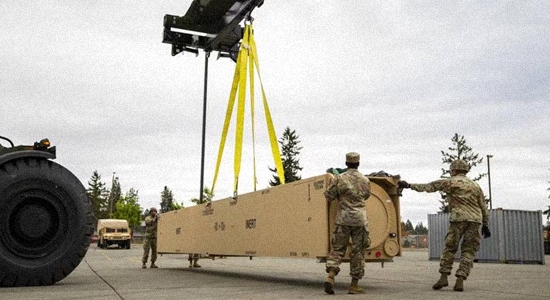
Army. Its joint program with the Navy’s Dark Eagle “long-range hypersonic weapon” was to be ready to fly at the end of fiscal year 2023 (September 30), then got postponed to the end of calendar year 2023, then got postponed to summer 2024.The Army had begun overpromising in 2021, when it delivered two nonfunctional training canisters. (“Now, Soldiers can begin training.”)
Department of Defense. The Defense Advanced Research Projects Agency (DARPA) has no less than three projects going: the Tactical Boost Glide, still in development; Operational Fires, also in development; and the Hypersonic Air-breathing Weapons Concept (HAWC), with contracts awarded last summer to build prototypes for testing.
All of this share-the-wealth program largesse may actually be slowing things down. A Defense One article lays out the problems in this approach. Since nothing is being done to course-correct, more failure seems inevitable.
Most of the efforts to develop these new missiles, GAO found, use a new development authority that bypasses regular DOD “acquisition and requirement development policies and processes.” These projects aim at building an initial prototype within six months and deploying an initial capability within five years. Among the many problems facing the development of hypersonic missiles, GAO noted, were “immature technologies and aggressive schedules.”
But is five years really an aggressive schedule? And isn’t the more basic problem one of management across the services?
China currently has the ability to preempt any naval defense of Taiwan in a matter of minutes. It can destroy enemy installations, including missile silos and bases, before the enemy is even aware of incoming missiles. It can deliver a crippling first-strike nuclear attack, it can suddenly decapitate a command structure.
Of course, all capabilities are subject to corruption and incompetence, but the incompetence race may be one that the U.S. military can win. □
James Roth works for a large defense contractor in Virginia.
Also see:
DefenseNews: “ ‘Dark Eagle’ has landed: US Army finishes equipping first unit with hypersonic capability”
“The I Corps’ 5th Battalion, 3rd Field Artillery Regiment, 17th Field Artillery Brigade received the first equipment for the battery in March 2021—consisting of two training canisters—and wrapped up Sept. 28, Col. Ian Humphrey, the Army’s hypersonic project office’s project manager for integration, told reporters in an Oct. 7 briefing.
“From a blank piece of paper in March 2019, we—along with our industry partners and joint services—delivered this hardware in just over two years. Now, soldiers can begin training,” Lt. Gen. L. Neil Thurgood, the RCCTO’s director, said in a statement.