Astute minds sometimes think alike about some aspects of some questions. Right after we published Mr. Roth’s recent column on the difficulties of invading the Republic of China and of helping it to defend itself better, we were alerted to a piece at the Responsible Statecraft site about the “8-point buzzsaw facing any invasion of Taiwan,” which argues that geography “is still the island’s best defense.”
I doubt that the terrain could provide a sufficient buzzsaw without the hundreds of billions in defense spending that author Dan Grazier says come second to terrain. But he is mainly trying to counter a focus on defending Taiwan in which “ ‘China is going to invade Taiwan’ has devolved into little more than a talking point” and “very little is generally said about Taiwan itself and its suitability as a stage for major military operations.”
Grazier contends that the island is an unsuitable stage for major military operations.
Eight reasons why
● The necessity of crossing the Taiwan Strait to get to Taiwan renders the ships of an invading force “extremely vulnerable to submarines, underwater mines, long-range missiles, and now uncrewed attack vessels.”
● It’s hard to land on the mountain-covered island, “and in most places, the mountains drop straight into the sea.”
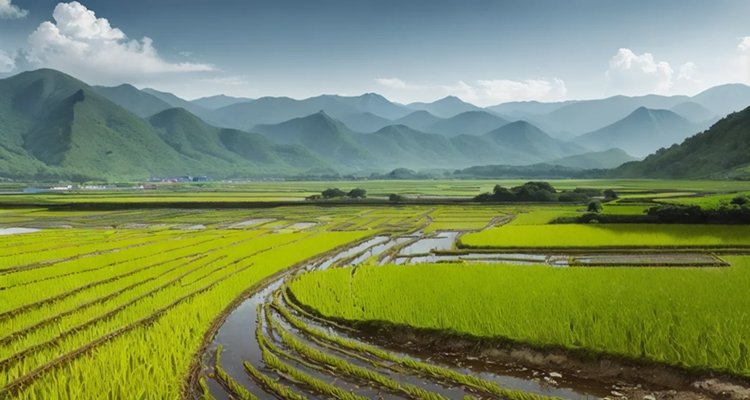
● Taiwan’s “water-intensive agricultural land”—rice paddies—would make a breakout assault difficult.
● Usable beaches which don’t lead to farmland—rice paddies—lead instead to cities and urban combat.
● Because “armored vehicles can’t drive through rice paddies,” highways would be better for the invaders. Except that they’re often elevated in Taiwan and “the defender needs only to drop sections of the road to completely disrupt forward movement.”
● Mountains and other natural obstacles obstruct an invader and “provide the Taiwanese with the ability to create a layered defense.”
● “Mountains surround” Greater Taipei, which can be reached only through narrow mountain passes. “One such pass is so narrow that the highway winding through it is elevated the entire way with opposing traffic lanes stacked vertically. Another pass is a little wider but it has been developed into essentially a long city with a winding river running through the middle creating a miles-long obstacle protecting the approaches to Taipei.”
● Taipei, 250 square miles, is “very dense with relatively little open space at street level…. The scale of a contested battle over Taipei is almost impossible to comprehend.” It would be another Stalingrad.
And yet…
What about Grazier’s conclusion, though, that “the doyens of the national security establishment may need to find a new pacing threat”?
It depends on what exactly he is responding to. In 2022, Ely Ratner, assistant secretary of defense for Indo-Pacific Affairs, said that the Indo-Pacific “remains the priority theater for the Defense Department, and China remains the pacing challenge for the U.S. military….” As stated, this general policy and perception of China could be justified no matter how hard it is to invade Taiwan.
Today, Defense Secretary Pete Hegseth says that “China is undertaking a historic military buildup and actively rehearsing for an invasion of Taiwan… Our pacing threat is communist China. Beijing is preparing for war in the Indo-Pacific as part of its broader strategy to dominate that region and then the world.”
This is all broadly true even if, in hopes of intimidating the people of the Republic of China into surrendering, Chinese Communist Party officials have no real near-term plan to wage the war for which it’s continuously rehearsing. Yet they might wage that war, and we and the ROC government must act as if they might—and so make the terrain even more difficult.
There is no contradiction between regarding China as the “pacing threat” for the U.S. military and seriously doubting that the PRC will anytime soon add a full-scale invasion of Taiwan to all the gray-zone and other assaults on the ROC and other countries that the mainland is always undertaking.
Moreover, with respect to deterrence of a full-scale invasion of Taiwan, one cannot really say that it is geography alone or even primarily geography which has inhibited the aggression of Taiwan’s next-door neighbor. Or at least Grazier does not make this argument. To make it, one would have to imagine the last 75 years without any ROC Armed Forces and without any U.S. alliance.
Also see:
StoptheCCP.org: “How Not to Better Defend Taiwan”
“So we have an armed population inhabiting large cities on a mountainous island with few beaches suitable for landing and flat land given over to rice paddies. Drones will not solve an invader’s problems.”
StoptheCCP.org: “Three Ways Red China Might Not Grab the Republic of China”
StoptheCCP.org: “What War Between Beijing and Taipei Would Really Mean”