The Maritime Executive asks “What Happens if Beijing Expands its Indo-Pacific Push?” (May 3, 2026).
The People’s Republic might get more aggressive anytime, often does, but right now the U.S. is “distracted” by the war in Iran. To the authors, then, the question seems more relevant than ever. The distraction presents a golden opportunity, maybe.
The scenarios sketched are rather abstract, perhaps unavoidably. Greater aggressiveness would be tried here and there. Responses to China’s amplified aggression would diverge.
Rather than gradually expanding its defense and security engagement across the Indo-Pacific, Beijing may choose to accelerate its trajectory, pushing boundaries to advance its interests and take advantage of a distracted United States. The result would be a rapid buildup of Chinese presence and a sharper, faster-moving cycle of pressure that tests regional cohesion and alliance resolve….
In the Southwest Pacific, a more assertive Beijing would pursue port access and logistics agreements more aggressively, including dual-use arrangements and hubs capable of sustaining persistent operations. A buildup of China Coast Guard and maritime militia activity would intensify pressure in fisheries and maritime zones, expanding Beijing’s access while testing sovereignty boundaries.
This would place Pacific island countries under significant strain…. Some states…might deepen partnerships with Beijing, while others might seek to leverage heightened competition to extract greater benefits from external partners, risking regional fragmentation.
At the same time, many island countries would work to avoid such fractures….
Intensified live-fire exercises, seabed survey activity and grey-zone operations would place additional strain on Australian Defence Force readiness. To maintain credible deterrence, Australia would need to respond by strengthening its surveillance of the sea, its broader intelligence and surveillance capabilities and its northward deployment of forces. Greater emphasis on partnerships with middle powers and regional states would also be critical, particularly if US regional engagement fluctuated….
Beyond expanding its presence, China would also seek to test allied responses. By varying the tempo and intensity of its activity, Beijing could assess thresholds, probe alliance cohesion and identify gaps in regional resilience. These actions might fall short of provoking conflict but would increase operational risk and the likelihood of miscalculation.
In short, decidedly more intense aggression across the board from China, even if still in the gray zone (i.e., the not-yet-war zone), would provoke stronger resistance or stronger appeasement from China’s many targets. Countries would hang together or separately. The ball doesn’t get rolling, though, on the hypothesized next-level aggression unless the Chinese government believes that the U.S. is more or less out of the picture in the Indo-Pacific because of the war in Iran.
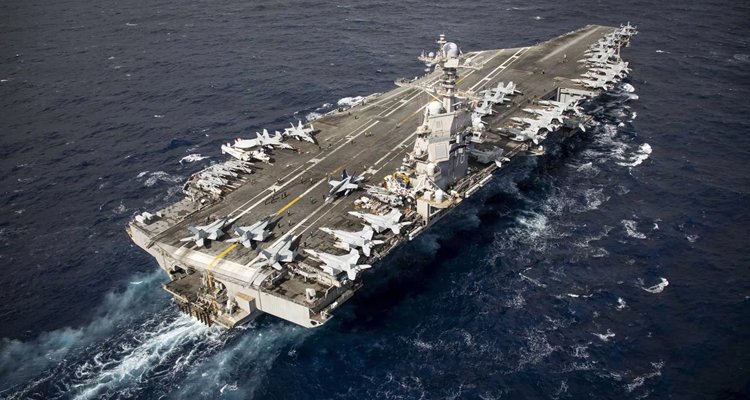
Something like 4 percent of active-duty U.S. forces are currently in the region around Iran: 50,000 troops out of around 1.3 million active-duty members of the U.S. Armed Forces. It’s harder to guesstimate the percentage of U.S. military hardware in the region, but it’s still just a fraction of the total; for example, hundreds of military aircraft, out of thousands. The U.S. commanders and soldiers involved in the war are probably the most distracted by it. The U.S. military has others, and the U.S. president has military advisors.