On December 20, 2024, the Ford Foundation funded a gathering of Chinese nongovernmental organizations in Beijing. The NGOs didn’t accomplish anything, aside from successfully concluding their meeting, but the very idea of a communist state having NGOs is startling.
What are they?
The Christian publication ChinaSource offered this explanation in 2002 (emphasis added): “The so-called NGOs in China are special organizations such as labor unions, the Women’s Federation, the Communist Youth League, writers’ associations, trade associations and so on. Although they are not officially government agencies, everyone in China knows what they are and their ‘semiofficial’ status.”
Many civilian groups “are trying to form their own NGOs.” But “in order to obtain legal status, many civilian NGOs have no choice but to align themselves with certain government offices. This process of seeking a relevant government office to ‘adopt’ their new NGO is called ‘align and adopt.’ ”
Align and adopt
Align with what and adopt what? Align with the Communist Party and adopt its objectives.
“In the garden which is China,” says ChinaSource, “these NGOs are like bonsai plants—plants whose primary purpose is viewing pleasure.” They present a picture of functioning civil society while providing a supervised outlet for the energies of eccentric activists like environmentalists.
According to Guangyao Chen, a director of China’s Nongovernmental Organizations Administrative Bureau, “The role of Chinese NGOs is to serve as a bridge for mutual communication that will link government and society and set definite standards for social behavior.”
In April 2016, Beijing put foreign NGOs under restraints similar to those of the domestic counterparts.
The foreign NGO law “is part of China’s suite of national security laws,” ChinaFile reports. “The law imposes costly administrative demands on overseas NGOs that want to register, but with the police as gatekeepers to setting up and maintaining a registered office in China the main challenge has been political rather than bureaucratic.”
No compromise?
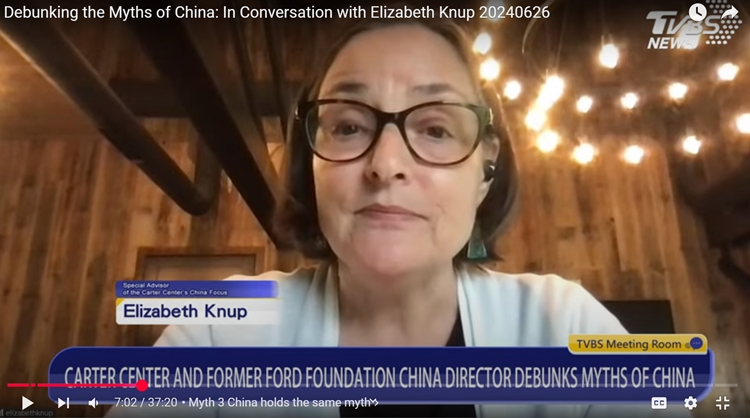
Foreign NGOs that could not get government sponsors left China. Some stayed, offering elaborate rationalizations. In 2021, the Ford Foundation’s Elizabeth Knup (who has since moved on) spoke as clearly as unclarity allows: “As the representative of an American rights-based social justice foundation [!] with operations in many challenging contexts around the world, I don’t think of our mission in terms of compromise.”
But Chinese law places the Ford Foundation under the supervision of the security services, the Foundation is required to have a government sponsor that answers for her deeds and misdeeds, it must file annual plans with the government that align with CCP priorities, and it must submit detailed financials for CCP approval.
Sounds like compromise to the power of ten.
Knup also said: “We have an obligation to keep working with partners who aspire for [sic] discourse and engagement with the world. We have an obligation to learn how our partners envision progressing toward more equity and human dignity. And we have an opportunity to support and elevate these aspirations, and to keep alive the conversation between visions of social justice in China and the rest of the world.”
There are a lot of noncommittal, low-expectation outcomes here: “keep working,” “learn how,” “support and elevate aspirations,” “keep alive the conversation.”
If the NGOs are like little bonsai plants, there sure are a lot of them. Estimates of how many operate in China vary widely. In 2016, The Diplomat said 500,000, the highest number reported and perhaps out of date.
Value for value
What do the NGO members get out of this arrangement in which, in the words of Guangyao Chen, they “serve as a bridge for mutual communication that will link government and society and set definite standards for social behavior”?
We know that an NGO provides an outlet for the nervous energies of eccentric hobbyists, “crusaders” if you will…or busybodies if you prefer. The government can provide NGOs with information, clientele, income, political and administrative support, and legitimacy (prestige). They can also provide the ever-welcome connections.
The benefits, however, are provided within an overarching framework not of the NGO’s making.
The CCP’s 14th Five-Year Plan for Social Organization Development, ending this year, “is the first time that Xi Jinping Thought becomes the sole guiding ideology in a major document regarding social organizations,” explains researcher Qun Wang.
“During this period, government agencies responsible for NGO registration and management must adhere to four basic principles. First, ensuring NGOs submit to the leadership of the CCP and internally strengthen party building. Second, enhancing their political functions and guiding NGOs to ‘thank the party, listen to the party, and follow the party.’ Third, improving their capacity for fulfilling NGOs’ role in service provision. Fourth, establishing a mechanism to cope with external and internal uncertainties that may cause instability in the nonprofit sector.”
That fourth item is a puzzler. But note that the CCP has left a little space in the third for the NGO mission if that mission is to deliver a government-approved service. The NGO’s own work, the work for which it was formed, is thus relegated to a distant and uncertain third place.
Thank, listen, follow
So let’s ask a few questions of the Ford Foundation and other foreign NGOs in China: Have you thanked the Party today? Are you listening to the Party today? Are you following the Party today?
For it is your duty to serve the Party at your own expense and at the expense of your donors. □
James Roth works for a major defense contractor in Virginia.