Taiwan is not part of the People’s Republic of China. We already knew that. But there is still much to learn from a lengthy discussion by Luke Bellocchi of claims and counterclaims about the status of Taiwan and/or the Republic of China.
Bellocchi’s article, referred to us by StoptheCCP.org columnist James Roth, is in part a reply to a National Interest article by Paul Heer.
How not to clarify
Heer comes out against ambiguity about the status of Taiwan and/or the Republic of China but seems pretty ambiguous himself.
He ends by telling us that Washington and Tokyo should be “confronting the dilemmas inherent in their ‘one China’ policies and their own historical accountability. They should pursue a diplomatic approach to the Taiwan issue that is not focused exclusively on military deterrence. If dialogue over time among Washington, Beijing, Taipei, and Tokyo cannot find a way to clarify Taiwan’s status, great-power politics or military force will.”
Clarify how? Despite all the dishonesties or confusions of any country’s diplomatic policies and statements, the ROC’s independence from the mainland is a fact. The status is already clear. What the diplomats and administrations can do to clarify is more openly acknowledge the fact. Would Beijing welcome this clarification?
What would “pursuing a diplomatic approach” that includes Beijing and “is not focused exclusively on military deterrence” amount to (that is, in addition to “historic accountability” for the U.S. and Japan but not, apparently, for the People’s Republic of China)? Would the current government of the Republic of China even be admitted to the talks?
Chinese Communist Party officials will formally sit down with Kuomintang officials, at least many of whom in latter days have adopted a strategy of accommodating Beijing, but not with President Lai Ching-te or other officials of the ruling Democratic Progressive Party. That’s because “separatist” Lai is willing to state the obvious, that his country is independent from the mainland, with separate governance and elections and everything; and also because Lai recognizes that the mainland government is an implacably hostile enemy that must be confronted on many fronts, including militarily.
If Lai and his diplomats were invited to attend talks with the CCP on how to surrender Taiwan to Beijing, it would be unwise for them to attend. The only war-preventing diplomacy and negotiation favored by Xi Jinping and the CCP is a process that culminates in “peaceful” “re”-unification with Taiwan and, thus, in subjugation of the Taiwanese. Shortly after the surrender, the former ROC citizens would fall prey to all kinds of CCP-wielded nonpeaceful coercion. There is no negotiating on such a basis.
Bellocchi on Heer
Bellocchi’s response to the Heer hooey (RealClear Defense, March 9, 2026).
Paul Heer’s recent plea that sovereignty over Taiwan cannot remain “undetermined” revives an important and long‑neglected question in U.S. policy: “Does China have a sovereign right to annex Taiwan?”
His conclusion—that history and international law obliges the United States to align “our one China policy” (i.e., that there is only one government of China and that Taipei is not it), with Beijing’s “one China Principle” that Taiwan is part of China—rests on a tendentious interpretation of the history of Taiwan’s “undetermined status,” a disregard for Taiwan’s political transformation and, most unsettling, an ignorance of Taiwan’s emergence as both a unique and irreplaceable font of advanced technology for not only the Western democracies but for humankind. And if that isn’t enough, there is of course, the “lesser” consideration of Taiwan’s strategic significance to the U.S. and its allies.
Even a cursory examination of the America’s historical archives, the international treaty record, and America’s obvious national interests would lead a fair observer to a different conclusion: Taiwan is not now, nor has it ever been, a part of the People’s Republic of China (PRC); and it is not now, nor has it ever been, in U.S. national interests to say otherwise.
History and analysis that I don’t think is cursory ensue. Bellocchi concludes:
Where one truly must part ways with Mr. Heer’s analysis is his sense of urgency that “something must be done” to lance the boil of Taiwan’s “undetermined status.”
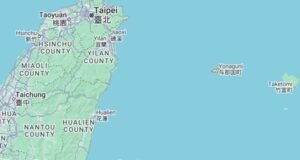
President Trump’s current National Security Strategy paper—published as recently as December 5, 2025—is unambiguous. Taiwan is central to the security architecture of the Indo‑Pacific. Its absorption by the PRC would significantly expand the People’s Liberation Army’s operational reach and undermine U.S. alliances in the region. Diplomatically, abandoning Taiwan would signal to allies and partners that U.S. commitments are negotiable, weakening deterrence globally. Commercially, Taiwan’s semiconductor industry is indispensable to the global economy as is its geographic position guarding vital commercial lanes and a path for its blue water fleet beyond the first island chain; PRC control over these factors would create unprecedented leverage over the United States and its partners. Morally, Taiwan is a vibrant democracy whose citizens consistently reject PRC rule. Supporting their right to determine their own future aligns with long‑standing American values and international norms.
Mr. Heer is right that the status quo is unsustainable. But the solution is not to accept Beijing’s narrative of historical inevitability. It is to recognize the political, legal, and strategic realities of the present. Taiwan is not part of the PRC, and U.S. policy should reflect that fact rather than obscure it behind outdated 80-year-old diplomatic statements that were clearly superseded by treaty and do not reflect the current reality of U.S. and allied strategic interests in the region.
Hear, hear!
Also see:
U.S. Naval Institute: 2025 U.S. National Security Strategy
StoptheCCP.org: “How Realistic Is U.S. Defense Strategy Re the PRC?”
Roth’s pre–Operation Epic Fury comparison of the November 2025 National Security Strategy and the January 2026 National Defense Strategy.
StoptheCCP.org: “What Is This ‘Republic of China’?”
LinkedIn: Matthew Fulco’s Post (via Monkton)
“The PRC’s strategy for subduing and absorbing Taiwan has not changed much in the past 20 years. It just has greater military power to use as leverage, especially in relation to Taiwanese and American defense capabilities.”