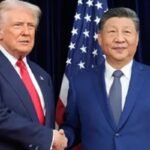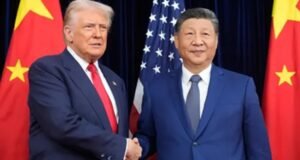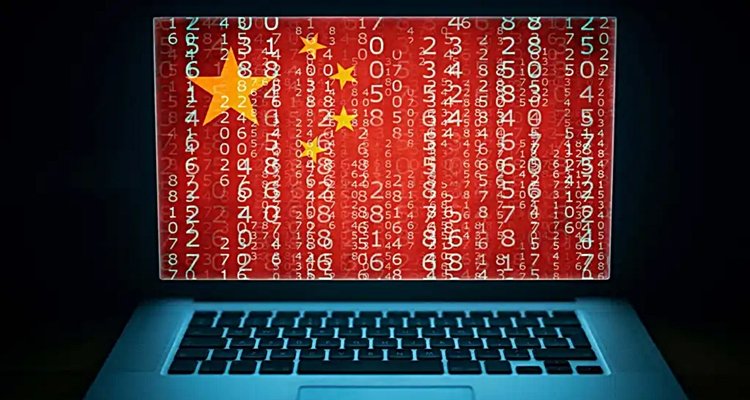
President Donald Trump has agreed to make Chinese cyberattacks and surveillance of technology used by Americans as easy as possible in order to help improve the atmosphere of his impending April meeting with dictator Xi Jinping. Maybe there’s some distance between this statement and the exact truth, but I’m not sure how many picometers that distance would consist of.
Reuters reports that the Trump administration has “shelved a number of key security measures aimed at Beijing ahead of an April meeting between the two countries’ presidents” (February 13, 2026).
The security measures being put on hold include
a ban on China Telecom’s U.S. operations and restrictions on sales of Chinese equipment for U.S. data centers, sources said.
The U.S. has also put on hold proposed bans on domestic sales of routers made by TP-Link and the U.S. internet business of China Unicom and China Mobile along with another measure that would bar sales of Chinese electric trucks and buses in the U.S., four people said, declining to be named.
Those decisions have not previously been reported. They are the latest moves by the Trump administration to rein in U.S. government actions that could antagonize Beijing following a trade truce reached by China’s Xi Jinping and Trump in October, the sources said….
“At a moment when we are desperately trying to remove ourselves from Beijing’s leverage over rare-earth supply chains, it is ironic that we’re actually letting Beijing acquire new areas of leverage over the U.S. economy—in telecoms infrastructure, in data centers and AI, and EVs,” said Matt Pottinger, who served as deputy national security advisor during Trump’s first term….
All the measures that the administration has now paused were initially aimed at keeping Beijing from accessing and exploiting sensitive American data for blackmail or intellectual property theft and positioning itself deep within internet-connected systems to sabotage critical infrastructure, two of the sources said.
Blackmail, theft, sabotage. But that’s it. Those are the only risks being exacerbated by this decision.
The story has the tone of reporting a scoop, but how much of a revelation is involved, really? Reuters also reports that during the last year, the Commerce Department has been delaying implementation of various at least nominally approved, now more explicitly deferred measures to protect U.S. customers and industry from the People’s Republic of China.
Throughout much of last year, Commerce Undersecretary Jeffrey Kessler dragged his heels on advancing the measures, citing the need to get buy-in from the White House and Commerce Secretary Howard Lutnick, two of the people said. The Commerce Department and Kessler did not respond to requests for comment on this description.
But after the October trade truce, leadership instructed staffers in the office charged with policing foreign tech threats to “focus on Iran and Russia,” two of the sources said. Iran is not viewed as a tech threat on par with China or Russia. Commerce did not comment on questions about its shift in focus.
PRC Dictator Xi Jinping is probably not very happy about the presence of the U.S. military in places where the People’s Republic of China would rather not have the U.S. military. Like in the vicinity of Taiwan, the Philippines, Japan. So why hasn’t U.S. President Donald Trump agreed to withdraw troops and equipment from such sensitive areas so as to improve the atmosphere of the upcoming meeting in April?
The U.S. doubtless regards such dispositions as nonnegotiable. Withdrawing from the region was never on the table and never could be on the table (one hopes), no matter how annoyed about U.S. troops and alliances Xi might be. These other things that have turned out to be negotiable should never have been negotiable either.
Also see:
Networkworld: “US investigates China Mobile, China Telecom, and China Unicom over data misuse concerns“ (June 25, 2024)
”The US has launched investigations into China Mobile, China Telecom, and China Unicom amid concerns that these firms could misuse their access to US data.”