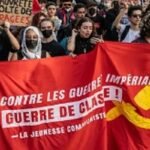
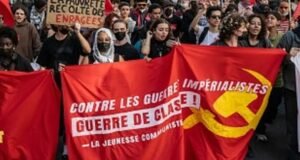
U.S. President Donald Trump promised the protesters in Iran that he would come to their aid if the regime started killing them.
By January 13, 2026, killings of protesters in the thousands had been reported. (Also see ISW’s Iran Update for January 14.) By January 14, Trump was saying that “We’ve been told that the killing in Iran is stopping—it’s stopped—it’s stopping.” And Associated Press was wondering whether his latest comments meant that “he would hold off on action.”
At least when it comes to tactics, the president is mercurial and zigs and zags. It’s possible that this was not taken into account by the Iranian protesters.
Although not the kind they had in mind, Trump has taken some action, or committed himself to taking some action, against Iran in recent days. On January 12 he announced on Truth Social: “Effective immediately, any Country doing business with the Islamic Republic of Iran will pay a Tariff of 25% on any and all business being done with the United States of America. This Order is final and conclusive.” As I write, though, how soon the immediate effect will take effect does not seem to have been reported.
China is Iran’s largest trading partner. After Trump made his announcement, CCP foreign ministry spokeswoman Mao Ning said, “We have always believed that there are no winners in a tariff war, and China will resolutely safeguard its legitimate rights and interests.”
This may fall under the category of strongly worded letter to the editor that James Roth has been talking about.
Greenland and Venezuela
Specialists cited by Tasmin Lockwood argue that “Trump’s latest geopolitical gambits all lead back to China” (CNBC, January 14, 2026).
“The connection here is the U.S.-China rivalry, and to a lesser extent U.S.-Russia strategic frictions,” Dan Alamariu, chief geopolitical strategist at Alpine Macro, told CNBC over email.
“The U.S. simply doesn’t want either China or Russia—or Iran for that matter—operating out of Venezuela. It doesn’t want Chinese economic influence in Greenland, while it wants to counter Russian pushes into the Arctic. And it wants to weaken Iran and Venezuela, which are Beijing and Moscow friendly.”…
Moving against Venezuela was also about removing “non-American powers from the Western Hemisphere,” Alamariu said, as is agitating to annex Greenland, although that is “potentially far more risky and extremely controversial.”
Iran is farther away, but China is its top trading partner. Trump’s hard line on Iran is partly about the Mideast oil—“and China does import a significant share of its energy from the Persian Gulf”—but also about its nuclear and missile capabilities, support for movements the U.S. designates terrorists, its drive for regional hegemony, and its longstanding enmity with the U.S., Alamariu said.
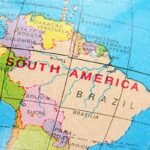
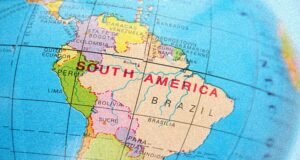
Responding to critics of President Trump’s action in Venezuela, Venezuelan-born Andres Guilarte suggests that “reducing U.S. interest to ‘oil greed’ ignores a far larger context: Venezuela has been a sanctuary for trans-national criminal networks, a staging ground for alliances with foreign adversaries [like China], and a source of regional instability. Those are serious national security concerns” that, he says, the United States has the right to address. Which indeed it does.