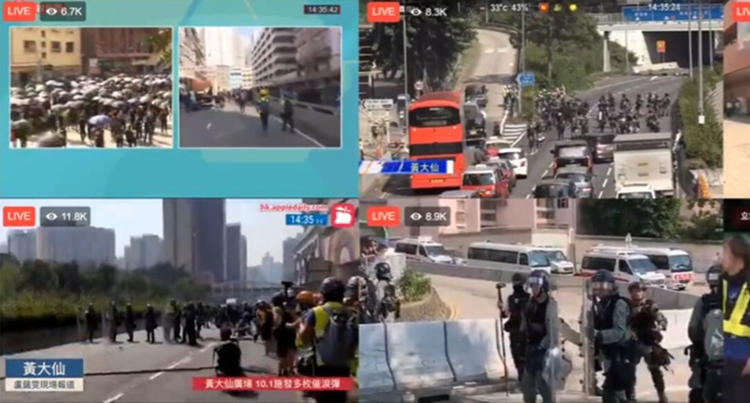
Not all live video streams stored on Facebook are about cats or bungee jumping. If video evidence of China’s crackdown on dissent in Hong Kong is gone for good, this “will make it easier for the authorities to impose their own narrative on events in the city’s recent history,” RFA reporter Alice Yam observes.
“Facebook notified users last month that it will be deleting archived live video streams from June 5, while newly streamed live video will be deleted after 30 days from Feb. 19, 2025.”
Account holders can apply for a six-month extension before their currently archived videos are deleted. Without the extension, they have 90 days to download or transfer older video after being notified of an impending deletion.
Narratives
It’s good that Facebook users in Hong Kong and elsewhere will have a chance to download the footage that Meta is scrubbing from its servers. But there is a hitch or two. If you’re in Hong Kong, reposting a video that the Chinese Communist Party dislikes may get you in trouble (“Hong Kong media urged to back up Facebook protest videos,” Radio Free Asia, March 12, 2025).
A reporter for an online media outlet who gave only the pseudonym Ken for fear of reprisals said a very large proportion of the public record of the 2019 protests was streamed live on Facebook, with more than 100 videos stored there.
While current media organizations have made backups, the footage will no longer be there for anyone to browse, making the record of that year less publicly available, Ken said.
“It’s like we’ve lost an online library,” he said. “Unless someone is willing to back it up and put it all online, there’ll be no way of finding that history any more, should you want to.”
Ken and his colleagues are concerned that online records of the 2019 could disappear entirely in a few years’ time, especially as republishing them from Hong Kong could render the user vulnerable to accusations of “glorifying” the protests, and prosecution under two national security laws.
Another journalist who didn’t want RFA to use his real name, a Mr. G, said that even though the outfit he works for will retain access to its own streamed Facebook or YouTube video of the 2019 protests, Facebook’s deletions may well result in permanent losses of historically important footage.
Time and money
Media commentator To Yiu-ming suggests that social media platforms may be less than the best way of archiving things anyway. “Users may well encounter similar practices even…if they move to another social media platform. If you want to preserve the historical record, you have to use less convenient methods, and spend a bit of time and money.”
Like fees for archiving video that adds up to more than a certain number of gigabytes and for viewing that adds up to more than a certain number of gigabits per month?
Storage is still cheap, and the giant social media companies must benefit from economies of scale. Facebook could probably cover its costs by charging modest fees for storage and data transfer, preventing unnecessary hardship or risk for persons who live under repressive regimes. Why simply delete everything?
Also see: