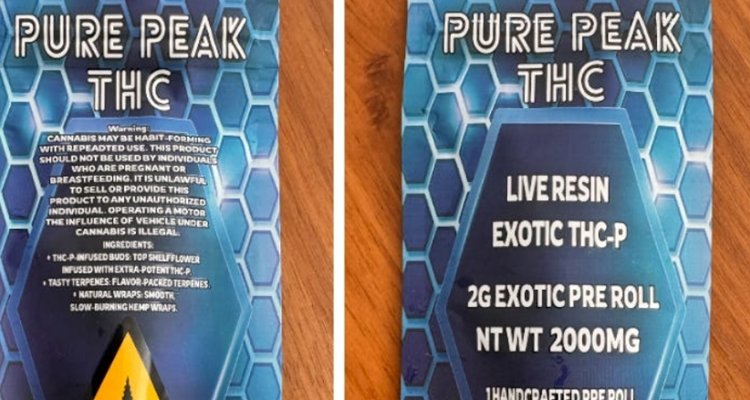
The Robinson Report, a Substack that investigates Maine and world politics, recently looked at how exporters like Shanghai Minstar Chemical have been circumventing U.S. trade laws in order to provide American customers with “cheap synthetic drugs—in this instance, THC-P” (October 8, 2025).
The Report obtained Minstar’s emails to a U.S. cannabis business offering to help it “import lab-made THC analogs by evading inspections, disguising the chemicals as innocuous industrial products, and structuring large orders into smaller duty-free parcels.”
The steps included mislabeling THC-related compounds as benign fragrance ingredients; undervaluing invoices; routing through a “special courier” that would “avoid both China and US Customs”; repacking bulk orders into many sub-$800 packages designed to qualify for the de minimis exemption; and, later, moving production or transshipment through Thailand to sidestep U.S. China-tariff exposure.
The recipient of these messages was a U.S.-based cannabis business operator who later turned the messages over to U.S. Customs and Border Protection….
The Chinese broker, who went by the name David Pan, explicitly described how the tariff and customs subversion would work, including falsely labeling THC-related products as more common industrial chemicals and declaring fraudulent values for packages.
“We are very professional to ship cannabis products to US market. When we shipping to US market, we usually label it with similar upstream products, such as Olivetol (CAS 500-66-3)… [and] 2,4-dihydroxy-6-propyl-benzoic acid methyl ester (CAS 55382-52-0)…,” wrote Minstar’s exporting manager.
For large orders, he added, “I could cut declaration value… If I declare lower value in invoice, then you could save lots of tariff.”
The emails were sent in 2024, before the new Trump administration’s stepped-up tariffs on the People’s Republic of China and its elimination of the de minimis exemption for imports of Chinese goods “valued at or under $800.”
The Robinson Report notes that chemicals often called “gas station weed” are not the same as “the flower or extracts derived from cannabis sativa or cannabis indica, the two primary psychoactive strains of the cannabis plant. But many of these chemicals, including THC-P, have psychoactive properties or can be easily converted into psychoactive substances. Some of them, such as THC-P, have also been found to have stronger negative effects, such as tachycardia, anxiety, and even psychosis….
“The danger of THC-P, though low in comparison to fentanyl and other synthetic street drugs, stems in part from the inconsistent production, lack of transparency, and quasi-criminal nature of the supply chain.”
When permitted at all in a particular state of the union, domestic production of THC products is often heavily regulated. Some U.S. producers of THC products are fly-by-night. Others take pains to explain how they maintain quality and fine-tune potency and how their products may be safely used.