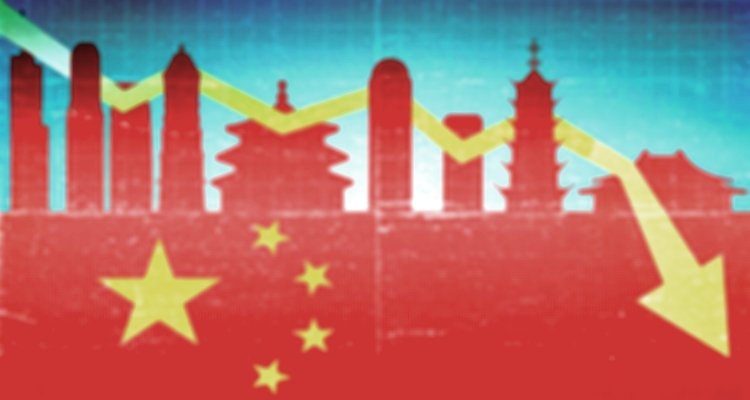
A new “stronger than expected” gross domestic product number from China, 5.3 percent, is misleading in isolation.
The New York Times states part of the relevant context: “A steep slide in housing prices has left consumers less prosperous and less willing to spend, but the government is pouring money into new rail lines and other projects…. China has long relied on building roads, bridges, ports, and other infrastructure projects to revive a slowing economy. But rising debt, especially among local and provincial governments, is making this strategy harder to sustain.”
Government spending, no matter how futile or destructive, is counted as part of an economy’s activity, and so part of its product.
If China’s economy consisted of unhampered free markets, a trend of ever cheaper goods and services throughout the economy would represent the lowering of costs that naturally attends ever greater productivity. Generally lower costs wouldn’t hurt workers who are themselves becoming more productive and richer as computers, food, clothing, and housing units become less expensive in real terms. But all the housing units sitting around in China are the consequence of the state’s massive malinvestments. And people are getting poorer in that country, not richer.
The Times piece is good on certain details of the Chinese economy but doesn’t state the biggest aspect of the big picture as clearly as the editors of National Review. Who say (April 21, 2026):
China, by insulating firms from profit-and-loss signals, has subsidized commercial failure on an epic scale. In doing so, the state diverted labor and resources from countless entrepreneurial endeavors that could have improved real lives.
This should mark the end of the so-called Beijing Consensus, coined in 2004 as an alternative to the free-market prescriptions for growth that enabled billions to escape global poverty. Instead of stable rules and unconstrained decision-making, it promised state-driven prosperity through a “ruthless willingness to innovate and experiment” and a “lively defense of national borders and interests.” In practice, all that meant was centralized control over Chinese society’s wealth and opportunity. Individuals were made to advance the CCP’s desired ends, not their own.
Insofar as the Chinese model succeeded, it was attributable to a shift away from collectivism and toward liberalization and private property. The CCP’s resurgent Leninism—the systematic elevation of some industries, the obliteration of others on a whim—was always an economic drag, not a competitive edge.
The recent decades of the People’s Republic of China have shown that the statist elements of a mixed economy may be very statist indeed—openly and insistently totalitarian—while still permitting enough of a market to permit mass production of goods and services and to pay for all of the state’s military and other belligerent projects. This is possible especially when that economy is buffered by massive intellectual property theft, looting of the resources of other countries, and ability to exploit suicidally lax global trade policies. In this setup, the effects of the PRC’s assaults on markets and lives can be dampened or disguised or deferred but cannot be made to disappear.
Also see:
StoptheCCP.org: China’s “Planned Capitalism” Kills Wealth