Revelation of the affair of now-former Nvidia CEO Jensen Huang with a spy for the Chinese Communist Party “revives push to tighten China chip curbs” even though the scandal tells us nothing new about the nature of the Chinese party-state and whether it’s a good idea to equip it with the most advanced microchips that U.S. firms can provide.
Efforts to tighten U.S. curbs on exports of advanced chips are being supplemented by efforts to stop Chinese firms from gaining access to restricted chips remotely. One means of achieving the latter is a regulatory rule that has been in the works for months. Another is legislation the fate of which will probably depend on what the next Congress is inclined to do (CNBC, November 12, 2026).
The Commerce Department is finalizing a rule aimed at preventing Chinese AI firms from remotely accessing advanced chips through data centers in other countries, according to The Information. The effort, long opposed by tech firms including Nvidia, has gained renewed momentum following the Nvidia revelations.
More Chinese AI companies have reportedly started searching for Nvidia-powered computing capacity at data centers outside China, while traders and intermediaries are ramping up stockpiles of these processors, on the prospect of tougher U.S. enforcement.
If legislation like the Remote Access Security Act—passed by the House in January—goes through next year, it would increase compliance exposure for non-China-based cloud and data-center operators, including those in Southeast Asia, serving Chinese customers, Meale said.
In its first year, the Trump administration rescinded broad chip restrictions passed during the Biden administration that had allowed export of advanced chips to allies, had limited export to other countries, and had sought to ban export altogether to countries like China and Russia.
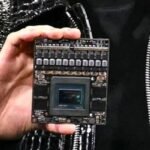
After scuttling those broad restrictions, the Trump administration at first retained controls on export of advanced chips to the People’s Republic of China but then loosened them to the extent that Commerce has been deciding on a case-by-case basis whether an aspiring PRC purchaser can get Nvidia’s H200 chip.
Problems
But there are a couple of problems with allowing a powerful microchip like the H200 to go to only “qualified” buyers in mainland China and treating this intermittent restriction as sufficient.
One is that regardless of any requirements that must be accepted by the purchasing company, it can still give access to the chips to the CCP and the People’s Liberation Army. Another is that Chinese firms prevented from obtaining advanced chips directly from the U.S. have been able to buy them from firms located in other countries, like CCP spy Alice Huang’s Megaspeed, which was set up in Singapore in order to evade export controls on the H200.
It would be great if the ability of CCP-governed Chinese firms to rent from afar the computing power of the H200 and other export-controlled chips is blocked in the coming months. But their ability to buy the chips must also be shut down.
Also see:
StoptheCCP.org: “U.S. Export Controls on Nvidia Chips Are Not Working”
Reuters: “Chinese AI firms rush to secure Nvidia chip capacity as spy scandal stirs fear of US curbs”
Fox News: “Howard Lutnick is next Trump official top Dems want on the chopping block amid NVIDIA scandal”
Also on or near the Democrats’ chopping block is Marco Rubio. Even though Rubio reportedly “Warned Officials About Nvidia’s Entanglement With Chinese Spy.”