The RSF says it’s “beyond censorship.”
I don’t think so. Governmental intimidation and coercion intended to muzzle or redirect the speech of the citizens of another country is simply censorship. The CCP’s attempts, sometimes successful, to order Thai journalists and broadcasters around, are attempts to censor. The opposite would be the complaints of irascible but peaceful citizens who threaten only to stop reading or watching (“Beyond censorship: China’s growing influence on Thailand’s media,” Reporters Without Borders [RSF], November 6, 2026).
The Chinese regime has expanded its presence in Thailand’s media sector through strategic partnerships with Thai outlets and journalists, and attempted to silence stories it does not like by intimidating them.
Examples:
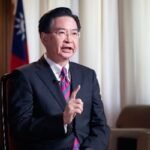
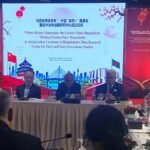
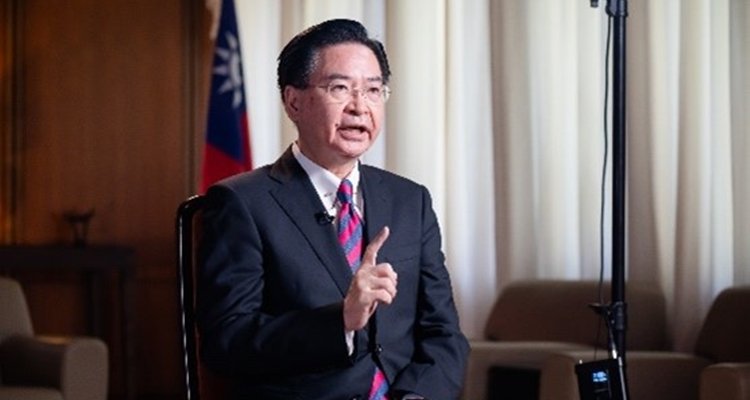
On 3 November 2023, the Thai Public Broadcasting Service (Thai PBS) aired an interview with Jaushieh Joseph Wu [shown above], who was Taiwan’s foreign minister at the time. Shortly after the interview was broadcast—excerpts were shown on television and the full interview made available online—the Chinese Embassy in Bangkok published a statement accusing the broadcaster of providing a platform for “Taiwan independence separatists.” The embassy claimed the interview had “hurt the feelings of the Chinese people” and accused the broadcaster of “abusing” press freedom.
According to someone familiar with the case who requested anonymity for fear of reprisals, the Chinese Embassy arranged a meeting with the broadcaster’s executives. An agreement was reached to remove the full interview from the broadcaster’s online platforms approximately one week after its publication; the television report was not affected. The removal took place without any public explanation from the broadcaster….
In one notable case from 2022, a Thai journalist was confronted about his reporting on the persecution of the Uyghur minority in China by several staff members from the Chinese embassy in Bangkok during a diplomatic reception. One embassy staff member warned that the journalist’s publication would no longer be granted access to interviews with the Chinese ambassador.
Since then, the embassy’s efforts to control portrayals of China in Thailand have become increasingly overt. In August 2025, for example, embassy officials intervened in an art exhibition at the Bangkok Art and Culture Centre, pressuring organisers to remove artworks related to Hong Kong, Tibet and East Turkestan (a Chinese territory also known as Xinjiang Uyghur Autonomous Region) and censor the text on the exhibition labels. The British news agency Reuters reported on the incident, but few Thai media outlets followed up on the story. When one of the few exceptions, news site Khaosod English, published an opinion piece by journalist Pravit Rojanaphruk on the censorship of the exhibit, the Chinese embassy’s counsellor for media affairs visited Khaosod English’s offiice and, according to the journalist, told him that Beijing’s One China policy, which was questioned by the exhibition, was not open to challenge.
We once regarded censorship as a mostly or exclusively domestic affliction. National governments censor citizens of the nation. Countries like Brazil, the United Kingdom, and the People’s Republic of China have shown us how often censorship and other forms of repression can be transnational; it is happening beyond borders. The people of some countries—like the ones right next to Red China—are especially at risk.