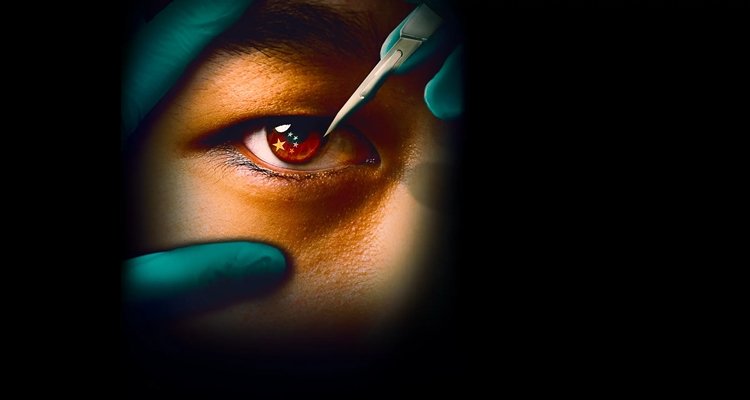
Jin-an Kim’s post on censorship of the documentary “State Organs” in South Korea covers several topics, including his own medical problems and his decision to reject recommendations to go to China for a kidney transplant.
Regarding his own situation, he says: “When a person undergoes dialysis three times a week, filtering their blood for four to five hours each session, for nearly a decade, both body and mind eventually reach their limits” (Bosik, October 24, 2026).
So why not do what so many over the years have advised him to do, get a quick kidney transplant in the People’s Republic of China? One, “I felt an overwhelming moral burden at the thought that the moment I paid for a transplant, I might become complicit in someone else’s life being taken to fulfill my request.”
Reason one is sufficient. But also, Kim’s doctor advised against it for other reasons. Since “the precise health condition and medical history of the organ donor could not be verified, the risks of fatal infections and complications were extremely high. Moreover, he said that inadequate surgical techniques and postoperative care at some local facilities had led to numerous cases in which patients returned to South Korea only to suffer organ rejection, acute sepsis, worsening health, or even death.”
Not in theaters
Kim’s main subject, though, is what’s been happening to the award-winning documentary “State Organs” in South Korea.
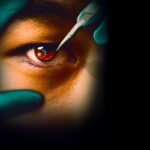
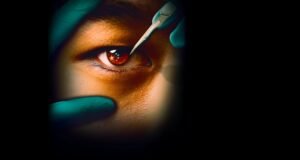
The official website of the documentary describes it as exploring “how the rise of the Falun Gong movement caused deep jealousy in Chinese Communist party leader Jiang Ze-Min, and how that jealousy resulted in Falun Gong practitioners being directly targeted and subjected to forced organ harvesting.”
Something people should know about. Yet showings of “State Organs” have been systematically blocked by multiplex chains and theaters—who may or may not have acted on their own.
Although it was selected as the opening film of the 2025 Seoul Larkspur International Film Festival and attracted sold-out audiences at regional screenings, a regular theatrical release was effectively blocked by major multiplex chains, with venue rental refusals, last-minute screening cancellations, and interruptions after screenings had begun.
Reports of funding cancellations ahead of the opening, unusual contacts from relevant local government departments, and the withdrawal of corporate sponsorships make it difficult to dismiss criticism that the entire process amounted to voluntary self-censorship, placing concerns about the Chinese government and the enormous Chinese market above universal human rights.
Even some civic organizations, cultural figures, and media outlets that normally speak loudly in defense of freedom of expression and human rights fell silent on this issue, almost as though they had agreed to do so.
Even more astonishing was the attitude of South Korea’s left-wing government and political establishment, which have long proclaimed human rights and freedom of expression as their highest values.
The verdict that “concerns about the Chinese government and the enormous Chinese market” have been placed “above universal human rights” is all too plausible.
Less plausible is the notion that whatever the lip service it may give to human rights and freedom of expression, the government of President Lee Jae Myung really gives a hoot about these when the content of expression proves inconvenient.
Speech crimes
South Korea recently imposed a law to penalize the spread of “false and manipulated information” online, which critics warned “could chill free speech and open the door to government-influenced censorship.” Earlier, Lee had said that what he calls hate speech and disinformation are “crimes that clearly go beyond the limits of free expression…. We can no longer overlook hate or disinformation disguised as opinion. Acts that distort facts or violate human dignity are crimes that must be punished as such.”
So Lee has pushed for laws imposing censorship. But as another commentator on the fate of “State Organs” in South Korea, Heo Eun-do, points out, “Censorship does not always come in the form of a written order.”
Heo adds that the documentary, though banned from theaters, nevertheless did reach a wide South Korean audience—online. The fact that it “rose to the top ranks on Coupang Play [a popular South Korean streaming service], surpassing numerous blockbuster films, reveals something significant.”
Also see:
Apple TV: “State Organs”
“A dangerous 20-year investigation within communist China uncovers a state-sanctioned organ harvesting program. Political prisoners, mainly Falun Gong practitioners, are executed on demand and their organs removed while some are still alive.”
State Media Monitor: South Korea