The phony “diversity problem” according to which too few persons in irrelevant categories are represented in the Chinese Communist Party or in its upper echelons is being again exposed, now by Chandu Doddi (“China’s Shrinking Politburo Has a Diversity Problem,” Irrawaddy, October 16, 2026).
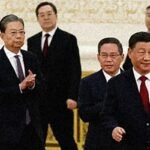
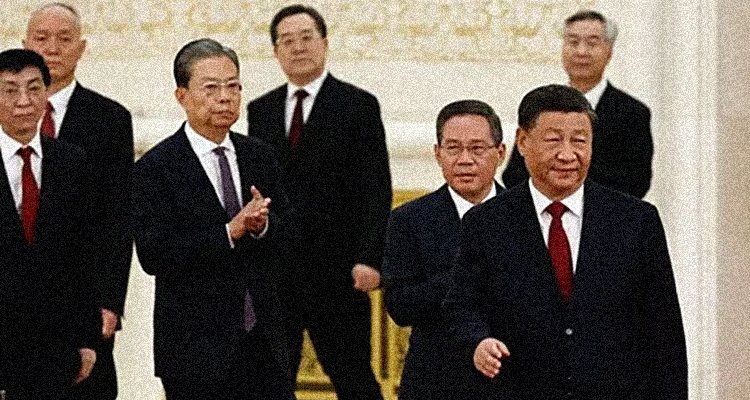
China’s Communist Party chose 24 men for its Politburo in October 2022, all of them Han Chinese. It was the first Politburo without a woman in 25 years, and it included nobody from any of China’s 55 officially recognized ethnic minority groups. After four years, the group is even more exclusive.
In October 2025, the party expelled Central Military Commission Vice Chairman He Weidong. Former Xinjiang Party Secretary Ma Xingrui followed in July 2026, and top general Zhang Youxia last month. Official notices accused all three of serious violations; the notice on Zhang also alleged disloyalty, “faction-building” and a remarkably large number of bribes. Their removal leaves an active Politburo of 21—a concentration that tells us something important about power under Xi Jinping. Diversity exists farther down the political system, often through quotas and administrative rules. It disappears where the most consequential decisions are made….
No ethnic minority official has ever joined the Politburo Standing Committee. A handful reached the wider Politburo.
Mein Gott. So…what?
No, author. The problem with the politburo and the Chinese Communist Party is that they exist and what they do, not that they neglect to give persons of whatever ethnicity or gender, including members of China’s especially oppressed groups, an equal opportunity to oppress.
To improve the “diversity” of the CCP and the politburo in a way that means something, make sure that at least half or 110 percent of all members are arch enemies of socialism with Chinese characteristics and unswerving champions of full laissez faire capitalism, freedom of speech, real democracy, protection from arbitrary surveillance, leaving Taiwan alone, that kind of thing. Let’s have whatever diversity is entailed by uniform bedrock allegiance to freedom and individual rights.
We get this concession from Doddi: “An all-male, all-Han Chinese Politburo doesn’t mean every member thinks alike. Nor does adding women or minority officials guarantee different policies.” But he makes too little of these elemental facts; also, of the fact that thinking alike in certain fundamental ways, or at least convincingly enough pretending to, is a prerequisite for joining the CCP and politburo clubs.
At the same time, he cites a study that, we find, offers this interesting insight: “While autocracies are usually characterized as being worse than democracies in terms of rights provision and political pluralism, they perform as well or even better than the average developing democracy in the area of female political representation.” (Top example: Rwanda.) Yes, we do often hear that autocracies are worse than democracies in terms of the rights provision.