The Chinese Communist Party does what it can to keep its propaganda modern, charming, on the cutting edge. One of the latest things is AI microdrama, which Tibetan Review defines as “serialized, vertical video stories—typically lasting 1 to 2 minutes per episode—produced largely or entirely using generative artificial intelligence tools for writing, voice, music, and video” (October 13, 2026).
When the mission is pitching CCP propaganda, artificial intelligence cannot be doing all the work. Agents of the Party must be prompting and directing.
One CCP-stamped AI microdrama, “The Ideal of a Tree,” shows how wondrous things are ecologically in Tibet even though “in reality environmental devastation remains an ever-growing problem there in the face of China’s relentlessly massive infrastructure, mining and militarisation drives.” Also advanced by this mini-story is “Beijing’s vision of national ethnic unity bound by shared roots and a common future.”
The Tibetan Review cites a South China Morning Post article according to which “a 2019 study session of the Politburo, the party’s top decision-making body, Xi urged mainstream media to boldly adapt new technologies, mechanisms and models to maximise publicity outcomes.”
A tangled web
The Post says that the “new wave of AI-generated miniseries weaves Chinese culture, policies and initiatives, developmental achievements and revolutionary history into engaging storylines.”
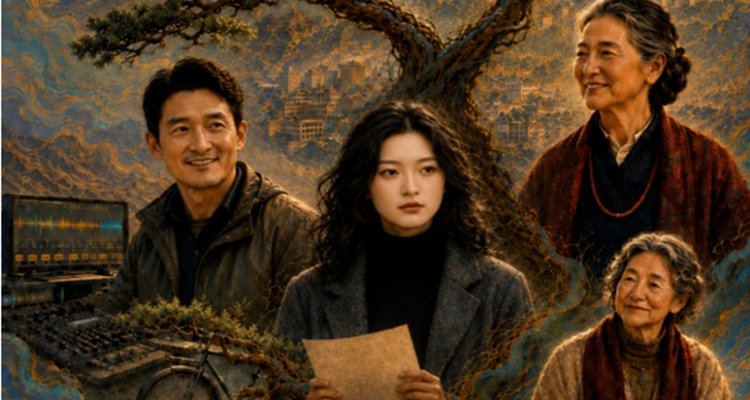
“The Ideal of a Tree” appears to be a six-part series. I couldn’t find functioning videos of the series but did find a web page promoting “Tibet’s first AI short drama.” The drama is billed as a production of “the Propaganda Department of the Tibet Autonomous Region Party Committee and Tibet Radio and Television Station.”
Following “a young musician from Shanghai’s journey to Tibet, ‘The Ideal of a Tree’ showcases the warmth of ethnic interaction, exchange, and integration through a cross-regional friendship, the transformation of Lhasa, and the story of a pine tree’s growth,” according to the page’s description, as Google Translated, of the story.
“Closely aligned with the four major priorities of ‘stability, development, ecology, and border strengthening,’ the drama portrays the spirit of young people from various ethnic groups as they inherit and innovate upon their ethnic cultures.”
An ideal
The summary of Episode 2 explicates further: “After arriving in Lhasa, Li Yue is amazed to find Tsering Drolkar living a life that defies her expectations—featuring a modern, stylish home and a menu of innovative Tibetan cuisine. In the study, Dorje uses old photographs to compare the terrain and pinpoint the exact location of the pine tree planted by Grandma Zhang over forty years ago. Zhuoga tells Li Yue that her journey is not just about searching for sounds, but also about seeing how the ‘ideal’ her grandmother planted all those years ago has grown.”
Sounds dull as dishwater. But what can you do when your AI microdrama must sell the “four major priorities” and other tenets of Xi Jinping Thought?
The microseries apparently conveys nothing about the relationship of the emblematic and cross-regionalizing pine tree to Party-instigated environmental devastation in Tibet. Or to how Tibetans are being thrown in prison for trying to preserve the Tibetan language or for sharing pictures of the Dalai Lama or possessing a Tibetan flag. Or to how Tibetan schools and monasteries are being forcibly closed and toddlers are being abducted from homes to be brainwashed in CCP-run boarding schools.
Also see:
The Wall Street Journal: “China Steals Language and Home Life From Tibetan Kids as Young as 4”
“Authorities frustrated by continued resistance to Beijing are now prying children as young as four years old from their homes—before they have a chance to fully absorb the Tibetan language and way of life.”