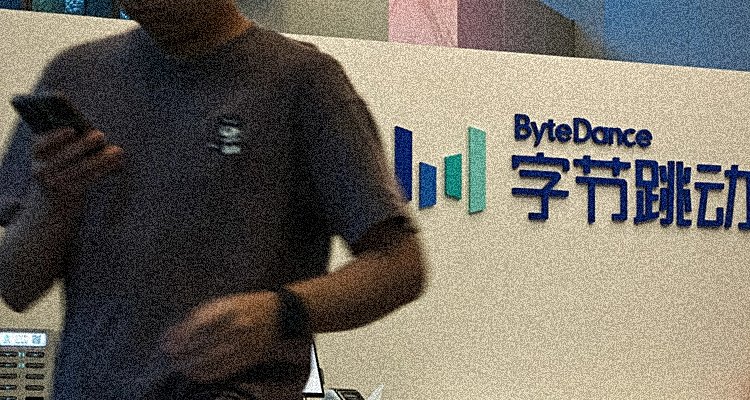
There’s too much opacity to figure out to what extent, if any, the U.S. version of TikTok is now separate and distinct from the global ByteDance-controlled TikTok, Politico finds. But the U.S. entity doesn’t look very walled off (October 9, 2026).
TikTok US has said it has indeed walled off Americans’ data in compliance with the law.
But the loose system for making sure that data about American TikTok users doesn’t end up in Lark [an internal chat system]—essentially one of self-regulation—appears to leave plenty of room for human error. Even if an employee is not deliberately mishandling data, they could easily slip up by accident. In fact, the Department of Justice argued in a 2024 legal filing that TikTok employees had sent “significant amounts of restricted U.S. user data” to each other through Lark.
Did theoretically restricted U.S. user data stop flowing to global colleagues as soon as TikTok US was formed in January 2026? One U.S. employee told Politico that communicating with global colleagues is essential, “but I can think of a thousand different ways we would be able to do that that wouldn’t necessarily violate at least the spirit of this agreement.” Not quite an ironclad guarantee.
Unknowns
And, notes Politico:
there are still many unknowns about the terms of the deal—particularly around the powerful algorithm that determines what content gets fed to users. TikTok said on its website that the new company will “retrain, test, and update the content recommendation algorithm on U.S. user data” and “the content recommendation algorithm will be secured in Oracle’s U.S. cloud environment.” It’s unclear if the company licensed the algorithm from ByteDance, or the degree to which the algorithm is still maintained and updated by ByteDance engineers….
The plan to create an American TikTok was always fraught. How do you neatly carve out a portion of a business that employs thousands of people across the world, runs on a sea of data moving across systems and countries, and relies on technology—a critical algorithm in particular—built by TikTok’s former Beijing-based parent company?…
ByteDance would keep the moneymaking parts of TikTok’s business, including advertising and ecommerce, while TikTok US would be focused on data security and content moderation. The final lineup of investors included ByteDance, which retained a stake of just under 20% as well as a seat on the board. The logistics of how TikTok US would be severed from TikTok’s global operation—or whether it would maintain any operational ties to its former Beijing-based parent company—were not clear.
“The whole thing was bullshit,” said a former congressional staffer familiar with the process, who was granted anonymity to speak candidly.
Politico’s story seems mostly accurate, and the reporter asks the right questions. But she says too little about John Moolenaar’s public statements after Will Farrell, the chief security officer for TikTok US, abruptly cancelled a scheduled September 15 appearance before the House Select Committee on the Chinese Communist Party.
As Politico reports, Moolenaar, who leads the Select Committee, believed that TikTok was seeking to “avoid scrutiny of its child safety practices, a decision that came soon after Meta reached a $17 billion settlement over claims it hooked young users to its products and misled them about potential harms.”
Why cancel?
Moolenaar suggested this and also suggested that the desire to avoid talking about the child-safety issues was not a valid reason for cancelling, since the questions about child safety were not intended to be the subject of hearing. The subject was to be “how the new venture is safeguarding TikTok’s algorithm and Americans’ data from Chinese influence.”
The cancellation “raises serious questions on the algorithm, access to Americans’ data, what kind of influence the CCP continues to have with TikTok,” Moolenaar told Bloomberg. “They had an opportunity to inspire confidence that the law was being met and could have simply at the roundtable said, ‘By advice of counsel, we are not able to answer questions, due to legal proceedings, on child safety issues.’ But the fact that they cancelled, to me, really undermines their credibility.”
Moolenaar also “said it was unclear whether the directive to drop out had come from TikTok US, which oversees its safety and security efforts, or from ByteDance, which still owns a 19.9% stake in the company’s US operations and controls the most valuable parts of its business. That ‘goes to the heart of the concerns that remain about TikTok—its ownership, its loyalties, its commitment to the American people,’ he said.”
Farrell could have nailed down what he’d be asked during the hearing with a phone call; and in any case, as Moolenaar pointed out, simply refused to answer questions about child safety. But Farrell and/or his bosses at TikTok US and/or Beijing-based ByteDance apparently determined that no political harm would come from cancelling the appearance, refusing to reschedule, and leaving publicly unresolved all questions about the TikTok algorithm and users’ data.