The Trump administration is still applying the brakes to a long-stalled sale of $14 billion in arms to the Republic of China in deference to the dictator of the People’s Republic of China, Xi Jinping, whom President Trump expects to meet perhaps two more times in 2026. But the U.S. is also doing various things to show its continued support for the ROC despite this major indication to the contrary, says Bloomberg’s Yian Lee (October 9, 2026).
Lee’s article notes that:
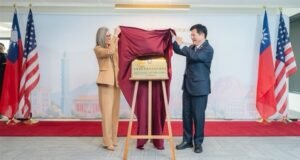
● ROC Foreign Minister Lin Chia-lung recently traveled to Arizona to open the ROC’s first new “representative office” in the United States since 2020. (Such regional offices are often called “de facto” consulates because the U.S. does not grant formal diplomatic recognition to the Republic of China.)
● Former ROC President Tsai Ing-wen recently visited the U.S. for the first time since stepping down in 2024.
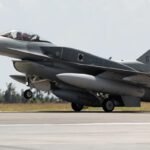
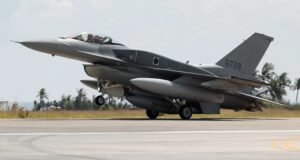
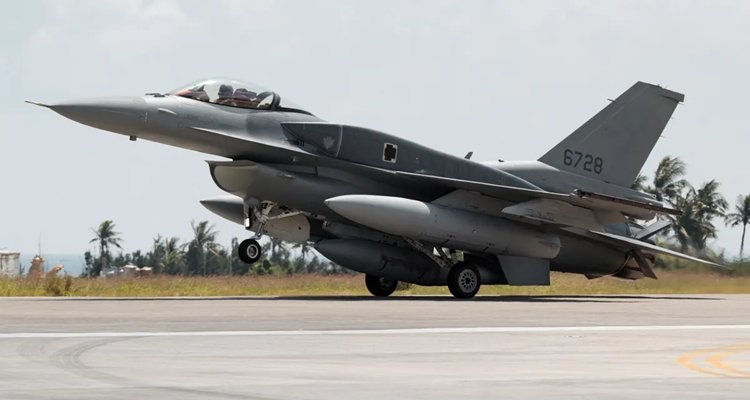
● “And after years of delays, Taiwan received two new US-made F-16s last week.” According to another report by the same author, “The two F-16 Block 70 aircraft are the first batch of a total order of 66 such fighter jets made by Taiwan in 2019 under a NT$247.2 billion program.” More may be on the way by the end of the year.
The author calls these items, two visits by high-level ROC officials and receipt of two long-delayed high-level planes, a “flurry of engagements.” They are not nothing, but Taipei will probably feel better about the level of engagement and its ability to deter its next-door neighbor if and when the $14 billion arms sale is finally allowed to go through.
Also see:
The Associated Press: “Taiwan says US arms sales to island are unchanged, but a $14B package remains on hold” (September 29, 2026)