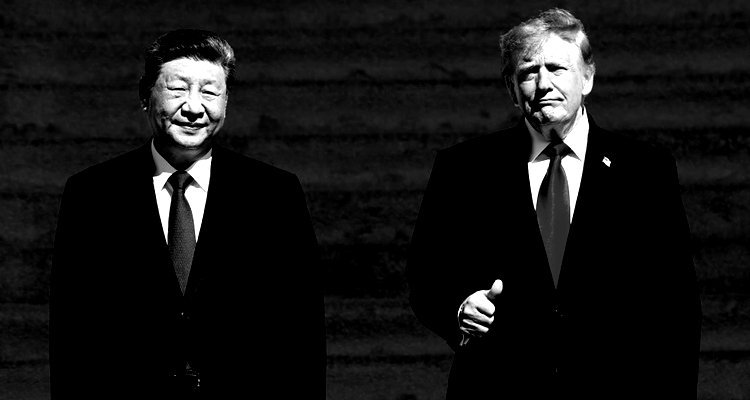
This has already been more or less said in these pages but is worth saying again: “Trump’s greatest gift to Xi: Making China America’s peer” (The Hill, October 1, 2026).
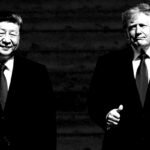
Brahma Chellaney argues that by repeatedly describing his summits with Xi as “G2” or “group of two” get-togethers, “Trump is granting China recognition as America’s principal strategic peer.”
In fact, by hosting Xi last week for a state visit while world leaders gathered at the United Nations, Trump effectively portrayed the U.S.-China relationship as the axis of a bipolar world—a depiction that risks alienating U.S. allies and partners, such as Japan, India, Australia, the Philippines, Vietnam, South Korea and NATO members.
The symbolism surrounding the latest Trump-Xi summit was hard to miss. In an unprecedented departure from American diplomatic practice, Trump personally traveled to Joint Base Andrews, Md., to greet the arriving Xi with a lavish ceremony, which included a red carpet lined by U.S. service members and a military flyover featuring two B-1 bombers.
The following morning, a 479-member military honor guard greeted the Chinese leader during a White House arrival ceremony, capped by a flyover of a B-2 Spirit bomber escorted by four F-22 Raptors. Besides a state dinner, the visit also included a Trump-escorted tour of the National Archives.
These ceremonial flourishes communicated a powerful message: The leaders of the world’s two preeminent powers were meeting as equals.
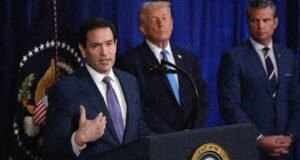
More revealing than the pomp and pageantry of the summits with Xi has been Trump’s own language. He has repeatedly described his meetings with Xi as the G2. Before last October’s summit in Busan, South Korea, he announced on Truth Social, “THE G2 WILL BE CONVENING SHORTLY!” Afterward, he celebrated “My G2 meeting with President Xi.” Secretary of War Pete Hegseth also echoed the summit encounter as a “historic ‘G2 meeting.’ ”
Hegseth went so far as to say that he and Trump agree that “the relationship between the United States and China has never been better.”
The problem suggested by all this, and other indications laid out by Chellaney, is not that President Trump is acceding to the necessity of “engaging a powerful rival to help avert costly miscalculation.” It’s that he is publicly elevating China “into a privileged bilateral condominium,” a “co-leader of the international system.” With everybody else, including U.S. friends in Asia, left to cope with the resultant “strategic nightmare.”
I hope that Chellaney is overstating the problem, but it’s only a hope.