The U.S. won’t be “taking” Greenland or making it the 51st state. But President Trump reported on September 18 on his Truth Social platform that Greenland and Denmark are open to a larger U.S. military presence in Greenland.
I am pleased to announce that the United States of America has entered into an Agreement with The Kingdom of Denmark, and Greenland, that gives the United States permanent control over security, and all other needs, in Greenland, completely addressing ALL of our many U.S. concerns….
At my direction, we worked with representatives of Denmark and Greenland to guarantee that the United States will FOREVER have the complete ability to do what is necessary in Greenland in order to secure and defend the security of Greenland, and the United States of America. Additionally, from now on, no U.S. adversary can EVER have a base in Greenland, have a military presence in Greenland, or make sensitive investments in Greenland, without our express written approval.
A New York Times headline says that “Trump Says” that the “U.S. and Denmark Have Reached Security Deal on Greenland” but that a formal agreement has yet to be signed and that leaders of Greenland and Denmark see it differently from the way the U.S. president sees it.
The full contours of the deal Mr. Trump was describing were not immediately clear, but shortly after his announcement, leaders of Greenland and Denmark issued statements indicating they expected an agreement to be signed next week during the United Nations General Assembly in New York.
The two sides described the agreement in very different terms….
The United States first established a military presence in Greenland during World War II, and in 1951 reached an agreement with Denmark granting it broad freedom to operate military installations on the island.
The 1951 pact allowed for access by the forces of NATO nations. But it did not explicitly restrict the presence of “adversary” nations, as Mr. Trump claimed on Friday the new agreement would do. Under the new deal, countries that are not part of the North Atlantic Treaty Organization would not be permitted to build a base or maintain a military presence in Greenland, according to a State Department official detailing the deal under the condition of anonymity.
The Times also says that the new agreement, if it happens, would be a “diplomatic solution to a U.S.-made threat.” Does this mean that there are no threats in that region of the world that the agreement would help the U.S. to better cope with?
Strategic blind spot
In a Dispatch published in January 2026, the Atlantic Council argued that Greenland is “Europe’s strategic blind spot—and its responsibility.”
The real lesson of Venezuela is that the Trump administration acts where it believes control is feasible, resistance manageable, and alternatives absent. If Europe wants to ensure that no outside power—not the United States, not Russia, not China—can credibly contemplate coercive leverage over Greenland, then it must focus less on protest and more on its own strategic steps.
Although the advice is for Europe, the author, Justina Budginaite-Froehly, then explains why the U.S. has been pushing for the arrangement with Greenland and Denmark that it now seems to have obtained.
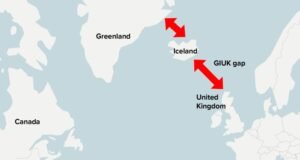
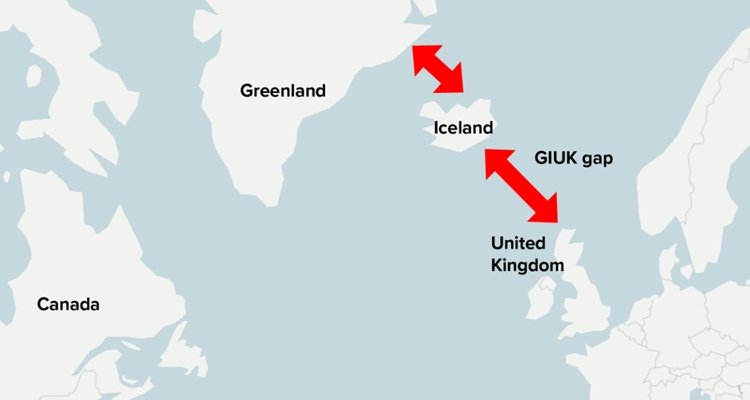
That Greenland is located in the Greenland–Iceland–UK (GIUK) Gap
makes it central to monitoring Russian—and, potentially, soon Chinese—submarines entering the Atlantic. Early-warning and missile-tracking radar systems stationed in Greenland feed directly into US homeland defense. Beyond that, Greenland is emerging as a critical node in satellite command and control, space domain awareness, and satellite tracking. Its geography allows for satellite ground stations and secure communications infrastructure that are increasingly vital as rivals develop counter-space and cyber capabilities.
That logic explains why in June 2025, the Trump administration shifted Greenland from US European Command to Northern Command. It reflects a broader view of the island as part of the emerging great-power contest in the Arctic—a contest in which Russia has already built a formidable Arctic military posture and China is positioning itself for long-term influence as a self-declared “near-Arctic state.” And Moscow and Beijing are increasingly cooperating on the development of the Northern Sea Route, which will allow for a shorter dual-use shipping route between Europe and Asia.
The author doesn’t blame the U.S. for treating Greenland as a strategic asset. She does blame Europe for failing to treat it as a strategic asset—or at least for taking steps to do so that “remain too slow, too fragmented, and too cautious.”
Also see:
StoptheCCP.org “A Fake Neighbor’s Fake Neighborliness in the Arctic” (February 21, 2025)
“Beijing believes polar regions are military high ground that give a strategic advantage to their possessor.”