The anti-Iran sanctions war is on and it is a war of headlines.
A press release is issued, the sanctioned respond, sanctioners get credit for “doing something,” the media get clicks, and the public on both sides gets another reason to vote.
The U.S. has been sanctioning Iran since 1979. Yet Tehran somehow collects enough materiel for a nuclear program while selling its oil and accumulating dollars.
Now, as of late last month, the Department of the Treasury has blackballed “nearly 60 entities, individuals, and identifying vessels as blocked property.”
If you could push a button and make 60 entities disappear, would this be enough to stop a regime rich in resources and with access to major foreign markets like China, Russia, and India?
The sanctions net widened previously to target certain Red Chinese interests.
In May, the U.S. Office of Foreign Assets Control announced new designations “aimed at individuals and entities that helped Iran’s Islamic Revolutionary Guard Corps sell and ship its allotment of Iranian oil to China using a series of front companies.”
That month, Red China “ordered its companies to ignore U.S. sanctions,” which Bloomberg said was “an unprecedented act of defiance.” Such drama. But the same story noted that “Beijing has often railed against unilateral sanctions and pronounced them illegitimate, but it has also quietly allowed its largest companies to comply with them, in order to avoid blowback on its own economy and to preserve access to the U.S. financial system.”
“All necessary measures”
More recently, under Operation Economic Outcast, the CCP has threatened “all necessary measures” to protect its interests.
Headline after headline. Nonstop excitement. But effects?
U.S. Department of State, August 28 (emphasis added): “Today, the United States is imposing sanctions on the manager of the Dubai branch of Iran’s Bank Melli, Reza Mohammad Taeedi. Bank Melli has served as a critical financial hub for Iran’s armed forces, including the Islamic Revolutionary Guard Corps-Qods Force and the Ministry of Defense and Armed Forces Logistics, both U.S.-sanctioned entities. We are also sanctioning a Hong Kong–based company that has helped designated Iranian individuals and entities to access the international financial system. In addition, the U.S. Department of the Treasury’s Financial Crimes Enforcement Network proposed a rule that would revoke Banque Misr UAE’s correspondent banking access to U.S. financial institutions. Treasury assesses that Banque Misr UAE is a critical node for the Iranian regime’s access to U.S. dollars. Today’s action intensifies our pressure campaign against Iran.”
Whatever temporary pressure this applies (think small), it won’t prevent other banks and other middlemen from granting “access to the international financial system.”
That same week, “Companies based in Hong Kong and mainland China were among the entities targeted by the US after Treasury Secretary Scott Bessent announced ‘Operation Economic Outcast’…to further isolate Iran. The US, however, stopped short of listing large [mainland] Chinese financial institutions.”
The U.S.-China Economic and Security Review Commission writes that “China enables Iran to mitigate global sanctions through trade and financial networks, technology transfers, and dual-use trade. Chinese banks, front companies, and intermediary firms facilitate oil transactions, the shadow fleet that transports Iranian oil, access to controlled technologies that support Iran’s missile and drone programs, and money laundering that enables it all.”
It would seem, therefore, that if the U.S. keeps stopping short of listing large communist entities, the sanctions game will keep being one of Whac-A-Mole. Beijing’s “unprecedented defiance” is performative.
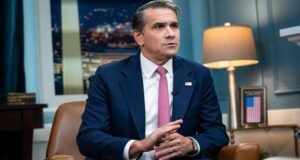
Speaking of performative, we do have U.S. Treasury Secretary Scott Bessent warning Chinese banks “that they will be sanctioned if they ‘facilitate transactions and are part of the ecosystem that turns Iranian oil into money.’ ”
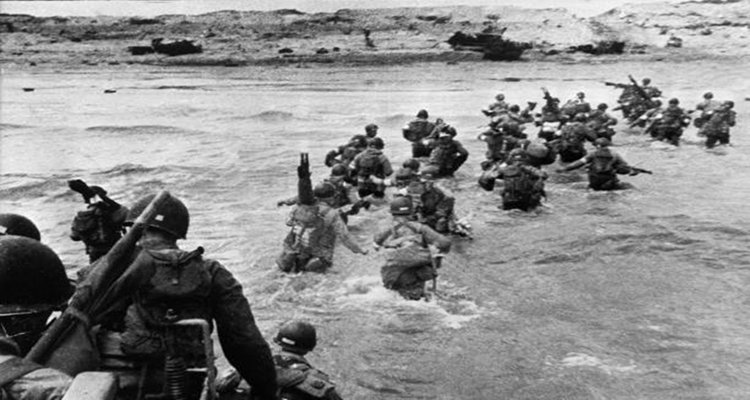
Spirit of D-Day
At its website, Treasury describes Operation Economic Outcast as “an unprecedented, whole-of-government economic campaign against the Islamic Republic of Iran and its enablers.”
Whole-of-government refers to the U.S. side, where all the agencies are preparing their wrist-slapping and stern talking-to measures.
“In the Second World War, D-Day marked the historic beginning of a campaign with our allies to target and drive the enemy from its positions, including those in third countries,” Bessent is there quoted. “Today, in that same spirit, we are launching an economic onslaught against Iran’s financial connections around the globe. Our objective is to sever every economic lifeline that sustains this tyrannical regime until Tehran stands alone.”
This “economic onslaught” is akin to the onslaught of ants attacking crumbs at a picnic.
One opinion piece notes, “So Bessent has chosen this moment, just over two months before China’s expanded rare earth regime returns and weeks before [communist] Chinese leader Xi Jinping is due for a visit in Washington, to inform Beijing that it is either with the US or against it.”
One suspects that Xi will opt for “neither” and that this response will persist until the U.S. applies real, actual pressure. □
James Roth works for a major defense contractor in Virginia.