Maybe Evergrande founder Hui Ka Yan committed fraud. I don’t know that he did simply because the Chinese Communist Party and what passes for its system of justice say so. But it’s possible and even plausible that he committed fraud in the frenzy to prevent his debt-laden firm from going under.
If so, was this fraud, his and that of other builders, the only major factor encouraging massive accumulation of debt in the Chinese economy and producing the vast stretches of empty housing and other proofs of malinvestment?
The implosions that the Chinese economy has suffered are just what one would expect as a consequence of decades of massive economic intervention, including the interventionism characteristic of “socialism with Chinese characteristics.” As elsewhere, the dislocations and disasters are attended by the fraud and corruption that routine governmental distortion of market processes invites.
Fraud, etc.
Hui has been sentenced to life in prison, which “caps the downfall of a property empire whose collapse set off a prolonged crisis in the Chinese economy” (The New York Times, August 20, 2026).
Hui Ka Yan, the company’s founder and former chairman, was also ordered to forfeit all of his personal assets, marking the final chapter in a remarkable fall from the upper echelons of Chinese society….
The Shenzhen Intermediate People’s Court found that between 2016 and 2021, Mr. Hui and Evergrande engaged in large-scale financial fraud and committed crimes including misuse of funds, fund-raising fraud and illegally taking public deposits, according to an announcement the court posted on social media. Mr. Hui pleaded guilty to the charges in April….
The court stripped him of his political rights for life and fined Evergrande Group and its subsidiary, Evergrande Real Estate Group, a combined $2.35 billion. [The people of China have “political rights”?]
Evergrande was once China’s fastest-growing property developer. But its collapse in 2021 under more than $300 billion of debt pushed China’s financial system to the edge and exposed a vulnerability in the Chinese economy: its extraordinary dependency on real estate to drive growth….
The court found that Mr. Hui bore responsibility for Evergrande Group’s operations and should be punished severely because his actions and those of the company “seriously disrupted the socialist market economic order,” according to its social media post.
In the bust phase of boom-and-bust, the collapse of somebody or other is often what starts the dominoes falling. The Times sort of acknowledges that the Chinese government, including local governments, had something to do with erecting the house of cards; but then seems to downplay this insight.
By 2020, Beijing was growing worried that its property boom—the biggest the world has ever seen—was threatening the financial system. Developers like Evergrande had borrowed extensively from local governments, banks and other creditors to finance breakneck expansion. To cool the market, officials imposed restrictions on how much developers could borrow. For heavily indebted companies like Evergrande, the measures cut off the steady flow of cash they needed to keep building.
When Evergrande collapsed in 2021, much of the blame fell on Beijing and its abrupt crackdown. Home buyers protested in the streets in cities across China. But the company had been borrowing beyond its means for years and had engaged in questionable accounting.
So…not only were PRC national and local governments lending and encouraging others to lend beyond their means, but companies like Evergrande were in like wise borrowing beyond their means? Perhaps the two go together, could that be it?
Ghost saving
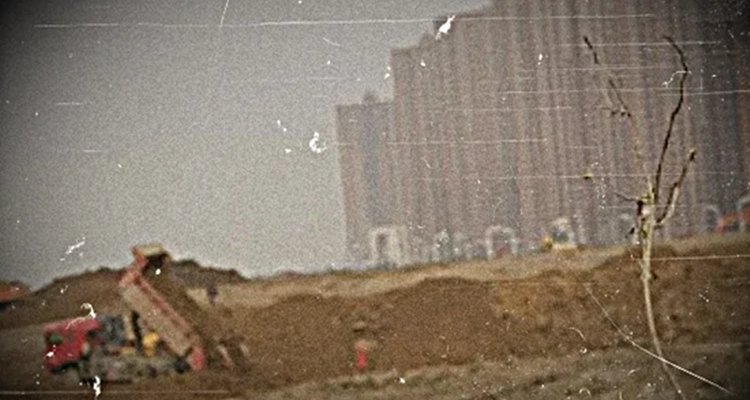
In a 2016 piece for FEE that we reprinted here, economist Sandy Ikeda talked about the ghost towns in China.
“Sometimes, prosperity is an illusion,” Ikeda wrote. “The massive building boom in the People’s Republic of China is creating outer signs of affluence, but there isn’t enough demand to put residents in the new homes….
“The millions of people employed in China’s construction boom are being paid with money that the government has created out of thin air. Yes, they will spend their new incomes and add to current aggregate demand. But if the construction has not been financed through real saving, then down the road, the cost of those resources will inevitably overwhelm people’s willingness to pay for them. If you build it, they may not come. So unless China can somehow find hundreds of millions of willing and able buyers, we may see an economic collapse beside which the Great Recession would pale in comparison.”
Also see:
StoptheCCP.org: “China’s ‘Planned Capitalism’ Kills Wealth”