Economist Jeff Ferry argues that current tariff rates won’t help the U.S. to reduce economic dependence on the People’s Republic of China. U.S. tariffs on China that are only a little steeper than those on other countries provide no incentive to move production facilities out of China. In fact, companies that did leave China under the influence of much higher tariff rates now have an incentive to return (Washington Examiner, August 17, 2026).
Double or triple
Ferry reports that in the spring of 2025, after the new Trump administration unveiled its new tariffs, the total effective rate on China (taking into account all exclusions and exemptions) was 45.6%, “in many cases double or triple the tariffs on other countries…. American corporations got the message. The hundreds of corporations that manufacture in or source products and parts in China began looking hard for alternatives. Many of those companies shifted production to Southeast Asia. Some moved parts of their supply chain to Mexico.”
Now, though, the effective tariff rate on China is “almost the same as the 20.6% rate on Cambodia.” And the modest differential provides no incentive to shift production away from China.
The problem
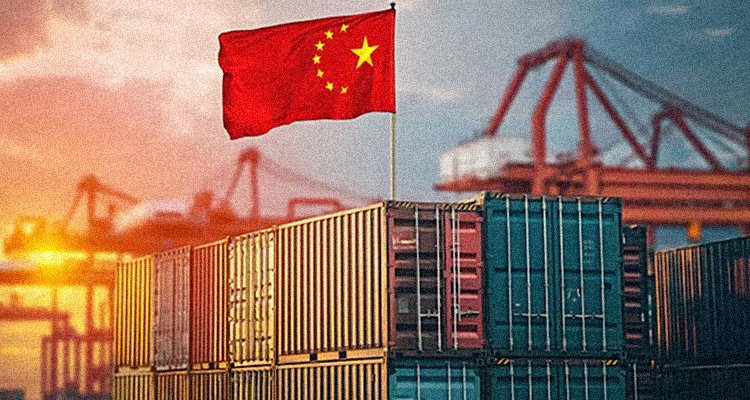
is that China has multiple economic advantages that make it a cheap location to produce goods. Government-funded industrial subsidies are the most obvious Chinese advantage. [But China also] has some of the largest, most automated, and most sophisticated ports in the world. The largest container ships call at Shanghai and other Chinese ports, making transportation in and out of China frequent and cost-effective. China has good quality roads and trains, making it easy to move goods to the ports. China also has an undervalued exchange rate for the Chinese yuan, carefully managed by the Chinese government to keep China’s costs globally competitive.
The net result is that for other nations to be competitive with China, the tariff differential has to be more substantial, and certainly in double digits….
Last year, when tariffs on Chinese goods were well above 30%, [electronics maker Alliance Consumer Group] was building the business case for moving more production out of China, and some even to North America. But now, with tariffs on flashlights from China down to just 16.3%, those plans are on hold….
Ferry doesn’t mention one of the big reasons for the Trump administration’s retreat on tariffs.
Critical minerals
Or rather, he does mention it, but only when itemizing the PRC’s trade advantages over other countries: “In some sectors, such as rare earths or solar panels, China has a near-total global monopoly.”
Last spring, immediately after the Trump administration imposed its sky-high tariffs on China, the Chinese government restricted exports of rare earths and critical minerals. In the months since, the Trump administration has been working to find or expand foreign and domestic sources of these critical resources. Meanwhile, tariff rates on imports from China have gone way down.
Ferry says that “U.S. Trade Representative Jamieson Greer should ensure that tariff rates maintain a clear and durable differential favoring production outside China, taking into account all the ploys and devices China used to make its goods excessively competitive.” Can Greer ensure this? Although he enjoys substantial discretion in implementing tariff policy, he’s not the one who sets it.
Also see:
StoptheCCP.org: “Beijing’s Fake Trade Surplus; Or, How to Lie With Statistics”
StoptheCCP.org: “The Mad, Mad, Mad, Mad World of Rare Earths”
StoptheCCP.org: “Cutting Off Knowledge of China and Trade Makes Arguments Poorer”