In July 2025, James Roth was among those who noticed that a June agreement by Beijing to expedite exports of rare earths to the U.S. was not really resulting in significant export expediting. It looked like full stoppage was being succeeded by slow crawl. Roth suggested that if auto suppliers can develop motors with little or no reliance on rare earths, maybe our military could also come up with alternatives.
Be that as it may, and despite new assurances that “we’ll get right on that,” mainland China is still reluctant to release the rare earths and critical minerals, the mining and especially processing of which its firms have come to dominate over the last few decades (Politico, June 1, 2026).
Remember when China said in November that it was suspending restrictions on its rare earth exports for one year? Those watching the U.S. defense supply chain say it simply hasn’t happened.
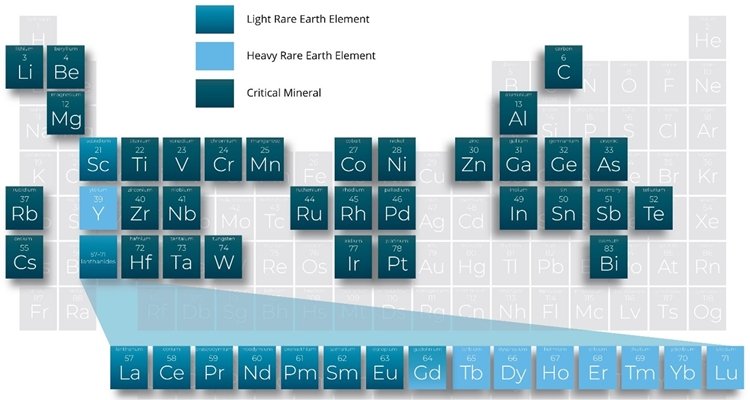
“It hasn’t been fixed,” Kevin Michaels, managing director of Michigan-based AeroDynamic Advisory, which works with defense aerospace contractors, told NatSec Daily. He pointed in particular to yttrium, a key component in everything from jet engines and missile casings to laser targeting systems.
“Yttrium is used in almost every jet engine, and manufacturers have been finding caches of suppliers here and there and are doing workarounds, but the yttrium has not started flowing from China yet to U.S. companies.”
Chinese export data also shows that rare earth shipments to U.S. companies haven’t rebounded.
U.S. officials say that the glass is half full. “We’ve certainly seen the rare earths come back up to better levels. Sometimes it’s slow,” says U.S. Trade Representative Jamieson Greer. “There are times when we have to go and make our point.” But he gives Beijing a “passing grade.”
“The sticking point isn’t so much bureaucracy as the Chinese government specifically deciding to flex in key areas,” counters Bradley Martin, who specializes in defense industry supply chains for the RAND Corporation. “In other words, where there’s slow-rolling, it’s a signal, not a glitch.”
The slow-doling should motivate the U.S. government and U.S. firms to keep coming up with domestic and foreign alternatives—new mining in the U.S. to the extent punishing enviro regs permit and more imports from countries that are not the People’s Republic of China. And perhaps, also, to keep coming up with ways of making things that don’t rely so much on rare earths and critical minerals.