“I think the last thing we need right now is a war that’s 9,500 miles away.”
Just place a period after the word “war” in President Trump’s comments to reporters after the recent summit with Chinese ruler Xi Jinping and discussion about China’s democratic neighbor, Taiwan, the Republic of China.
Which raises the question: How best to avoid war over Taiwan?
U.S. military policy requires being capable in this very theater. The Taiwan Strait (7,900 miles from Washington, not 9,500) is closer to the U.S. than is the Philippines, with whom we have a military defense treaty, and not much farther than Japan and South Korea, also treaty-entitled to our defense. One Japanese island is less than 70 miles from Taiwan.
Communist China, the People’s Republic of China, claims Taiwan as a province, demanding “reunification”—by force as soon as they can get away with it. Yet the PRC has never governed one inch of Taiwan.
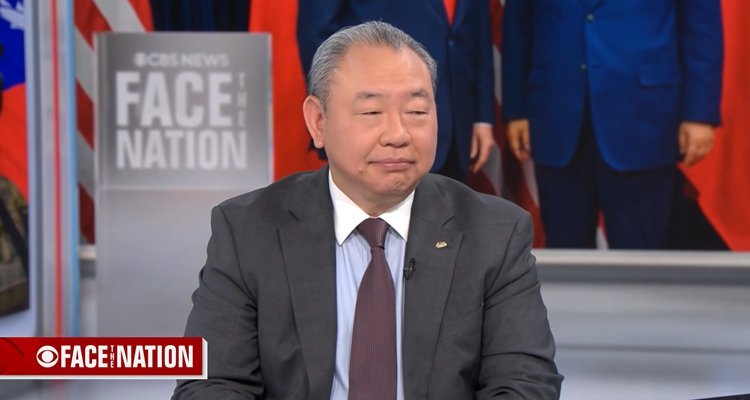
As Ambassador Alexander Yui (shown above), Taiwan’s representative to the U.S., explained on “Face the Nation”: “We’re not the ones creating all this trouble.”
The People’s Liberation Army Navy—now the world’s largest navy—has sunk Vietnamese boats and regularly harasses Filipino ships. Although Xi had promised President Obama that China would not militarize islands in the South China Sea, the PRC now boasts 10,000 Chinese soldiers on 27 illegal military outposts.
In the wake of the summit, at which Xi sought to talk Trump out of completing a $14 billion dollar arms sale to Taiwan, our president must determine whether placating the Chinese will really make them behave peacefully.
Or will strength, specifically military strength, better serve the cause of peace?
Taiwan’s and ours.
This is Common Sense. I’m Paul Jacob.
This article originally appeared May 18, 2025 at ThisIsCommonSense.org