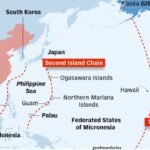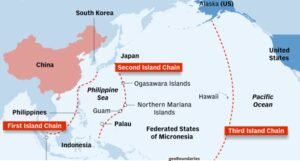
A female Japanese-American correspondent, Yoko Kubota, is “Leaving China After 8 Years. Suspicion of Outsiders Is Rising.” An experience with a hortatory cab driver illustrates (The Wall Street Journal, May 5, 2026).
I asked the driver what [a large digitally displayed] map was showing. Realizing I was a foreigner, he said he couldn’t tell me. “It’s a national secret,” he said.
The driver went on to lecture me about how Japan—the country of my birth—shouldn’t interfere with Beijing’s ambitions in Taiwan, the democratically self-ruled island that the government in Beijing views as part of China.
The unexpected turn in the conversation is emblematic of how much has changed in the eight years since I moved to China. Over that time, tensions between China and the U.S. have grown—driving the two countries toward a new Cold War. Ties between China and Japan are at their worst in many years, too….
Beijing’s [propaganda] campaigns have likely contributed to worsening views that the Chinese public holds toward other countries. A poll conducted by China’s Tsinghua University in 2024 found that 81% of Chinese respondents held unfavorable opinions of the U.S. government. In other surveys, respondents have consistently given Japan the worst favorability scores—and Russia the highest….
In China, the drumbeat of nationalistic sentiment has intensified with time. Negative push alerts about Japan from news outlets and social media filled my smartphone screen as relations became more tense. In a museum playroom, a preschool aged child lectured my children and me about how terrible Japan was.
Kubota also mentions the Chinese Communist Party’s targeting of foreign companies under expanded anti-espionage rules, which has led to raids of some firms and the sentencing of “a leading figure in Japan’s business community in Beijing,” a drugmaker, for espionage. Videos and signs remind subway riders and library visitors to protect state secrets from foreigners—state secrets like the true meaning of a taxicab’s publicly visible map.
I do wonder whether life for foreigners in China has in eight years changed as much as Kubota suggests, even granting the recent worsening of relations with Japan and the CCP’s constant screw-turning. Is it possible that the same dreary features of life under a totalitarian dictatorship that were present eight years ago have simply gotten harder to put with as time goes on?