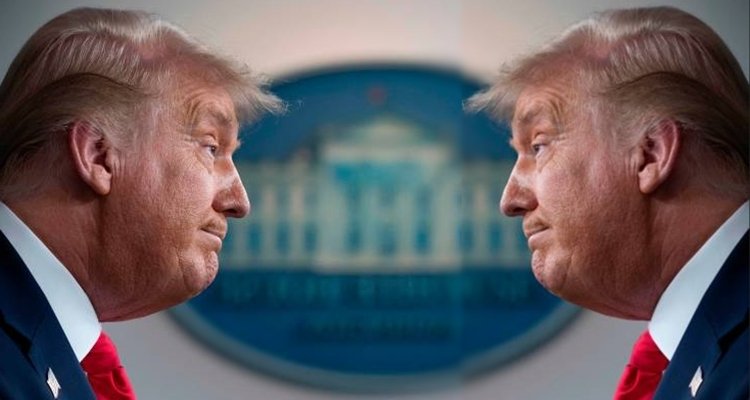
Oren Cass offers a discouraging litany of President Trump’s CCP-empowering actions during his second term. They come after “anti-China sentiment” helped him win that second term and after he packed his second administration “with prominent China hawks” (The New York Times, May 8, 2026).
Cass is reacting to news of a recent meeting with Treasury Secretary Scott Bessent in which Chinese negotiators “played the investment card,” offering to “ramp up Chinese investment” in the United States on two conditions.
Condition one: “the US loosen its scrutiny of investments originating from China.” Condition two: “any Chinese factories built in the US get a break on tariffs for any inputs they imported.”
Not a good idea, says Congressman John Moolenaar, chairman of the Select Committee on the Chinese Communist Party: “China has weaponized its own market and companies against us for decades, and we cannot allow those companies to have more access to our economy.”
The Huang agenda
The Bloomberg report adds that the opponents of empowering the People’s Republic of China often called China hawks are increasingly worried that the president “is going soft on China as he prepares to meet Xi in the coming weeks.” They fear that Trump’s China policy “is increasingly shaped by both formal and informal advisers from a tech industry that wants to do business with China. And that one man in particular, Nvidia’s Jensen Huang, has an outsize influence.”
Huang has “derided China hawks” and promoted a major “win-win” U.S.-China trade deal. “And it’s hard not to see Trump finding that seductive.”
Cass:
As mind-boggling as [the prospect of Trump’s cutting a deal to permit China to invest a trillion dollars in the U.S.] might seem, however, it doesn’t come out of nowhere. Other than the steep tariffs he imposed (and then lowered), Mr. Trump’s approach to China has frequently put him at odds with his own administration. The White House’s high-level National Security Strategy seeks merely to “rebalance America’s economic relationship with China.” When the Pentagon’s draft of the more detailed National Defense Strategy described China as the top security threat, the president sent the authors back to the drawing board.
After Mr. Trump reached a “trade truce” with Mr. Xi at their October summit in South Korea, he directed Stephen Miller, a White House deputy chief of staff, to limit any agency actions that might antagonize China. He made the case for granting 600,000 Chinese student visas. And he pushed to allow China access to advanced A.I. chips—even though his administration’s own A.I. Action Plan states: “Denying our foreign adversaries access to this resource” is “a matter of both geostrategic competition and national security.”…
A trillion-dollar infusion of capital would exceed the total direct investment in the United States made by any other country since the Declaration of Independence. Even a fraction of that amount would blow apart what remains of our economic defenses, weakening national security and supply-chain resilience, handing the Chinese Communist Party a powerful tool with which to subvert our market, undermining the basic logic of the president’s own trade agenda and kneecapping our efforts at rebuilding domestic industry….
In recent years, prominent Chinese firms and Chinese nationals have been accused in countless incidents, such as stealing software source code from an American supplier, removing equipment from an American lab and even digging up proprietary seeds from a test field in Iowa. Now they’d be doing it with a hall pass from the American government.
The problem, Cass observes, is not foreign investment as such.
There’s a big difference between investment by foreign companies that are part of “market democracies” and companies that must conform to the will of a totalitarian dictatorship whose ambitions officially include “ ‘gain[ing] a grip on foreign government leaders and their business elites by encouraging our companies to invest in their local economies.’ If Mr. Trump grants Mr. Xi that grip, he will lose his own hold on the era’s key strategic conflict, entranced by China’s siren song as foolishly as the ‘globalists’ he made his name railing against, this time with consequences more irreversible.”
Also see:
StoptheCCP.org: “How Realistic Is U.S. Defense Strategy Re the PRC?”
“These sound almost like talking points from the Chinese Communist Party describing its own policies. Are we meeting Beijing more than halfway?”
StoptheCCP.org: “The Strategy of Our China Strategy”
Domino Theory: “Jensen Huang Crosses a Line: Nvidia CEO calls China hawks ‘unpatriotic’ ” (October 5, 2025)
“The Chinese government has arbitrarily detained more than a million Uyghurs in Xinjiang. It has used its growing navy to militarize the South China Sea and menace Taiwan. It has worked for years to export its model of digital authoritarianism to the rest of the developing world….
“ ‘Apparently, if you’re a China hawk, you get to wear that label with pride, it’s almost like a badge of honor,’ Huang said on the Bg2 podcast last week. ‘It’s a badge of shame. There’s no question it’s a badge of shame.’
“Huang’s comments were tantamount to carrying water for the Chinese Communist Party. Other U.S. billionaires like Tim Cook and Jamie Dimon might let their own business interests influence how they act toward China, but they’ve always stopped short of publicly auditioning for the Global Times editorial page.”