The Trump administration has threatened to impose new tariffs on countries that import goods made with forced labor, despite the permeability of the U.S. government’s own bans on such goods.
This March it “began a new trade investigation…that targets 59 countries and the European Union with potential tariffs unless they pass laws that ban imports of goods made with forced labor.” Reviews of the initiative are mixed (The New York Times, May 1, 2026).
In two days of hearings about the investigation in Washington this week, human rights officials and company executives generally praised the move, saying it was likely to bring about a major expansion of global legislation to combat forced labor. But they also expressed a variety of cautionary messages, saying the administration must ensure that other countries actually enforce any new laws and that the efforts don’t backfire.
Some who testified argued that the additional tariffs the Trump administration has proposed could tax the resources that foreign governments need to police labor violations, or hurt vulnerable foreign workers rather than help them by cutting off trade with the United States.
Others argued that forced labor occurs in fields, factories and fishing vessels, and that import bans could risk missing where labor violations were actually occurring….
Others urged the United States to do a better job of enforcing its own rules against imports of goods made with forced labor, including a 2021 law that bans most products from Xinjiang, a far-western region of China. The 2021 law established a blacklist of companies whose supply chains have been found to involve forced labor, but no new entities have been added to that list since the Biden administration….
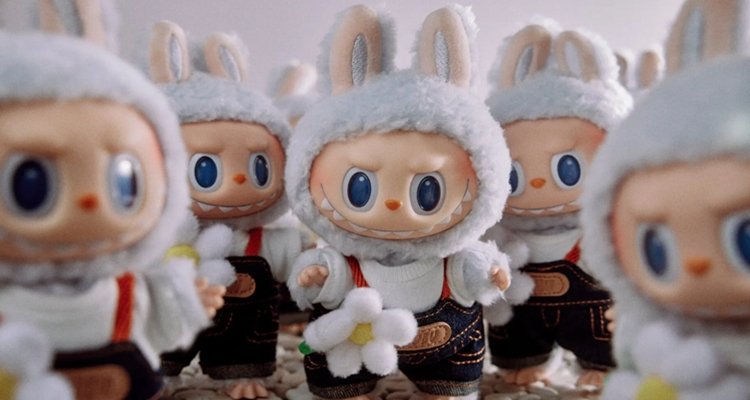
Some experts say imports of banned goods remain widespread. An investigation by The New York Times last month found that some Labubus—a viral doll made by a Chinese company—contained cotton from Xinjiang.
The use of slave labor in the Xinjiang or East Turkestan region of China has become notorious. But it is not exclusive to that region of China.
By 2024, it was being reported that the Chinese Communist Party was stepping up transfers of slave laborers to different parts of the country to make it harder to comply with sanctions on slave-produced goods. A year earlier, The New Yorker had reported that “Between 2014 and 2019…Chinese authorities annually relocated more than ten per cent of Xinjiang’s population—or over two and a half million people—through labor transfers; some twenty-five thousand people a year were sent out of the region.”
Also see:
The New York Times: “Some Labubu Dolls Contain Cotton Banned by Forced Labor Law, Testing Shows”
“A spokeswoman for [the Chinese company] Pop Mart said that it would conduct an investigation into the presence of Xinjiang cotton in its supply chains, and that the company held itself and its suppliers to ‘the highest standards.’ Pop Mart said that only a small percentage of its dolls used cotton for apparel, and that it was working on a plan to use alternative materials, rather than cotton, in its products for the U.S. market.”
The New Yorker: “The Uyghurs Forced to Process the World’s Fish”
“One Uyghur man was released from a reëducation camp only to be transferred to a garment factory. ‘We didn’t have a choice but to go there,’ he told Amnesty International, according to its 2021 report. A woman from Xinjiang named Gulzira Auelkhan was forced to work in a glove factory. She was punished for crying or spending a couple of extra minutes in the restroom by being placed in the ‘tiger chair,’ which kept her arms and legs pinned down—a form of torture. ‘I spent six to eight hours in the tiger chair the first time because I didn’t follow the rules,’ she said. ‘The police claimed I had mental issues and wasn’t in the right mind-set.’ ”
StoptheCCP.org: “Forced Labor and How to Fight It”
International Support for Uyghurs: “Say East Turkistan, Not ‘Xinjiang’ ”