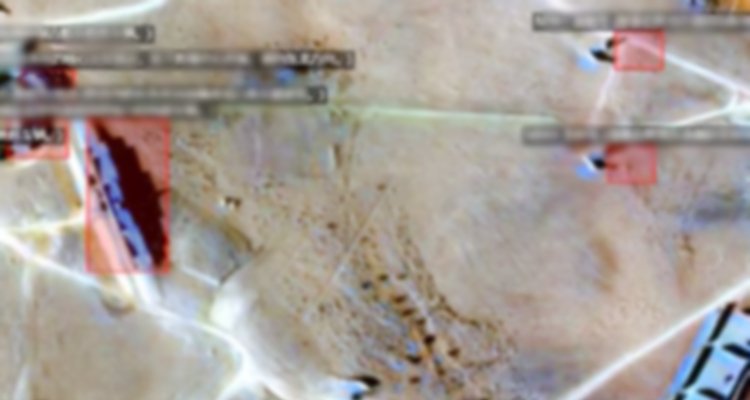
China and artificial intelligence have been helping the Iranian military learn from “detailed satellite images with tagging data of multiple US military sites in the lead-up to, and during, the Iran war.” A Chinese software company called MizarVision, “which the Chinese government has a small ownership stake in,” has been publishing the images (ABC News [Australia], April 5, 2026).
The ABC has been briefed on the intelligence by a source inside US defence, who says the images are endangering lives….
The imagery showcases an AI tool that identifies and tags military forces across vast areas, a capability that once required the resources of a national intelligence agency.
The Pentagon believes the Iranian Revolutionary Guard Corps is using the AI-enhanced satellite imagery to help target sites, according to a source within the US Defense Intelligence Agency (DIA), the intelligence branch of the American military.
“This is an example of a Chinese company, we believe maliciously, providing intelligence on an open-source platform that informs missile and unmanned aerial vehicle [drone] targeting protocols,” the DIA source told ABC News….
An Australian-based US government source has separately confirmed the classified assessment.
The company has been using the software to identify different military capabilities, including specific types of planes, location of navy ships, deployment of air defence systems, and radar.
MizarVision is mum in response to the ABC’s queries, but the Chinese foreign ministry is eager to stress that all is well. After all, Chinese companies must always obey “laws and regulations,” and “the satellite imagery released by the relevant companies was obtained from open-source channels and is a routine market practice.” The same CCP rep chastises “certain entities” who have been “eager to maliciously link the conflict to China….”
Why would anyone think there’s a link? Well, in addition to helping Iran identify U.S. targets in accordance with “laws and regulations” and “routine market practice,” which seems like a link, The Telegraph reports on how “Sanctioned vessels carrying enough chemicals to produce hundreds of projectiles travel from Chinese to Iranian ports.”
Beijing simultaneously maintains implicit backing for Iran’s like-minded authoritarian regime and plausible deniability. This is similar to China’s approach to supporting Russia’s wartime production, including supplying machine tools to make the nuclear-capable Oreshnik missile, as previous investigations by The Telegraph have found.
But it is a delicate balancing act for China, given that Iran is attacking the wider Middle East, particularly in the Gulf, where Beijing has invested heavily in infrastructure projects.”
The United States lacks “an effective mechanism to limit the flow of these raw materials, whether they are for weapons systems, energy, drug production,” Isaac Kardon, author of China’s Law of the Sea, told The Telegraph. “That’s a real strategic problem, and China is a little [more] brazen than even I might have expected.”
Maybe the deniability isn’t so plausible.