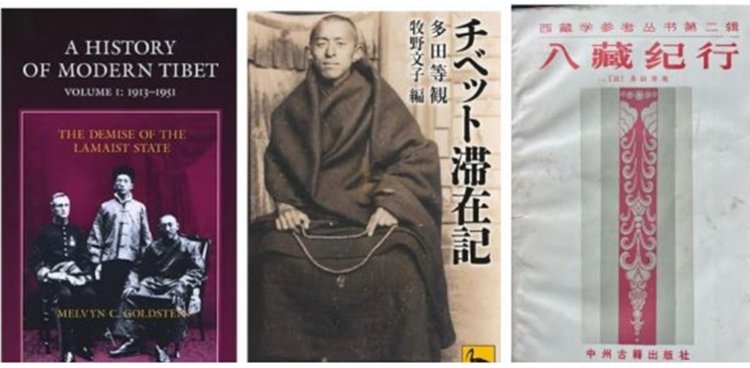
Seventy-five years after Mao and the People’s Republic of China invaded Tibet, the PRC is still struggling to complete the conquest, which in these latter days means further efforts to wipe out Tibetan culture, memory, and spirit.
The means of assimilation include surveillance; forcible separation of children from parents in order to indoctrinate the children with CCP-approved language and precepts; and imprisonment, torture, and murder. Measures include changing the name of Tibet, prohibiting Tibetans from possessing images of the Dalai Lama and, now, banning the sale of books on Tibet by “China’s largest online and offline bookstore, Kongfuzi Jiushu Wang” (The Tibet Post, January 14, 2026).
At a time when the Chinese government is attempting to erase the Tibetan name [by changing it from “Tibet” to “Xizang”], identity, history, language, culture and religion in Tibet, the Chinese government has also asked China’s largest online and offline bookstore, Kongfuzi Jiushu Wang, to remove all books related to Tibet, particularly those dealing with Tibetan history and the Chinese occupation of Tibet and its history, as well as documentaries demonstrating that Tibet was an independent country before the illegal invasion by the Chinese army.
Among the works removed from the bookstore’s offerings are A History of Modern Tibet, 1913-1951: The Demise of the Lamaist State by Melvyn Goldstein, Documentary Account of the Suppression of the Tibetan Rebellion by Ji Xu Quan, and Account of a Journey to Tibet by Tada Tōkan.
It’s another blow. At the same time, the very scale and persistence of the party-state’s efforts to end the distinctive culture of Tibet—and failure so far to do so—say something about the resilience of the Tibetans and of the human spirit.
Also see:
@chuanhu5533: Tibetan dance