A recent article in the National Security Journal proposes that China could “quickly” conquer forces on Taiwan with a “fait accompli,” an opinion it ascribes to “the Pentagon.” Author Kris Osborn says (December 6, 2025):
“Fait Accompli” is the term often used by the Pentagon’s annual China report to describe a potential People’s Liberation Army strategy to annex the island of Taiwan so quickly and effectively that it would simply become too costly in lives, dollars, and consequences to “extract” an embedded PRC force.
A search of the Department of Defense 2024 China report does not yield a single instance of the term “fait accompli.” The 2025 edition is not out yet, but the phrase is also absent from the newly issued U.S. national strategy document. This is not nitpicking: with or without the term, the underlying concept itself is missing from both publications.
Four mistakes
Let’s look at Osborn’s Key Points and Summary:
The Pentagon worries Beijing could try a “fait accompli” against Taiwan: seize the island so fast that prying the PLA out would require a massive, bloody counter-invasion.
A slow, visible amphibious buildup is unlikely to succeed against forward-deployed U.S. carriers, subs, and F-35s.
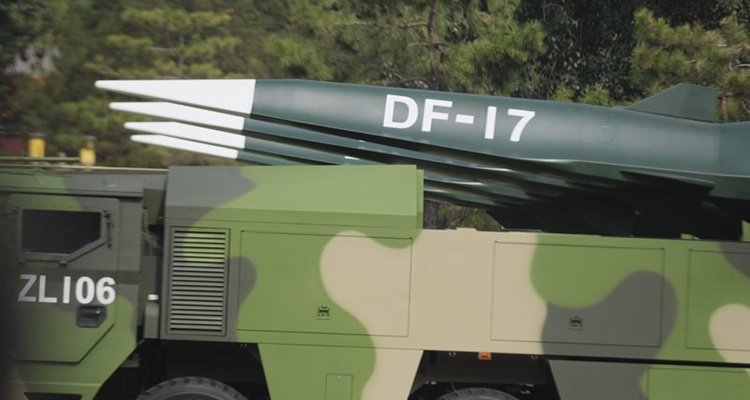
The real danger is a rapid campaign built around hypersonic “access denial”—PLA missiles and bombers creating a kill bubble that keeps U.S. and allied forces at arm’s length while China locks in control.
Yet Washington’s own hypersonic weapons and defenses are coming online fast, narrowing Beijing’s window to pull off such a shock move.
First, none of the Pentagon’s scenarios envision Red China seizing the island fast. The closest match is the possibility that military drills around the island could quickly switch over to an attack. But this would open the door to a longer struggle. The Pentagon’s 2024 China report states (page 139):
PRC writings describe different operational concepts for an amphibious invasion of Taiwan. The most prominent of these…envisions a complex operation relying on coordinated, interlocking campaigns for EW [electronic warfare], logistics, air, and naval support. The objectives are to break through or circumvent Taiwan’s shore defenses, establish a beachhead, build up combat power along Taiwan’s western coastline, and seize key targets or the entire island.
This would be a grind, not a bold stroke that brings quick victory.
Second, the idea that a “slow, visible amphibious [Red] buildup is unlikely to succeed against forward-deployed U.S. carriers, subs, and F-35s” is puzzling. The buildup would take place on the mainland and in local waters before the war started. “Carriers, subs, and F-35s” come into the picture after a war starts.
Third, there is a misunderstanding here about “the real danger” being “a rapid campaign built around hypersonic ‘access denial’—PLA missiles and bombers creating a kill bubble that keeps U.S. and allied forces at arm’s length while China locks in control.”
The kill bubble, if established, would not facilitate a “rapid campaign.” The missiles might smash military installations, equipment and men; they might keep the U.S. at bay; but they would not, by themselves, conquer a mountainous island defended by one million reservists in its hills and major cities.
There is the additional difficulty of the communist military getting out of its own way. As the 2024 report says:
A large-scale amphibious invasion would be one of the most complicated and difficult military operations for the PLA, requiring air and maritime superiority, the rapid buildup and sustainment of supplies onshore, and uninterrupted support…. These factors, combined with inevitable force attrition, the complexity of urban warfare, and potential for determined resistance, make an amphibious invasion of Taiwan a significant political and military risk for Xi and the CCP, even assuming a successful landing and breakout past Taiwan beachhead defenses.
Slower than hypersonic
The author’s fourth point seems intended to offer some hope for a defense against sudden strikes: “Yet Washington’s own hypersonic weapons and defenses are coming online fast, narrowing Beijing’s window to pull off such a shock move.”
This statement is untrue. First of all, hypersonics are offensive weapons. They do not defend against each other. And to develop anti-hypersonic capabilities, you would need to have a hypersonics stockpile of your own to test against. We certainly don’t have that.
As we wrote here in 2024, in this area the United States is lagging behind China by at least ten years. The gap is not one of degrees or separation by generations of tech: it’s about the U.S. having nothing at all and China having missiles that are several generations past prototype.
How sad is this?
● The Army/Navy CPS (hypersonics) program is in Phase 1, “rapid prototyping.” Procurement of missiles may start in Phase 3, optimistically projected to occur after fiscal year 2027.
● Meanwhile, delays in finalizing the design for the Air Force’s Hypersonic Attack Cruise Missile “have put the program behind schedule.” The Air Force is still finalizing a design.
A July 2025 article at the National Defense website puts the problem in perspective:
The United States has actively pursued hypersonic weapons—maneuvering systems that can travel at speeds of Mach 5 and greater—since the early 2000s. Two decades later, the scene is a mixture of schedule delays and cancelled programs coupled with testing successes and progress that has ultimately brought the United States to the year it will likely field its first weapon.
Correction: 2025 (or 2026) is not the year in which the U.S. will field its first weapon. Perhaps it can field a working prototype for testing. Specifications are being revised and testing continues.
One disturbing aspect of U.S. reporting on hypersonic missiles is the persistent appearance of the speed “Mach 5.” It seems that the procurement folks have set the bar this low to accommodate a U.S.-flavored definition of “hypersonic.” It’s a target easier for contractors to hit than, say, Beijing’s Mach 20, Iran’s Mach 15, North Korea’s Mach 12, Russia’s Mach 11, or even Taipei’s Mach 6.
Meanwhile, the communists have moved on to new, exciting developments. This month:
China has unveiled a new “dirt cheap” hypersonic missile with a range of 1,300 kilometres, which an expert has warned could upend the global defence market due to its low price. The missile, which is reportedly priced at 700,000 yuan [about $99,000], costs a fraction of the price of US [non-hypersonic] missiles, which can range from $4 million to $15 million.
If the U.S. wants an anti-hypersonic capability, it first needs hypersonic tech. Buy some from Taipei, for crying out loud.
But no first strike, however swift or savage, will clear the way for a “fait accompli” victory. □
James Roth works for a major defense contractor in Virginia.
Also see:
StoptheCCP.org: “Laggards Gonna Lag; or, American Hypo-Hypersonic”
StoptheCCP.org: “Three Ways Red China Might Not Grab the Republic of China”