This is the view of the National Post’s Terry Glavin, whose commentary offers a survey of recent CCP activity, including within Canada (November 29, 2025).
He argues that various CCP doings in recent weeks “stand out as harbingers of the emerging new world order of Xi Jinping’s ‘community of the common destiny of humankind,’ as it expands ever outward from its military-industrial epicentre in Beijing.”
The last few weeks have been nothing special in this respect—the harbingers have been piling up for quite a while—but the examples are certainly representative. They are dismaying but not surprising.
● “In Kazakhstan, 16 members of the Atajurt Kazakh Human Rights organization along with several first-hand observers of Beijing’s concentration camps in Xinjiang were picked up off the street the other day in Almaty.”
A November 24, 2025 report by the Association for the Defense of Human Rights and Religious Freedom on the effect of CCP pressure in Kazakhstan notes that Atajurt “has painstakingly collected and recorded more than 10,000 video testimonies from survivors and relatives of detainees in Xinjiang. It was the first organization to bring to light the Chinese Communist Party’s crimes against humanity in the region. For years, its activists have been harassed, fined, and detained. Now, the arrests have escalated.”
● In Shanghai, an Indian national was detained for 18 hours because according to her passport, she had been born in Arunachal Pradesh, “which Beijing now insists is Chinese territory.” Thus making her passport invalid (or so officials at the Shanghai airport pretended for 18 hours).
● In Britain, MI5 warned legislators that China’s spies, posing as corporate recruiters, have been targeting them and others in a vast influence operation. “Canadians should be intimately familiar with clandestine foreign-influence operations of this kind, which Ottawa solemnly pledged to address with a foreign-agents registry that is either inexplicably dead or is mysteriously stalled.”
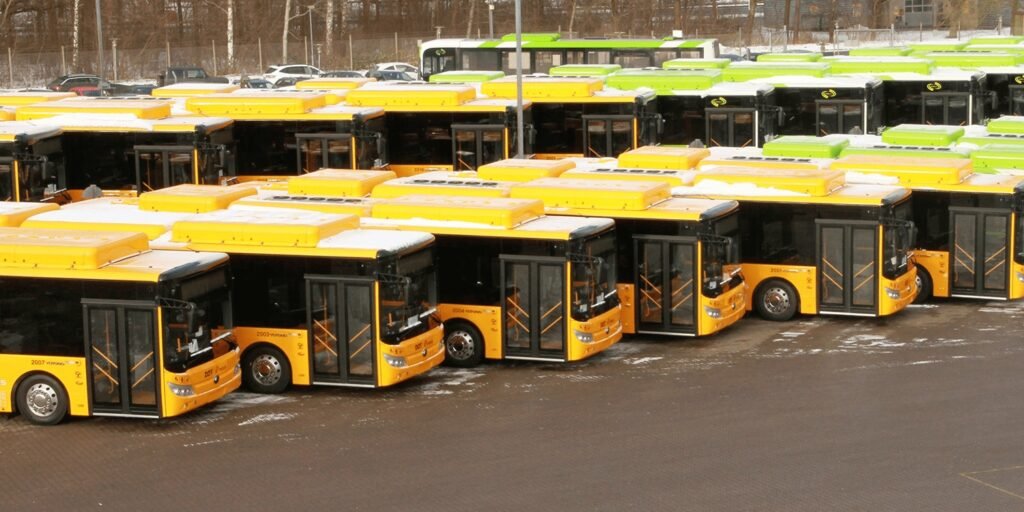
● Denmark and Norway have learned that their Chinese-made buses are installed with kill-switch software that could enable them to be “shut down remotely, from China.”
● The AidData research institute has learned that Europeans are not immune to something like the CCP’s Belt and Road debt traps. The institute discovered “a Chinese ‘shadow portfolio’ operating in the NATO countries that holds the debt on critical infrastructure projects from airports to electricity transmission lines. Beijing is now the world’s largest official creditor.” AidData says: “Much of the lending to wealthy countries is focused on critical infrastructure, critical minerals, and the acquisition of high-tech assets, like semiconductor companies.”
● Retaliations against Japan for its prime minister’s unexceptionable foreign policy statements include a threat to behead her and “a surprise attack on Japan’s tourism industry” entailing cancellation of some 500,000 trips from China to Japan.
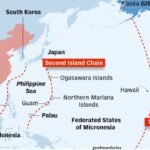
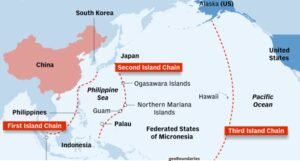
● ROC President Lai Ching-te says: “China’s threats to Taiwan and the Indo-Pacific region are escalating.” Glavin says: “According to U.S. intelligence assessments, the Chinese military’s rapid expansion in troop strength, sea power, space-based weaponry, cyber-war technology, nuclear capability and precision-attack ballistic and cruise missiles have put the entire Western Pacific within striking distance of the People’s Liberation Army.”
● Many Canadians don’t want to know what’s going on. “The new Beijing-Ottawa ‘strategic partnership’ appears to consist mostly of an agreement by the Canadian side to avoid entirely such ‘irritants’ as Beijing’s brutal capture of Hong Kong, its vicious repressions in Xinjiang and Tibet, its vast strongarming networks in Canada, its warmongering designs on Taiwan, its piracy in the South China Sea, and so on.”
Getting Started
When jolted into recognition of the problem of Beijing’s maleficent influence operations within Canada, the Canadian government has proven that it can take steps to begin to counter the united front work. But whether it can do more than begin is an open question.
Some 18 months after Canada’s parliament passed a Foreign Influence Transparency and Accountability Act, “there is still no publicly accessible registry of agents acting on behalf of foreign states. There is still no independent foreign influence transparency commissioner. All Public Safety Minister Gary Anandasangaree has said on the subject is that a ‘process’ is still underway to get the initiative off the ground.”