The ideological atmospheres of many American colleges and universities have long tilted heavily toward socialism and authoritarianism even without the poisonous assistance of the Chinese Communist Party.
But as 2023 fall semesters were starting, Radio Free Asia’s Jing Wei reported that CCP infiltration of campuses for propagandistic and other purposes (such as acquiring technology with military applications) was expected to continue “despite the closure of dozens of its Confucius Institutes” (August 18, 2023):
“The Chinese Communist Party will again be indoctrinating and spying on students on American college campuses this academic year in an organized effort known as ‘cognitive warfare,’ ” according to an online seminar run by the Hudson Institute.
“Its objective is to suppress criticism of Chinese President Xi Jinping and his policies, promote Chinese Communist Party propaganda, spy on and intimidate Chinese exchange students, shape American views about the United States, and steal scientific, technological, and military research,” the institute said.
A primary means of waging the cognitive warfare is the Chinese Students and Scholars Association, an organization that the CCP started in the 1970s. (See the U.S. State Department document “The Chinese Communist Party on Campus.”)
Chapters of the CSSA often describe the purpose of the CCP-backed CSSA in anodyne terms: “create a communication platform for students, scholars, and professionals in the Austin area” (University of Texas at Austin); “unite Chinese students and scholars and provide a place for all to communicate” (University of New Orleans). Such mild mission statements are misleading.
In 2017, The New York Times reported on the activities of CSSA chapters (“On Campuses Far From China, Still Under Beijing’s Watchful Eye”), including the response of the CSSA at the University of California in San Diego to the school-sponsored visit of the Dalai Lama.
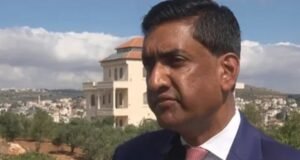
Within hours of Mr. Khosla’s announcement, though, the university was blindsided by nasty remarks on Facebook and other social media sites: “Imagine how Americans would feel if someone invited Bin Laden,” said one.
At the center of the opposition was the U.C. San Diego chapter of the Chinese Students and Scholars Association, which threatened “tough measures to resolutely resist the school’s unreasonable behavior.” The Chinese government accuses the Dalai Lama of promoting Tibetan independence from China, and if the student group’s message sounded a bit like the Beijing party line, that may have been no coincidence: The group said it had consulted with the Chinese Consulate in Los Angeles on the matter….
[Students from China] often bring to campus something else from home: the watchful eyes and occasionally heavy hand of the Chinese government, manifested through its ties to many of the 150-odd chapters of the Chinese Students and Scholars Associations.
The groups have worked in tandem with Beijing to promote a pro-Chinese agenda and tamp down anti-Chinese speech on Western campuses. At Columbia a decade ago, the club mobilized students to protest a presentation about human rights violations in China, urging them to “resolutely defend the honor and dignity of the Motherland.” At Duke, the group was accused of inciting a harassment campaign in 2008 against a Chinese student who tried to mediate between sides in a Tibet protest.
The CCP’s goals for the CSSA thus involve something more specific and less innocent-seeming than mutual support, communication, friendly intercultural exchange, etc.