The Wall Street Journal presents no solid evidence that the Trump administration is leaning toward or even considering saying what Xi Jinping is said to want the U.S. to say about the Republic of China. But in the context of trade negotiations in which too much has been conceded on the American side that should never have been on the table, the possibility that our government will oblige the dictator cannot be dismissed out of hand.
According to the ubiquitous “people familiar with the matter,” Xi wants “his American counterpart [U.S. President Donald Trump] to formally state that the U.S. ‘opposes’ Taiwan’s independence” (September 27, 2025).
Taiwan, or more precisely the Republic of China of which Taiwan is a part, has been independent, i.e., a country, for decades.
Ambiguity
This is undeniable except by the Chinese Communist Party and all governments around the world willing to appease it; including, sometimes, the United States. Of course, it would be bad if the U.S. government, which has long been ambiguous (“strategically” ambiguous) about the status of the Republic of China, fell even more in line with CCP rhetoric and propaganda about the ROC’s status by switching from ambiguous dishonesty about this question to unambiguous dishonesty. The U.S. should not spread CCP propaganda, should not (further) help the People’s Republic of China to achieve its geopolitical and military objectives.
After noting that the U.S. recently delayed military aid to the ROC and also denied entry to ROC President Lai Ching-te, actions that “have raised questions in both Washington and Taipei about whether it is giving priority to a trade deal with China over support for Taiwan,” the Journal’s Lingling Wei reports:
The people close to the White House say the administration is focused on deterring China from taking military actions against Taiwan and encouraging Taipei to increase its spending on key capabilities like drones and munitions to bolster its self-defense. The recent decision to deny the transit stop, they say, was intended to avoid dragging the U.S. into domestic Taiwanese politics by boosting Lai’s party during a local legislative recall election.
Rejecting Beijing’s Taiwan independence narrative is a key to deterrence, the people say, as doing so would deny China a potential pretext for conflict that mirrors Russia’s invasion of Ukraine.
A senior administration official said, “the U.S.’s one-China policy, which provides for executive branch interactions with both sides of the Taiwan Strait, remains the same as [it was during] the first Trump administration.” Under Trump’s first presidency, the U.S. increased engagement with Taiwan and boosted arms sales.
In a January call with China’s Foreign Minister Wang Yi, Secretary of State Marco Rubio privately reiterated the reassurance of nonsupport for Taiwanese independence, according to people familiar with the matter. Beijing then publicized the remark in an official account of the call without U.S. permission, the people said, which irked Rubio.
The U.S. readout of the January call instead focused on the concerns Rubio expressed to Wang over Beijing’s “coercive actions” against Taiwan. An updated State Department fact sheet on the U.S.-Taiwan relations in February even removed the Biden-era phrase stating the U.S. doesn’t support Taiwan independence.
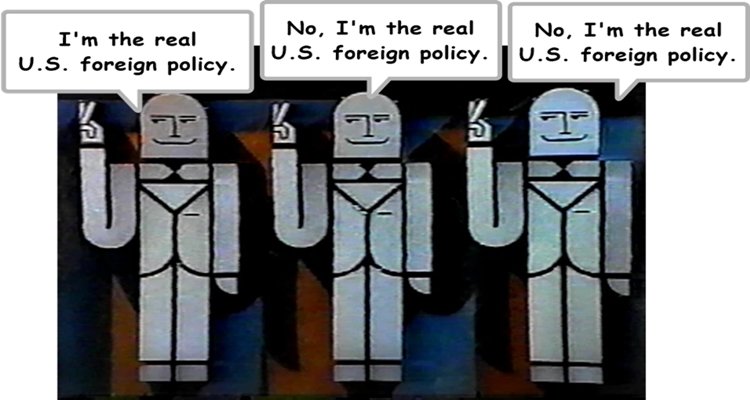
This is a goulash.
What would be the bad thing about “boosting Lai’s party during a local legislative recall election”? Does whether the U.S. grants duly elected foreign leaders permission to enter the United States usually depend so closely on the ups and downs of local politics? Refusing entry to Lai was much more likely motivated by fear of annoying the Chinese government during U.S.-China trade negotiations—as “people familiar with the matter” have indicated in other reports. The former rationale sounds like something that brainstormers around a conference table came up with to explain things.
In the January call with Chinese Foreign Minister Wang Yi, did Rubio stress “the reassurance of nonsupport for Taiwanese independence” as the CCP readout proclaims, or did he express concerns “over Beijing’s ‘coercive actions’ against Taiwan”? Or both? If Rubio was annoyed, what was he annoyed about? An accurate or an inaccurate characterization of his statement of the U.S. view?
Deterrence
Note that “people familiar with the matter,” presumably U.S. officials privy to the call, are again relaying the scoop here, saying that Rubio did indeed “privately reiterate the reassurance of nonsupport for Taiwanese independence.” Except as a slip of the tongue, though, what would be the reason for any such statement by Rubio, or any relaying of any such statement by “people familiar with the matter,” if, as indicated a few words later, the official U.S. government view is rather that “Rejecting Beijing’s Taiwan independence narrative is a key to deterrence…”?
Let’s hope that this last statement and allied statements conveyed by the Journal’s seesawing report represent the most basic, authentic, and enduring elements of administration policy on the PRC-ROC conflict.