Four U.S. senators are planning to visit South Korea, Japan, and Taiwan to “bolster U.S. alliances seen as important to countering China’s dominance in Asia.” The trip would take place before President Trump goes to Beijing to meet with Xi Jinping.
The Associated Press says that the Taiwan visit “could draw scrutiny from China” (March 28, 2026).
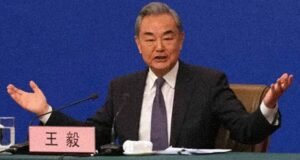
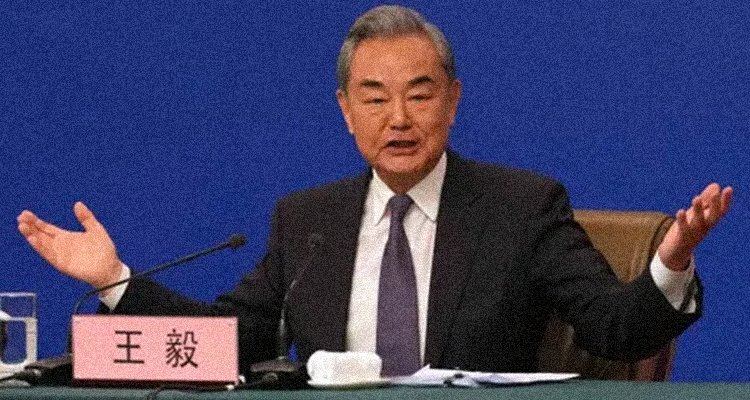
Yes, maybe, since the CCP tends to rudely complain whenever any foreign government officials interact with Republic of China officials. Several years ago, the Chinese government suffered apoplexy when a U.S. speaker of the House, Nancy Pelosi, visited Taiwan while saying that “We cannot stand by as the CCP proceeds to threaten Taiwan—and democracy itself.” Chinese Foreign Minister Wang Yi (shown above) burbled that Pelosi’s trip showed that “the United States has become the biggest destroyer of peace across the Taiwan Strait and for regional stability.”
The four U.S. senators heading for Taiwan, Japan, and South Korea are Jeanne Shaheen, Jacky Rosen, Democrats; and John Curtis, Thom Tillis, Republicans.
The lawmakers’ stop in Taiwan could draw scrutiny from China, which opposes such relations and sees them as a challenge to its claim of sovereignty over the self-governing island. Taiwan relies on American backing for its democracy, but recent moves by Trump, such as discussing a potential weapons sales to Taiwan with Xi, have raised questions about the future direction of U.S. policy.
Analysts in both China and the United States believe Xi, through the leader-level summit, will try to influence Trump to soften the U.S. stance on Taiwan.
“This bipartisan delegation demonstrates Congress’ commitment to these alliances and partnerships is unwavering and will endure well beyond any one administration,” Shaheen said in a statement.
In a show of reassurance to the Asian allies, the lawmakers plan to meet with political leaders and defense officials on their trip.
“Our alliance with Taiwan is one of the most strategically and morally significant partnerships America has in the Indo-Pacific,” Curtis said.
A visit to Taiwan by several members of the U.S. Senate may not be high-profile enough to provoke the same intensity of ire from the CCP as the visit by a speaker of the House, which in 2022 was manifested by angry diplomatic gestures to punish the U.S. as well as an increase in cyberattacks and military drills directed against Taiwan.
But we should probably expect at least a few spittle-soaked tirades about “destroying peace” and “destabilizing the Strait,” pretty standard CCP charges against both Taiwanese “independence separatists” and their foreign friends.