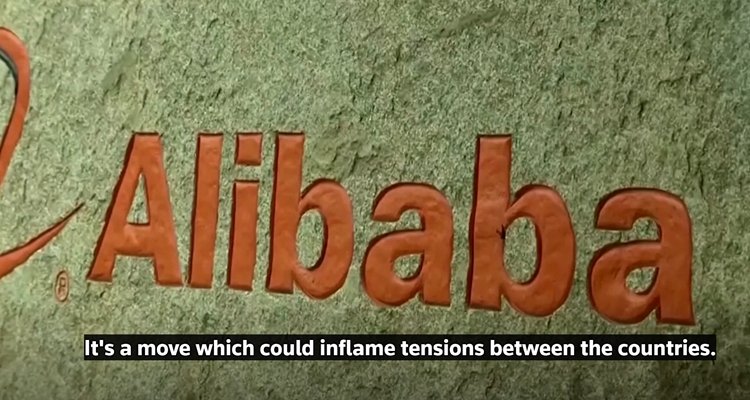
Progress. The U.S. Department of Defense has expanded its list of Chinese military companies, perhaps in part thanks to lobbying by U.S. Senator Rick Scott, Congressman John Moolenaar and others. The additions include Alibaba, Baidu, BYD, RoboSense Technology, and Trina Solar.
Last December, the lawmakers wrote to Defense Secretary Pete Hegseth to urge him to “expand the Department’s list of Chinese military companies…to include a set of Chinese firms that support ‘military-civil fusion’ and advance People’s Liberation Army capabilities across various sectors, including: biotechnology and life sciences; sensing, surveillance, and robotics; consumer smart devices; large-scale AI models; displays and imaging; semiconductors and manufacturing equipment; and power batteries and energy storage.”
Fusion
The firms named in the letter contribute to “military-civil fusion” in a way “central to PLA modernization, internal-security operations, and power-projection capabilities,” said the authors. “Their designation under Section 1260H would directly support Congress’ intent that U.S. taxpayer funds not underwrite PRC military-industrial and internal-security or intelligence capabilities.”
The point is not that companies on the list are making guns and bombs for the People’s Liberation Army but that they are helping the Chinese military in other material ways.
Several months later, the Coalition for a Prosperous America is praising the Pentagon for expanding its list to include “several major Chinese firms, including tech giants Alibaba and Baidu; EV manufacturer BYD; semiconductor manufacturers Yangtze Memory Technologies and ChangXin Memory Technologies; and Wuxi AppTec, a contract development and manufacturing organization used frequently by U.S. biotech companies. The additions reflect a growing recognition that ostensibly civilian Chinese companies can support the strategic objectives of the Chinese Communist Party and the People’s Liberation Army” (June 12, 2026).
“CPA strongly supports the Administration’s decision to expand the Chinese military companies list,” said CPA President Jon Toomey. “For far too long, U.S. policymakers have underestimated the risks posed by China’s military-civil fusion model, which blurs the line between commercial enterprise and state-directed military objectives. This designation process is an important tool for protecting American national security, supply chains, and industrial capacity.”
CPA also urged DoW to continue expanding the list to include additional Chinese companies with significant strategic importance to U.S. supply chains and critical industries. Among those firms not listed, and warranting further review, are China Hailiang Group—a major producer of copper products, pipe, and tube; and Zhejiang Geely Holding Group Co., Ltd.—one of China’s largest automotive conglomerates.
According to Toomey, “American policymakers cannot afford to separate economic security from national security. Companies operating within China’s state-directed system must be evaluated accordingly.”
CNBC characterizes the expansion as a “fresh blow to diplomatic thaw” while failing to mention that diplomatic thaws are often overrated. Reuters says that the move “could inflame tensions.” We have to keep reminding ourselves that we are dealing with an aggressive and irrational state with a planet-sized chip on its shoulder.
Being on the Defense Department’s list of Chinese military companies doesn’t necessarily kill all of a Chinese company’s ability to operate in the United States.
“The designations do not impose sanctions explicitly,” CNBC notes, except insofar as the Pentagon is prohibited from contracting directly with firms on the list. (And from contracting indirectly by buying a listed company’s wares from third parties—a further restriction that, however, only takes effect starting in 2027, a weird delay.) U.S. firms that do business with the Pentagon may now choose to refrain from dealing with a listed company. But they are not now outlawed from dealing with it.
Getting a Chinese military company listed thus seems to be only half the battle. Being on the list should have a wider and more definitive legal impact.
Déjà vu
Some of the companies now listed had also been briefly listed as Chinese military companies a few months ago. The names were even published as such—briefly—in the Federal Register. Before being yanked. Observers assumed then that the impending Trump-Xi summit, a product of diplomatic thaw, “might have played a role in the sudden withdrawal” of the additions.
Also see:
Defense.gov: “Entities Identified as Chinese Military Companies Operating in the United States in Accordance with Section 1260H…”