American companies are eluding a ban on exporting powerful AI microchips to the People’s Republic of China. They are not violating the law. They have been exploiting a loophole that Congress has again and again refused to close. Chinese firms get the illegal-to-buy chips “by renting them through U.S. cloud services instead” (Associated Press, October 31, 2025).
Four tries
Four attempts by U.S. lawmakers since September 2024 to close the loophole provoked “a flurry of activity from more than 100 lobbyists from tech companies and their trade associations trying to weigh in, according to disclosure reports” so that “All four times, the proposal failed, including just last month.”
Such attempts and failures of the attempts are not new.
Even while warning about national security and human rights abuse, the U.S. government across five Republican and Democratic administrations has repeatedly allowed and even actively helped American firms to sell technology to Chinese police, government agencies and surveillance companies, an Associated Press investigation has found.
And time after time, despite bipartisan attempts, Congress has turned a blind eye to loopholes that allow China to work around its own rules, such as cloud services, third-party resellers, and holes in sanctions passed after the Tiananmen massacre. For example, despite U.S. export rules around advanced chips, China bought $20.7 billion worth of chipmaking equipment from U.S. companies in 2024 to bolster its homegrown industry, a report from a congressional committee this month warned.
This reluctance to act reflects the tremendous wealth and power of the tech industry, which is more visible than ever under the Trump administration. And in recent months, the president himself has struck grand deals with Silicon Valley firms that even more closely tie the U.S. economy to tech exports to China….
Under the cloud services loophole, Chinese companies barred from accessing cutting-edge chips can use Microsoft Azure or Amazon Web Services overseas instead to train their AI models. Microsoft and AWS also both advertise the capacity to store video surveillance footage on their cloud services for Chinese customers.
For example, SDIC Contech, a state-owned tech company that works with AI, sought access to AWS and Microsoft Azure big data analytics services, procurement bids show. And Shanghai Qi Zhi Institute, a government-backed research institute working on sensitive technologies such as encryption, sought access to $280,000 worth of Azure OpenAI cloud services from Microsoft.
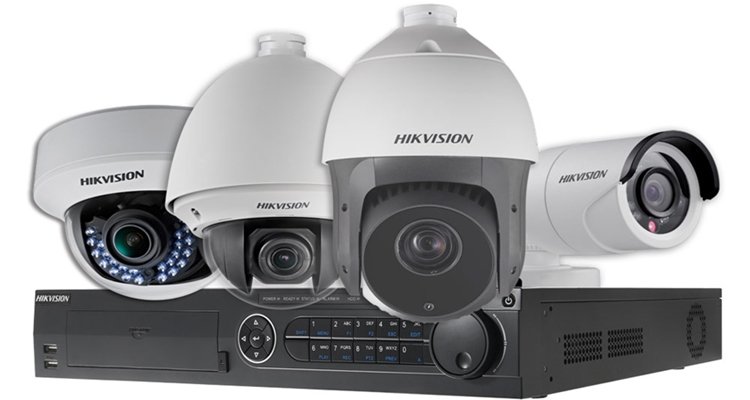
Even sanctioned Chinese companies can use AWS and Microsoft Azure to offer surveillance abilities to customers overseas. For example, despite U.S. sanctions over human rights abuses in Xinjiang in 2019, Dahua and Hikvision, China’s two largest surveillance companies, use AWS to offer networked surveillance abroad, according to marketing material on the company websites. Hikvision markets a video surveillance platform called “HikCentral” to private companies overseas, which can be also deployed on Azure, according to a post on Hikvision’s website this year.
Another enduring loophole is in the restrictions passed after the Tiananmen massacre that didn’t include newer policing technologies, such as security cameras, surveillance drives, or facial recognition systems. In 2006, 2007, 2009, 2011 and 2013, lawmakers introduced bills to try and close the loophole. All failed….
Gulbahar Haitiwaji, an ethnic Uyghur living in France, says little has changed since she testified to Congress in 2023 urging the U.S. government to “stop American companies from continuing to be complicit in surveilling our people.”
The role of American tech in building China’s surveillance state has long been reported. But AP may be right that its investigation of the problem has helped expose the extent of the complicity and especially of the role of elected and agency officials.
“This is a strategic failure by the United States,” says a Chinese activist currently living in the U.S., Zhou Fengsuo. The failure is also moral.
The firms have their arguments ready, if we want to call them arguments. According to a statement by Nvidia: “Continuing to ban U.S. computing from commercial markets only benefits foreign competition and undercuts President Trump’s efforts to create jobs, reduce the trade deficit, and grow the economy.”
In addition to suffering from a loose straw-man characterization of what opponents of empowering the CCP propose—banning of U.S. computing from “commercial markets”—Nvidia’s statement is a version of “everybody’s doing it.” The company’s words may be persuasive to those ignorant of what the technology is being used for, things like mass surveillance and facilitating of genocide, and of the long-run consequences both domestic and global of helping the Chinese Communist Party to keep its censorship, surveillance, cyber attacks, and military capabilities as cutting-edge as possible.
An analogy
Suppose that officers of a city police force are fighting gangsters in the streets. Suppose that some of the policemen have a side gig selling confiscated machine guns to the gangsters at hefty prices.
The goal of these vendors is wonderful: to help pay the bills at the police station. Would this benefit and the fact that other groups in the city are also taking pains to equip the gangsters let the collaborative cops off the hook? After all, like everybody else, police can always use more revenue. Fighting crime isn’t cheap. This being so, how can anyone possibly oppose machine-gun sales that help police pay the bills merely because by doing so they also help the gangsters to destroy the police and anybody else the gangsters choose to target?
One can say that the analogy doesn’t hold, mutatis mutandis, only on the assumption that the Chinese party-state is no determined enemy of the United States and our allies, and others, but only a kind of friendly competitor in something the equivalent of a game of checkers.