Ted Galen Carpenter argues that the PRC government keeps shooting itself in the foot with its aggressive policies and rhetoric wielded against Japan, Hong Kong, Taiwan.
A part of Carpenter’s discussion that I don’t completely follow pertains to how the current president of the Republic of China (often called Taiwan), Lai Ching-te, is even tougher than his immediate predecessor, Tsai Ing-wen. Both have provoked the ire of the Chinese Communist Party for their failure to emulate the turn toward appeasement of the CCP indulged in by the present-day Kuomintang (The American Conservative, February 22, 2026).
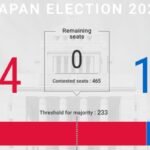
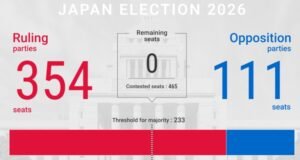
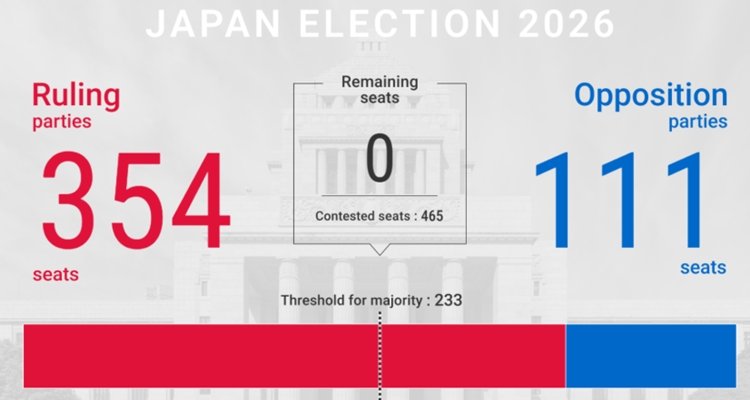
If Chinese leaders thought that Japanese voters would repudiate their new prime minister and her uncompromising stance toward Beijing, they miscalculated badly. Takaichi gambled by calling a snap election for early February, and the results were a spectacular political success for her and her party….
It is hardly the first time that Xi and his associates engaged in clumsy, tone-deaf policies that produced disastrous results for Beijing….
The PRC’s bullying tactics [in Hong Kong] especially alienated public opinion in Taiwan, killing off any chance of an agreement for the island’s political reunification with the mainland….
Expectations that there might be a gradual rapprochement between Taipei and Beijing once seemed reasonably promising [which Carpenter does not explicitly say would have been a bad thing insofar as it increased the chances of a takeover of Taipei by Beijing]….
[After a period of conciliatory presidential rule by the Kuomintang, various political factors] produced a decisive victory for DPP [Democratic Progressive Party] candidate Tsai Ing-wen in Taiwan’s 2016 presidential election. Instead of reacting calmly to the return of the DPP to power in a democratic system, however, PRC leaders denounced Tsai in the most harsh and inflammatory terms. Beijing also returned to the policy it pursued during Chen’s tenure of trying to isolate the island diplomatically and intimidate it militarily. The PRC intensified its efforts to induce the handful of small countries heavily dependent on Taiwan’s flow of economic aid that still maintained diplomatic relations with Taipei to switch their ties to Beijing, and 10 of them did so during her presidency….
Just as Beijing’s crackdown on Hong Kong’s democratic activists failed to sway Taiwan’s population to support appeasement and reunification, the PRC’s coercive measures against Tsai’s administration backfired. She won a landslide re-election victory in 2020 and, for the first time, the DPP also secured control of parliament. The PRC’s inexorable crackdown on Hong Kong enhanced the appeal of Taiwanese political leaders who insisted that they would never allow Taiwan to suffer a similar fate.
Indeed, the current government of Taiwan’s President Lai Ching-te (William Lai) is even more hardline than that of Tsai Ing-wen. Lyle Goldstein, a scholar on East Asia issues and director of the Asia Program at the Defense Priorities think tank, notes that instead of trying to adopt a low profile and play down any claims to an explicitly independent status for Taiwan, as did Tsai, “Lai has lurched toward formal independence with a succession of speeches making the case for Taiwanese nationhood. Lai devoted nearly all of his initial national address to making the case for Taiwan’s right to sovereignty. As one prominent Taiwanese columnist noted: “Never before has a Taiwanese president devoted an entire speech to laying out clearly, point-by-point, and unequivocally how Taiwan is unquestionably a sovereign nation.”
Formal independence?
The sentences of the last paragraph quoted above are not referring to quite the same thing.
The claim and the fact that the ROC “is unquestionably a sovereign nation” (i.e., is thus right now) is not the same as the proposition being argued for when making “the case for Taiwan’s right to sovereignty” or “for nationhood” (emphasis added). If we set aside the linguistic-political problem with treating “the Republic of China” and “Taiwan” as perfectly synonymous terms, we’re still left with the apparent if not entirely unambiguous implication that President Lai believes that the ROC should one day be sovereign rather than that it is already sovereign in point of fact. What would “formal independence” consist of in light of the fact that President Lai has observed again and again that the ROC is right now independent? What would the formality consist of? Some kind of special ceremony of the sort no other country feels obliged to conduct? A notice in the Taipei Times?
Of course, one can propose both that the ROC is right now politically independent of the mainland and that it should remain so. Perhaps this is all that Carpenter was trying to convey. But it’s not crystal-clear.
Making a fuss over exactitude of expression might be supererogatory here but for the fact that the CCP propagandists are constantly asserting that Taiwan is right now “a part of” what it asserts is the one true China, the China currently being ruled by the mainland government; and constantly asserting that there exists in Taiwan a lamentable species of agitator called “Taiwan independence separatists” who want Taiwan to become politically separate from the mainland. Decades of propaganda by the CCP and of bad diplomacy by countries around the world have not quite obliterated common sense, however.
Also see:
StoptheCCP.org: What Is This “Republic of China”?
Nikkei Asia: “Japan election: How Takaichi’s historic night unfolded”
“Hu Xijin, the outspoken former editor-in-chief of the Chinese Communist Party-affiliated Global Times, says Takaichi’s election win ‘cannot serve as leverage in dealing with China.’ ”