In April of this year, when the United States raised tariffs on Red China’s exports, Beijing stopped exporting rare earths to the U.S. In late June came the news that “US says deal with Beijing will expedite rare earth exports from China.”
“Expedite”? Start with the fact that all previously approved export licenses must be reapproved. Also, that the communists have instituted a new review process that takes at least 45 days.
And in a dramatic policy shift, Beijing is also now outlawing mining of these elements by private companies. The communists imposed new rules “on the mining, smelting and trade” of rare earths. “The regulations, issued by the State Council or cabinet…say rare earth resources belong to the state, and that the government will oversee the development of the industry around rare earths.”
Myanmar
Well, the state will need specialists for a plan like this. So, as we learned late last month, China is now “Tracking Down Its Rare-Earth Experts—and Taking Away Passports.”
Why limit their travel, you ask? Oddly enough, Red China’s mining regulations are just onerous enough to spur Chinese mining companies to do much of their extracting of rare earths abroad.
“Myanmar [Burma] is one of the world’s largest suppliers of rare earth production, according to the U.S. Geological Survey,” and “most of those rare earths are sent to China…. Myanmar accounted for about 57% of China’s total rare earth imports last year.”
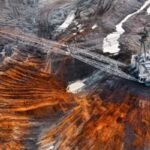
Here comes another bottleneck. In October, the Kachin Independence Army “seized northern Myanmar’s rare-earths mining belt” in an attempt to reduce Beijing’s support for Myanmar’s military dictatorship. “The group has imposed a hefty tax on the mostly Chinese-operated rare-earth miners working around Panwa and Chipwe towns in Kachin.”
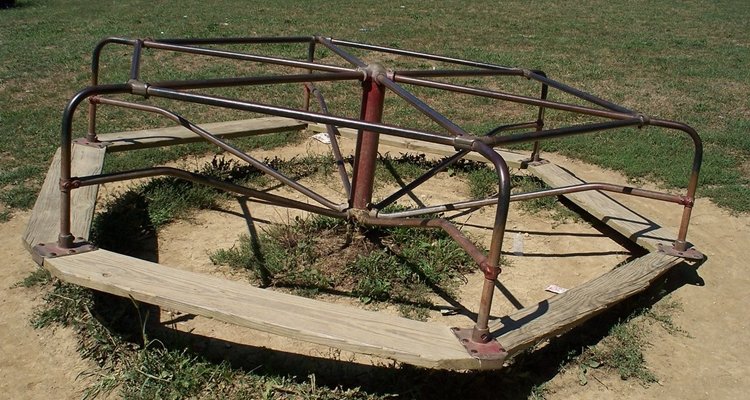
The U.S. buys rare earths from China because American companies can’t stand the regulations that burden stateside mining and processing. Meanwhile, Chinese producers flee Beijing’s regulations by mining abroad in Myanmar and soon in Greenland. It’s a merry-go-round.
Somehow these elements are essential but not so much that one would want to bend environmental rules to produce them.
Leverage
“Thomas Jones, a senior rare earth analyst at natural resources consultancy Wood Mackenzie, said US independence from Chinese rare earths was ‘years away’.
“ ‘The challenge the US faces is not a lack of will, but rather the huge logistical, technological, financial and environmental permitting required to make this a reality,’ he said.”
Who needs this stuff? You’ll hear that you “cannot build a modern car without rare earths,” but then you’ll read that “auto parts suppliers Aptiv and BorgWarner said they were developing motors with minimal or no rare earth content to counter supply constraints.”
The people who absolutely cannot do without, it seems, are in the American military. U.S. military suppliers “rely on these minerals for fighter jets and missile systems.”
Quiet, please: military geniuses at work. They made our defense depend on Beijing’s good will.
We do have some leverage, however. To get the full effect of farce, note that Red China buys our military-grade semiconductors in exchange for “these minerals for fighter jets and missile systems.” We support their military, they support ours. It’s a comedian’s plan for world peace.
“The White House has signaled a willingness to ease chip export controls if Beijing accelerates rare earth exports.”
That brings us back to “expediting.”
Broken system
“U.S. magnet maker Dexter Magnetic Technologies, which has defence clients, among others, has received just five of 180 licences since April, CEO Kash Mishra told Reuters, adding those were intended for non-defence sectors.” Permits are starting to be issued somewhat faster to European suppliers, but “cases where the end users are based in the United States, or where products move through third countries like India, are taking longer or not being prioritised” (emphasis added).
MP Materials Corp. is the “only US miner of the key materials used in smartphones and defense applications.” CEO Jim Litinsky said in May: “Regardless of how trade negotiations evolve from here, the system as it existed is broken, and the rare-earth Humpty Dumpty, so to speak, is not getting put back together….
“My impression from conversations with the Department of Defense is that there is a full-on recognition that we can’t be reliant on Chinese magnetics for national security purposes.”
The proof may be in the Department of Defense goal “to develop a complete rare earth element supply chain that can meet all U.S. defense needs by 2027 [as stated] in its 2024 National Defense Industrial Strategy.”
Unfortunately, “by the time these facilities are operational, their output will fall well short of China’s, with the U.S. still far from meeting the DOD’s goal of an independent rare earth element supply.”
What to do
The market’s demands will change over time. One can do as Aptiv and BorgWarner are doing now and learn to do without, or one can bet heavily on status quo technology that that will be obsolete by the time a U.S. rare earths supply chain is built.
Don’t double down on stupid, people. □
James Roth works for a major defense contractor in Virginia.