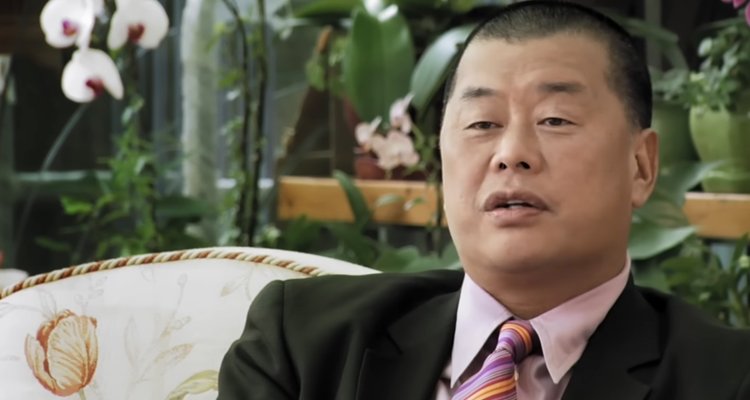
We have no verdict yet in the so-called trial of Jimmy Lai, which recently concluded. But the verdict will be announced “in good time,” says Esther Toh, one of the three judges in the case.
Toh also said, prefiguring the verdict she’s making us wait for: “It’s good to say la-di-da, freedom of expression is not illegal. Well, that’s true, but it’s not an absolute.”
Wrong on all counts.
Of course freedom of expression is illegal in Red China and Hong Kong. And of course the right of freedom of expression is an absolute. Such a right is inapplicable to the use of speech as a means to commit what is validly described as a crime, just as the absolute right to use a hammer that one owns does not imply a right to hit an innocent person over the head with it.
Toh cites arrests of pro-Palestinian protesters in the U.S. as an illustration of the truth of her contention that the right of freedom of expression is not an absolute. She ignores the context of criminal conduct by protesters. She ignores the fact that the number of Americans who babble lunacies about the wonderfulness of Palestinian terrorists without being arrested is legion. In any case, the mere fact that other governments act in a certain way does not by itself say anything about whether their action is justified.
The distinction between exercising one’s absolute rights and violating the absolute rights of others has not been relevant to assessing the conduct of former Apple Daily publisher Jimmy Lai (shown above). He has committed no crime with his speech or with any other instrument. He is being persecuted for his advocacy of freedom and democracy. That’s what this so-called trial is about.
Fair or unfair
The Reuters reporter can’t tell whether the trial, so-called, is politically motivated and whether Lai’s fate is being adjudicated fairly. People and countries disagree about this; hence, it is impossible, one gathers, to know who is right about the fact of the matter or at least to report who is right. The reporter can go this far: “Some countries such as the U.S. say the trial is politically motivated and have demanded Lai’s immediate release. The Chinese and Hong Kong governments say he is being given a fair trial” (August 28, 2025).
To be sure, matters that people dispute may also be uncertain matters. But they aren’t always.
The trial is a show trial, which is a kind of trial: a fake trial. So I really shouldn’t say “so-called trial” as though it were not a trial of some kind. However, in a spirit of solidarity I am emulating the usage in an Index on Censorship article by Jemimah Steinfeld, “The so-called trial of Jimmy Lai: How the Hong Kong and Chinese authorities use linguistic trickery to undermine opponents” (September 2, 2025).
The trick
Steinfeld’s slinging of “so-called” is itself an ironic imitation of the usage of the Chinese Communist Party, whose propagandists refer to the most obviously genuine or true things as “so-called.” A poor “trick.”
“I’ve lost count of the number of times the Chinese/Hong Kong authorities or CCP State media have called me a ‘so-called human rights lawyer’ leading a ‘so-called legal team’,” said one of Lai’s lawyers, Caoilfhionn Gallagher KC, this week on X. Gallagher made this comment following the release of a new report, titled “The Use of ‘So-called’ as a Propaganda Device in China”. By academics Linette Lim and Alexander Dukalsis (the latter an Index contributor), it looks at how China’s state-run media increasingly use inverted commas and the words “so-called” when talking about an idea or person that they wish to discredit.
“Including indicators of disapproval in the text is one technique to simultaneously invoke and discredit an idea,” say Lim and Dukalsis in explication of “so-called.” They also say that use of the tic in Hong Kong has increased since the CCP’s consolidation of political control over Hong Kong “in 2019 and 2020.”
The authors sift through a lot of data to come to such already obvious conclusions as the fact that “sarcastic uses of so-called tend to precede ideas, claims, or criticism that the Chinese state finds objectionable.” The study confirms the insights of literacy.
The Party’s deployment of “so-called” is unsubtle. Also unpersuasive. Yet it does persuade. When the standard kit of CCP propaganda somehow succeeds, it is succeeding with those who for whatever reason cannot resist endless dogmatic repetition of the patently false.
Also see:
Acton Institute: Video: “The Hong Konger: Jimmy Lai’s Extraordinary Struggle for Freedom”