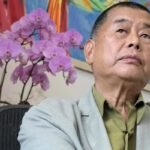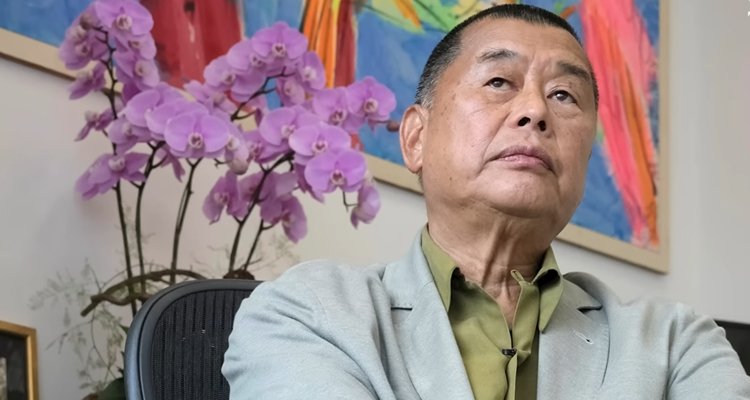
The censorship imposed on Hongkongers after the mainland enacted the National Security Law of 2020 is still in place: “Hong Kong’s once-vibrant press stays silent or celebrates Jimmy Lai’s 20-year jail sentence” (The Guardian, February 10, 2026).
After months of protests, which Lai and his newspaper [Apple Daily] supported, Beijing imposed a national security law on the city [in 2020]. Lai was one of the earliest, and most high-profile, people to be arrested under the new legislation.
The US, the UK, the EU and the UN have condemned the heavy sentence handed down to Lai, a British citizen, and called for his release….
But Hong Kong’s press associations, once the voices of media freedom in the city, reacted with silence, underscoring the narrowing space for commentary that could be seen as critical of the authorities.
Selina Cheng, the chair of the Hong Kong Journalists Association (HKJA), said: “I’m not free to speak my mind on the Apple Daily sentencing.”
The HKJA has been attacked before by the Hong Kong government for “whitewashing” Lai, and the association and Cheng personally have also been targeted by Chinese state media.
The Foreign Correspondents’ Club of Hong Kong (FCC) said it had no comment about the heavy sentence given to one of Hong Kong’s most influential media figures….
An analysis by Hong Kong Free Press, a local outlet, showed that the number of statements issued by the FCC in support of press freedom has declined dramatically since the imposition of the national security law.
Hong Kong’s three other press associations, the Beijing-backed Hong Kong Federation of Journalists, the Hong Kong News Executives Association and the Hong Kong Press Photographers Association also did not publish statements about Lai’s sentence.
Meanwhile, many CCP or CCP-leaning outlets in Hong Kong waxed enthusiastic about the destruction of Lai. Commentary in the South China Morning Post babbled about the robustness of the rule of law thus demonstrated. According to the state-owned paper Ta Kung Pao: “The anti-China and pro-chaos forces represented by Jimmy Lai have been forever nailed to the pillar of historical shame.”
Beh Lih Yi, with the Committee to Protect Journalists, points out what everyone who looks can see: “Hong Kong’s once-vibrant free press is a ghost of its former self.”
Also see: Hong Kong Free Press: “Hong Kong press groups silent on jailing of media tycoon Jimmy Lai”