A dizzying year
Washington Post, Chris Miller, December 10, 2025.
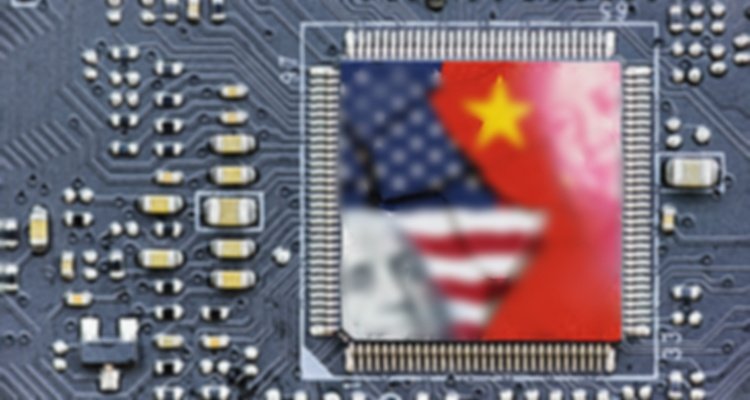
“It’s been a dizzying year for debate about semiconductors and artificial intelligence in Washington: presidential tweets, summits with world leaders, CEO dinners at the White House, hirings and firings of senior personnel. The latest twist: President Donald Trump’s decision to allow sales of Nvidia H200 chips to China….
“The administration’s internal debate on export controls has catalyzed Congress to raise its voice. Most controls on tech transfer in recent years have come from executive action, not legislation. Recent movement in Congress could change that….
“In the must-pass National Defense Authorization Act, Congress nearly included a provision called the Gain AI Act, which would have required the Commerce Department to provide 30 days notice before approving sales of any high-end AI chips to China, and given Congress the right to block sales….
“America’s leading chip firms want looser rules, but U.S. AI giants, who benefit from weaker Chinese competitors, have powerful political voices too. On top of a bipartisan congressional consensus, now a significant share of America’s AI industry is coming to realize that selling advanced chips to China threatens not only national security, but also their business.”
CCP says Trump has given up
The New York Times, Lily Kuo, December 12, 2025
“The Trump administration has softened its criticism of China’s Communist Party in a strategy document. It has reopened a channel for high-end chip sales that Washington once treated as untouchable. And President Trump has held his tongue as a key U.S. ally in Asia faces Chinese intimidation for backing Taiwan.
“For Beijing, the shifts in Washington’s approach suggest that Mr. Trump has less of an appetite for confronting China over ideology, technology and diplomacy. Some commentators in China have hailed these developments as irrefutable signs of American decline and Chinese ascendancy.
“Mr. Trump’s decision on Monday to allow some advanced chips to be sold to China, the prominent Chinese technology executive Zhou Hongyi said on social media, showed how China’s unstoppable technological rise had “pushed the United States against a wall.’
“The Global Times, a Communist Party newspaper, pointed to the White House’s new national security strategy, which focuses more on the Western Hemisphere than China, as ‘evidence of the U.S. acknowledging its relative decline in power.’ Washington has realized ‘it cannot afford the costs of prolonged confrontation’ with China, the nationalist blog Jiuwanli similarly concluded.
“And Mr. Trump has remained publicly silent [but not inactive] as China has mounted a pressure campaign against Japan, a U.S. ally, over that country’s support for Taiwan. Beijing has summoned Japanese diplomats, canceled flights, curbed tourism and stepped up military flights near Japanese airspace, including with Russia, to highlight its displeasure….
“That shift was laid out plainly in Mr. Trump’s national security strategy, released last week. It recast the U.S.-China rivalry as chiefly an economic contest and not a struggle over security or political systems. The strategy’s stated priority: establishing a “mutually advantageous economic relationship with Beijing….
“For the first time in more than 30 years, the national security strategy did not criticize China’s authoritarian rule or press Beijing to uphold human rights—sentiments echoed by presidents from George H.W. Bush to Joseph R. Biden Jr. and even to Mr. Trump himself in 2017, during his first term.”
Gift for People’s Liberation Army
Reuters, Karen Freifeld and Alexandra Alper, December 9, 2025
“China hardliners in Washington slammed the Trump administration for its decision to allow Nvidia to ship its second most advanced AI chip to China, citing concerns Beijing could harness the technology to supercharge its military….
“The decision ‘puts our competitive edge up for sale, all for a 25% cut of chip exports,’ said Brad Carson, a former Under Secretary of the Army. ‘When China starts supplying their military with AI built on U.S. chips, the world will regret this decision.’…
“It also marks a dramatic reversal from his first term, when Trump drew international attention by cracking down on Chinese access to U.S. technology, citing claims Beijing steals American intellectual property and harnesses commercially obtained technology to bolster its military, which Beijing denies.
“But the administration, led by White House AI czar David Sacks, now argues that shipping advanced AI chips to China discourages Chinese competitors like Huawei from redoubling efforts to catch up with Nvidia and AMD’s most advanced chip designs….
“Stewart Baker, a former Homeland Security and National Security Agency official, said the notion that the U.S. can keep China dependent on U.S. chips by letting them have the H200 is ‘a delusion.’
“ ‘There’s no world in which they are not going to continue to press as hard as possible to have a domestic industry that will ultimately have as its goal the bankruptcy of Nvidia and the dependence of the United States on Chinese AI,’ Baker said.”
Extortion or sellout
National Review, NR Editors, December 12, 2025
“This agreement builds upon an earlier deal, inked over the summer, that permitted the export of less-powerful chips to China on the condition that the government receive a 15 percent cut. But Nvidia wasn’t satisfied. It lobbied the Trump administration to approve exports of its second-most-advanced model, the H200, built to enable frontier-scale AI such as large language models. Keen to extract wealth from a private company in search of a favor, the president acquiesced once he secured a piece of the action.
“The U.S. government will now profit from supporting a Chinese AI industry that is racing to defeat our own. There are only two possible explanations for what happened here: If the export of advanced chips to China never actually threatened the United States, Trump has extorted Nvidia, using the power of the state to constrain the company’s business until it handed over a few billion dollars. If the export controls did serve vital U.S. interests, however, the president has sold out national security for a quick payoff.”