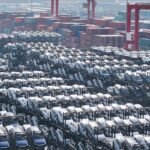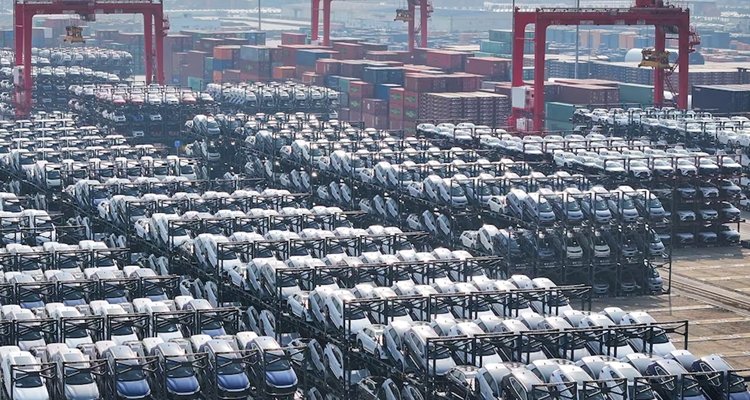
One problem with Canadian Prime Minister Mark Carney’s deal with China to usher in up to 49,000 Chinese electric vehicles—dropping the 100% tariff on China’s EVs that had been in force hitherto—is that those vehicles can spy on you.
Leading the charge in opposition to the EV onslaught is Ontario premier Doug Ford. Much of his argument has been protectionist; he doesn’t want Ontario’s auto industry or Canada’s auto industry to suffer the competition. He is also concerned about the American response (City News, January 16, 2026).
He argued the deal opens the door to a surge of low‑cost Chinese EVs without securing equivalent investment commitments in Canada’s auto sector, supply chain or broader economy.
Ford warned that lowering tariffs on Chinese-made EVs could also jeopardize access to the U.S. market—the destination for the vast majority of Ontario-built vehicles—if American regulators view Canada as a backdoor for Chinese imports….
“Finding a resolution to U.S. auto tariffs just got more difficult.”
Judging by some of the remarks of the U.S. president, Ford is right to worry about the American response. Example: “If Canada makes a deal with China, it will immediately be hit with a 100% Tariff against all Canadian goods and products coming into the U.S.A.!”
Premier Ford’s references to the potential for espionage have been more incidental. The City News report quotes nothing from Ford about concerns that China’s EVs may spy on drivers and transmit information to China. But here and there he has indeed lamented the policy of “bringing in Chinese spy vehicles” or “spy cars.”
Globe and Mail commentator Erica Alini downplays the concern (January 30, 2026).
Ontario Premier Doug Ford has dubbed Chinese-made electric vehicles “spy cars” and urged Canadians to boycott them after Ottawa agreed to import small quantities of them in a recent deal with Beijing. Federal Conservative Leader Pierre Poilievre has similarly dubbed the cars “roving surveillance operations.” And policy analysts have long warned that even private Chinese companies can legally be forced to spy for Beijing.
In fact, eavesdropping isn’t even the worst of it. Talk to a cybersecurity expert if you want to hear hypotheticals that sound like sci-fi horror. The nightmare scenario is one in which, say, all cars of a certain type suddenly freeze in the middle of the road or accelerate erratically. It wouldn’t take many of them to clog a country’s streets with accidents.
But those what-ifs don’t apply only to EVs made in China. Most new-ish automobiles, including gas-powered ones, could be hacked or weaponized by independent groups or hostile governments. Cars have become data-syphoning computers on wheels. They are just as vulnerable to bugs and cyberthreats as our phones and laptops.
The big difference is that the People’s Republic of China is a hostile power that often acts with malicious intent, a context that seems to be omitted from Alini’s thinking on the subject. The U.S. and Canada are probably not as concerned about the possibility of a military conflict with Tesla or Apple or of Tesla-led or Apple-led cyberattacks.
Non-Chinese devices can also be hacked and surveilled or controlled by various malicious actors, including Chinese hackers working for the Chinese Communist Party. But why make it easier for the CCP to spy on us and attack us when we know that it does so and we know the history of the Party’s cyberattacks on U.S. communications and infrastructure?