As president Trump hits at the Chinese government by hitting Iran, he is also doing so by pressuring Latin American countries to give China its walking papers (Associated Press, March 5, 2026).
The U.S. imposed travel bans on three Chilean officials over the possible construction of a submarine fiber optic cable with China, while warning Peru against ceding control over a Chinese-built mega port.
Under pressure from President Donald Trump, who had threatened to take the Panama Canal back under U.S. control, the Panamanian government seized two ports at either end of the canal that had been run by a Hong Kong company.
And when the U.S. captured Venezuela’s then-President Nicolás Maduro in January, China saw its extensive interests in the oil-rich country suddenly vulnerable….
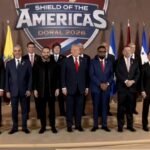
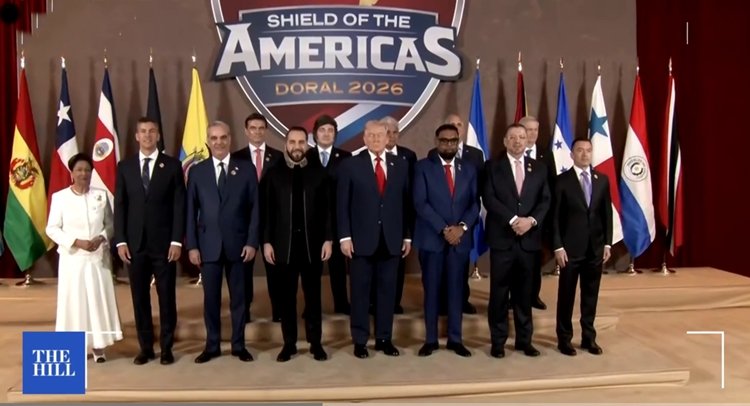
As part of his quest to restore U.S. preeminence in the Western Hemisphere, the president is hosting Latin American leaders at his golf resort near Miami this weekend for a summit dubbed the “Shield of Americas.”…
In its National Security Strategy released in December, the White House blamed “years of neglect” for the loss of U.S. preeminence in the Western Hemisphere and vowed to deny “non-Hemispheric competitors the ability to position forces or other threatening capabilities, or to own or control strategically vital assets, in our Hemisphere.”…
The Chinese-built port in Chancay, Peru, one of the deepest in Latin America, has raised concerns in Washington that China could use it for military purposes.
Some of the experts cited in the AP piece make arguable claims. But the remarks by one Sun Yun of the Stimson Center seem to amount to CCP propaganda.
First: “There’s no competition with the U.S. for dominance [in Latin America] from the Chinese view. They will prioritize protection of their assets and will not give up facilities such as a port without a fight.”
The Chinese Communist Party won’t give up military and dual-use facilities and spy facilities without a fight? I beg to not differ, as long as voicing stern objections is part of what is meant by “fight.” I would be surprised if the People’s Liberation Army launched any military operations against the United States from within Latin America in the very near future.
But is it really true that the Chinese Communist Party, from its own point of view, regards the United States as no adversary to be undermined as the CCP sets up shop down south?
Yun also says:
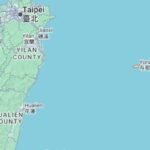
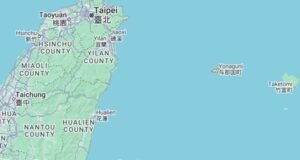
“What they [the Chinese government] are trying to do is to argue that Taiwan is fairly and squarely in China’s sphere of influence. If the U.S. expects China to respect its own definition, then the U.S. should also respect China’s definition of the Western Pacific, especially Taiwan, to be a core national interest for China.”
Some experts work hard to exclude the obvious from the domain of their expertise. Perhaps Yun is only trying to convey the assertions of Chinese Communist Party propaganda as faithfully as possible but knows that they are false.
If so, though, she should have added: “Of course, these contentions are ridiculous, and the U.S. officials should not be dumb enough to accept any of the Chinese Communist Party’s standard propaganda about Taiwan, the Western Pacific, or anything else. Threats are threats, and China has indeed been seeking dominance in Latin America—among other places.”
The Associated Press reporter would probably have quoted this.