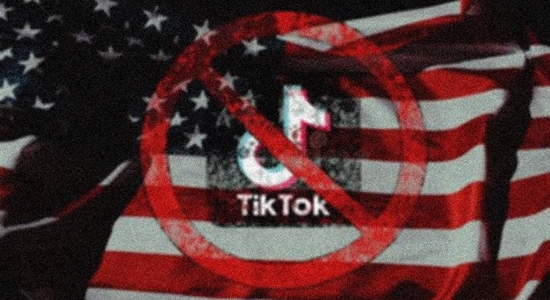
Before the U.S. Supreme Court, lawyers working for Beijing-based ByteDance, which owns the company that produces the popular app TikTok, argued that the case is about the freedom of speech of TikTok and of app users.
The legislation signed by President Biden in April 2024 would compel ByteDance to sell TikTok or see the app banned in the United States.
A previous effort to force the app’s sale or prohibition, in 2020 by then-President Donald Trump, was blocked by a federal court. In 2023, a judge blocked the Montana government’s attempt to ban the app within the state.
Running out of time
In April 2024, The New York Times reported that “lawmakers and security experts have said there are risks that the Chinese government could lean on ByteDance for access to sensitive data belonging to its 170 million U.S. users or to spread propaganda. The law would allow TikTok to continue to operate in the United States if ByteDance sold it within 270 days, or about nine months, a time frame that the president could extend to a year.”
We’re here. The deadline for sale is January 19, 2025, the day before the inauguration of Donald Trump as the new president. President Biden did not extend the deadline to a year, and the Supreme Court agreed to rule on ByteDance’s challenge before January 19.
Today the Times reported that the justices “are expected to rule quickly in the case, which pits national security concerns about China against the First Amendment’s protection of free speech” (“Supreme Court to Hear Challenge to Law That Could Shut Down TikTok,” January 10, 2025).
TikTok argues that if implemented, the law would violate its own First Amendment rights and those of its many American users.
People use TikTok
TikTok’s lawyers said: “Americans use TikTok to communicate about all manner of topics—from culture and sports, to politics and law, to commerce and humor. For instance, people of diverse faiths use TikTok to discuss their beliefs with others. Recovering alcoholics and individuals with rare diseases form support groups. Many also use the platform to share videos about products, businesses and travel.”
In a December 2024 decision to uphold the divest-or-ban law, Judge Douglas Ginsburg of the U.S. Court of Appeals for the District of Columbia Circuit argued that “the government acted solely to protect that freedom [of speech] from a foreign adversary nation and to limit that adversary’s ability to gather data on people in the United States.”
And now, Justice Clarence Thomas is asking the TikTok lawyers: “You’re converting the restriction on ByteDance’s ownership of the algorithm and the company into a restriction on TikTok’s speech. So why can’t we simply look at it as a restriction on ByteDance?”
Also see:
StopTheChinazis.org: “TikTok Only Pretends to Hide Data on U.S. Users From ByteDance and China”
StopTheChinazis.org: “TikTok Is Pretty Much a Chinese Communist Party App, Study Confirms”
StopTheChinazis.org: “The Temu App Is Like the TikTok App”
Network Contagion Research Institute: “How TikTok’s Global Platform Anomalies Align with the Chinese Communist Party’s Geostrategic Objectives”
Heritage.org: “TikTok Generation: A CCP Official in Every Pocket”
StopTheChinazis.org: “Response to Paul Jacob About TikTok and His Further Thoughts”
Racket News: “Why the TikTok Ban Is So Dangerous”