There are interesting (and troubling) differences between the National Security Strategy issued in November 2025 and the National Defense Strategy issued in January 2026. Think of the NSS as a roadmap and the NDS as an implementation document.
Although recently we criticized the quality of the strategy in the NSS, its authors clearly expected the worst in diplomacy, trade, and warlike behavior from Beijing. Thus, “We will build a military capable of denying aggression anywhere in the First Island Chain.”
More than half way?
November: Skepticism. Rivalry. Threats.
Now, the NDS is conciliatory:
Deter China in the Indo-Pacific Through Strength, Not Confrontation….
President Trump seeks a stable peace, fair trade, and respectful relations with China….
[The Department of War (DoW) will focus] on supporting strategic stability as well as deconfliction and de-escalation, more generally….
[We will demonstrate] through our behavior our own sincere desire to achieve and sustain…a peaceful and prosperous future….
The NSS directs DoW to maintain a favorable balance of military power in the Indo-Pacific. Not for purposes of dominating, humiliating, or strangling China. To the contrary, our goal is far more scoped and reasonable than that…
January: Respect. Reasonableness. Sincerity.
These sound almost like talking points from the Chinese Communist Party describing its own policies. Are we meeting Beijing more than half way?
The Taiwan Talks program asked whether the NDS is downplaying China as a threat.
Philippine panelist Renato Cruz de Castro thinks the NDS is a mix. It has a conciliatory tone, he said. But if you look at the whole document, “it’s preparing for an possible eventuality with China.” He noted that in this document, even when the United States “talks about the Monroe Doctrine or hemispheric defense, it’s all about China.”
Titus Chen, a Taiwan-based international relations researcher, observed the CCP’s reaction to the document, saying that “what strikes me is this cautious tone [from a Beijing spokesperson reacting to the report]. He talks about cooperation and coordination with the U.S. There is no hostility.”
Host Yin Khvat probed the question of a softer national defense strategy. “There is no longer characterization of China’s intention to displace the United States as the global or regional hegemon.” She also noticed that the NDS was released on a Friday evening during a winter storm alert with no accompanying video (as is provided for other major Department of War announcements). The kind of timing that buries the news.
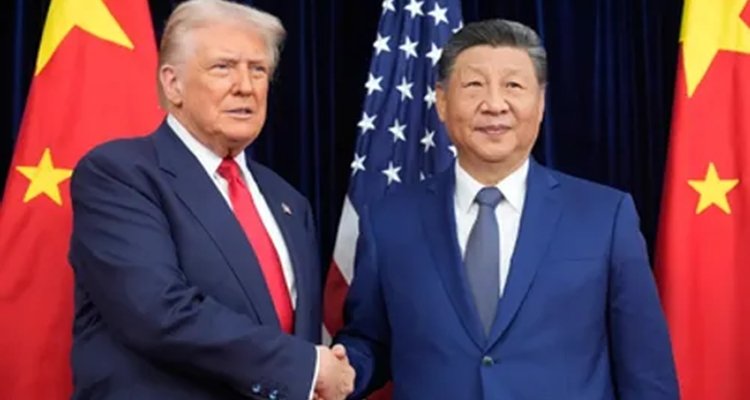
Chen agreed that this was no accident. President Trump is trying to avoid provoking Beijing by giving the document a lower profile. And, after all, he is going to meet Xi Jinping in April.
Inaction items
In a report on the NDS by the Center for Strategic and International Studies, authors Mark F. Cancian and Chris H. Park observe what may be a major flaw in the document: “The administration sets an ambitious goal to deter China by maintaining a ‘favorable balance of power’ while securing trade deals and persuading China to ‘accept and live under’ a peace ‘on terms favorable to Americans.’ The past two administrations have struggled to resolve this very tension.”
They struggled in vain, and the 2026 NDS does not lay out a solution that eluded Trump’s predecessors. In fact, the Defense One website points out what is “perhaps most striking”: “the absence of action items…. The 2026 NDS lacks any mention of force planning or the size and shape of the military, which consumed entire sections of past US defense strategies…. The most significant reduction is mentions of ‘China’ or ‘PRC,’ which dropped from 101 mentions in 2022 to 26 in the new document.”
The tone has shifted as well: four of the discussions of China emphasize a goal of being respectful towards Beijing and the rest offer reassurance that U.S. strategy’s goal simply is to deter but not threaten it. By contrast, the 2022 strategy called the Chinese military a “pacing challenge”—the phrase, which appeared 10 times, is absent from the new version—while the 2018 version was directly adversarial, using descriptors like “China is a strategic competitor using predatory economics to intimidate its neighbors while militarizing features in the South China Sea.”
The NDS does contain this piece in its Line of Effort section on China, however:
In the process of erecting a strong denial defense along the FIC [First Island Chain], DoW will ensure that the Joint Force always has the ability to conduct devastating strikes and operations against targets anywhere in the world, including directly from the U.S. Homeland, thereby providing the President with second-to-none operational flexibility and agility.
So under the fluff is buried at least one threat, to defend the First Island Chain. Is this enough to persuade China to ‘accept and live under’ a peace ‘on terms favorable to Americans?’ That seems unlikely. □
James Roth works for a major defense contractor in Virginia.
Also see:
The White House: “National Security Strategy of the United States of America” (November 2025)
U.S. Department of War: “2026 National Defense Strategy”
StoptheCCP.org: “The Strategy of Our China Strategy”