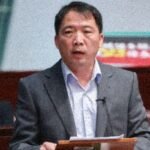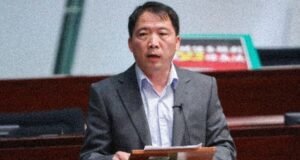
“Some critics appear to be driven more by bias against China than by objective analysis. Their criticisms are neither supported by evidence nor aligned with facts,” says a Hong Kong official, Michael Wong.
Wong “appeared to be referring to Stephen Roach,” a former leader of Morgan Stanley Asia, surmises Hong Kong Free Press (July 30, 2026).
A couple of weeks earlier, Roach had posted an article on Substack, “From Hong Kong to Xiānggǎng.” Subtitle: “The Hong Kong of old is over. Go to Xiānggǎng and see for yourself.”
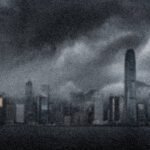
Hong Kong is still there. It has people, buildings, financial transactions. But, writes Roach:
Beijing’s hostile takeover following the pro-democracy demonstrations of 2019-20 has transformed Hong Kong into just another big Chinese city. Its Mandarin name of Xiānggǎng (香港: fragrant harbor), which celebrates its pre-colonial Chinese heritage, now seems far more appropriate than the Cantonese nomenclature of Hong Kong….
Finance-centric Hong Kong has always put great emphasis on its global rankings in capital raising for new companies, especially when compared with other major financial centers in larger cities such as New York, London, Tokyo, and even Mumbai. It turns out, however, that Hong Kong’s most recent IPO underwriting ascendancy back to #1 in 2025 and early 2026 was dominated by Mainland Chinese listings; by one estimate, they account for as much as 90% to 95% of recent funds raised…. Reflecting deliberate support from Beijing, Hong Kong is now less a thriving global IPO market than China’s principal international fundraising platform.
Also relevant is that population numbers, holding steady “at about 7.5 million since 2020,” conceal a
dramatic shift in the composition of Hong Kong’s work force; reflecting a sharp departure of expats [and presumably also Hongkongers] in 2021-22 immediately after the protests, a surge in Mainland immigrants was quick to follow in 2023…. Most research points to an outflow of Western expatriates of between 80,000 [and] 120,000 since 2020—down between 20% and 30% from pre-2020 highs and concentrated in industries such as finance, corporate law, accounting and consulting, media, regional headquarters of multinational corporations, and NGOs and policy organizations. Walking the streets of Hong Kong, today you are more likely to hear Mandarin than Cantonese, a dramatic shift in the tone of the city from its pre-2020 past.
Rule of law and political independence are gone, Roach also notes. The evidence includes crackdowns on Hong Kong bookstores, imprisonment of pro-democracy activists, and the departures of foreign judges who have recognized the end of the city’s judicial autonomy. Democracy is dead, free and open debate stifled, “any semblance of a free press” eliminated. The party-state’s destruction of Hongkongers’ political freedom is what explains the other features of the new Hong Kong that he reports on.
It all adds up to “a seismic transformation in the character of Hong Kong” no matter how often or loudly Hong Kong officials insist otherwise.