The bad news is that the lull in China’s use of military planes to conduct half-attacks on Taiwan seems to have ended. On March 7, The Independent reported that China was resuming military flights near Taiwan “after an unexplained week-long hiatus.” Nobody thought it would last forever.
The good news is that despite all the vitriol and inconvenience that the CCP has inflicted on Japan for expressing support for the Republic of China, those two country governments still have a good understanding. The Japanese prime minister has not retracted her statement that her country may provide military support for Taipei if the People’s Republic of China attacks Taiwan. And in a recent snap election, Japanese voters have given her a strong show of support (Taipei Times, March 2, 2026).
China’s full-spectrum pressure campaign against Japan—intended to weaken Japanese Prime Minister Sanae Takaichi—has instead helped deliver her a landslide victory in the Feb. 8 election. Japanese voters appear to have grown weary of Beijing’s coercion. The resulting supermajority in the Diet gives Takaichi not only political authority but also strategic latitude to harden Japan’s statecraft against China….
For the first time in decades, Japan is moving decisively from strategic ambiguity toward strategic clarity—and that shift matters enormously for Taiwan’s future….
For Taiwan, this reduces the most dangerous form of uncertainty—not whether China might act, but whether others would respond.
Then there are Tokyo’s Taiwan-vicinity military enhancements.
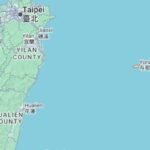
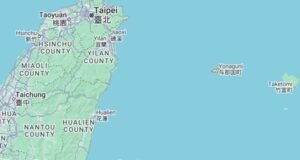
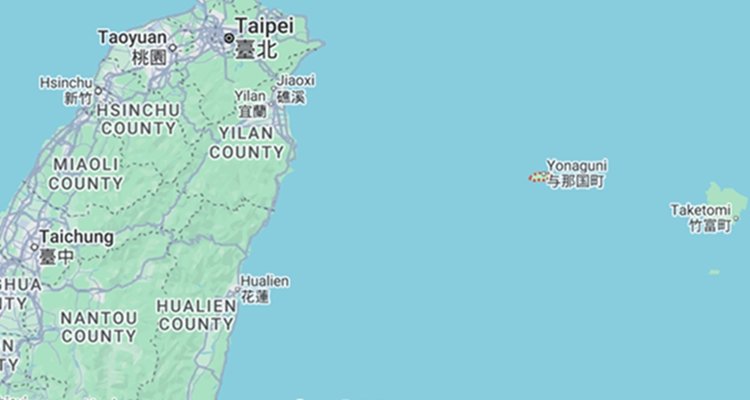
Japan’s southwestern island chain, stretching from Kyushu to Yonaguni just 110 kilometers from Taiwan, is rapidly becoming a fortified defensive arc. Japanese missile batteries, air defense systems, electronic warfare units and surveillance networks are being deployed along this chain, transforming it from a symbolic “tripwire” into a credible counterstrike barrier. This significantly complicates any Chinese attempt to blockade Taiwan or project force across the Taiwan Strait.
Japan could soon become even more helpful militarily. Author Brahma Chellaney thinks that Takaichi’s supermajority will make it possible to accomplish long-discussed reform of Japan’s World War Two–era constitution. “For decades, Article 9 has constrained Japan’s ability to act as a normal security provider…. Takaichi now has the leverage to formalize the status of the Self-Defense Forces and expand their operational latitude, even as she accelerates defense spending toward 2 percent of GDP. A stronger Japan means a more secure Taiwan.”
Also see:
Prime Minister’s Office of Japan: Constitution of Japan
“Article 9. Aspiring sincerely to an international peace based on justice and order, the Japanese people forever renounce war as a sovereign right of the nation and the threat or use of force as means of settling international disputes.
“In order to accomplish the aim of the preceding paragraph, land, sea, and air forces, as well as other war potential, will never be maintained. The right of belligerency of the state will not be recognized.”