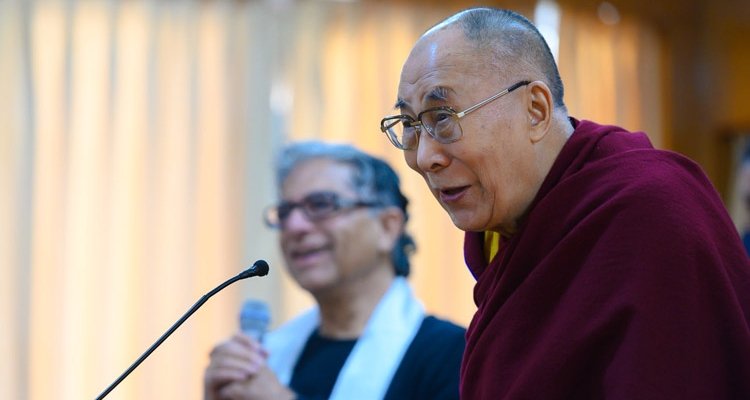
In a 40-0 vote in favor, the Czech Senate passed a resolution in defense of the religious freedom of the people of Tibet and “their exclusive right to determine their future spiritual leader, His Holiness the Dalai Lama.” The People’s Republic of China has “no legitimate authority” to pick the successor of the present Dalai Lama, who is now 90 (The Tibet Post, March 28, 2026).
A sponsor of the resolution, Senator Přemysl Rabas, compared the Chinese attempt to decide the next Dalai Lama to “a hypothetical scenario in which the European Union were to dictate the election of the Pope.”
The resolution “condemns the transnational repression carried out by China across the globe, particularly against Tibetans, as well as activists and human rights defenders.” And it reaffirms
the “long-standing warm relations” between the Czech Republic and Tibet, rooted in the legacy of President Václav Havel. It specifically cites recent high-level engagements, including a private meeting between the Czech President and the Dalai Lama in July 2025 and a parliamentary delegation visit to Dharamshala in December 2025. By passing this resolution, the Senate aligns the Czech Republic with other democratic nations like the US in mandating that religious leaders be chosen without state interference.
Thinlay Chukki, a representative of the Dalai Lama as well as the Central Tibetan Administration, was present during the vote. After the resolution had been adopted, she said that the Czech Senate “has today sent a clear and powerful message to the world: spiritual heritage cannot be legislated by an authoritarian state.
“By standing with the Tibetan people in our right to choose our own leaders, the Czech Republic reaffirms its legacy as a champion of human dignity. This resolution is not just a document. It is a beacon of hope for every Tibetan, and we are deeply grateful to the Czech Republic for this courageous stand.”