In response to an embassy spokesman’s online annoyance, Commodore Jay Tarriela of the Philippine Coast Guard felt it necessary to stipulate that he had not meant to accuse a PCG-investigated Chinese vessel of “trespassing” in Philippine waters. Yet the ship was obviously operating within the exclusive economic zone of the Philippines without authorization from the Philippine government (News5, January 2, 2025).
China Coast Guard ships and other ships of the People’s Republic of China do of course routinely, and deliberately, invade the exclusive economic zones of other countries. The point is to establish precedents and, often, to intimidate by way of acts of aggression like ramming and water-cannoning the vessels of the targeted country. Then there are the Chinese construction projects undertaken within an EEZ, like artificial islands and military outposts.
Tarriela:
“I never claimed that your Chinese research vessel ‘trespassed,’ ” Tarriela said in a quote-repost to a reply from the Chinese embassy in Manila on X.
“As clearly stated in our press release and posts, the Philippine Coast Guard deployed an aircraft to challenge the vessel’s presence, verify if it was conducting marine scientific research without consent, and assert the Philippines’ sovereign rights within its exclusive economic zone.”
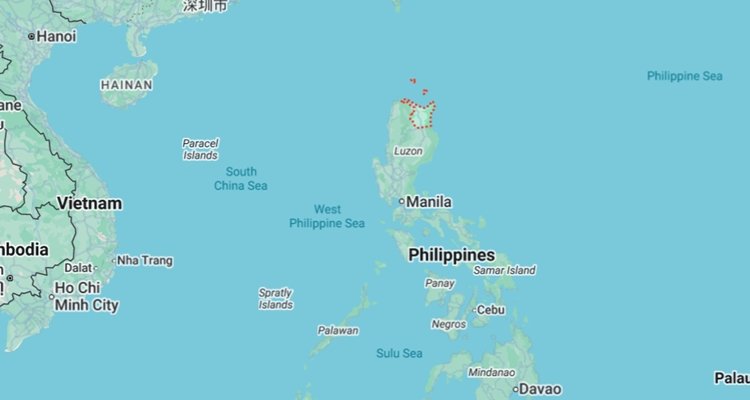
Tarriela responded to remarks from Chinese embassy spokesperson Guo Wei, who criticized the PCG for challenging the presence of Chinese research vessel Tan Suo Er Hao near Cagayan. Guo said the ship was just “like driving on a public highway that international law clearly allows everyone to use.”
The PCG earlier said the vessel was initially detected approaching within 19 nautical miles off the Cagayan coast. A PCG aircraft issued multiple radio challenges to the vessel but received no response, Tarriela said.
Tarriela criticized China for invoking the United Nations Convention on the Law of the Sea (UNCLOS) on innocent passage “while conveniently ignoring its fundamental provisions that do not align with [Beijing’s] excessive and unsubstantiated claims.”
The claim that he “never claimed trespass” is caviling that Tarriela might better have avoided. Why would the Philippine Coast Guard undertake an investigation of this Chinese research vessel? Because the vessel was evidently trespassing.
Under the terms of the 1982 UN Convention on the Law of the Sea, EEZs extend up to 200 nautical miles or 370 kilometers from a country’s shores. Within this area, a country “retains exclusive rights to the exploration and exploitation of natural resources” (Britannica). “UNCLOS establishes rights for how other countries may access the waters in an EEZ. It allows for innocent passage of foreign vessels; that is, ships are allowed to pass through as long as they do not participate in proprietary activities reserved for the coastal state, such as fishing or conducting research, without permission, or engage in criminal activities.”
If you’re a country government, you can either accept these definitions and demarcations as reasonable enough, even if imperfect, and take care to defer to another country’s rules for its EEZ; or you can go out of your way to make trouble. The Chinese party-state makes trouble.
Troublemaking is different from oblivious wandering or accident. Note that “research vessel” Tan Suo Er Hao was observed to be hanging out not 199 nautical miles away from the Philippine coastland but 19 miles away from it. The Tan Suo Er Hao was where it was on purpose.
Research
Even if the Philippine Coast Guard did not immediately know what the ship Tan Suo Er Hao was up to, the PCG had reason to suspect it of engaging in activity that the Philippine government doesn’t permit within the country’s EEZ. “Research” by foreign vessels must be one of those activities. Especially since the CCP’s use of the term “research” in this kind of context is often a conceptual blind.
Espionage is research. Cable-cutting is research if your scientific inquiry pertains to what happens to the Internet when you cut a deep-sea cable that carries Internet traffic.
How much can you get away with when you do everything you can short of waging war to push another country up against the wall? Interesting research question.