The Tibet Rights Collective would like the Chinese government to slow way down its building of huge dams in Tibet. Stop kicking Tibetans out of their homes, stop ignoring impact on “long-term river connectivity” and fish habitats, stop ignoring the risk of earthquakes, and start listening to the people who are being affected.
China has ignored all protests and concerns (March 3, 2026).
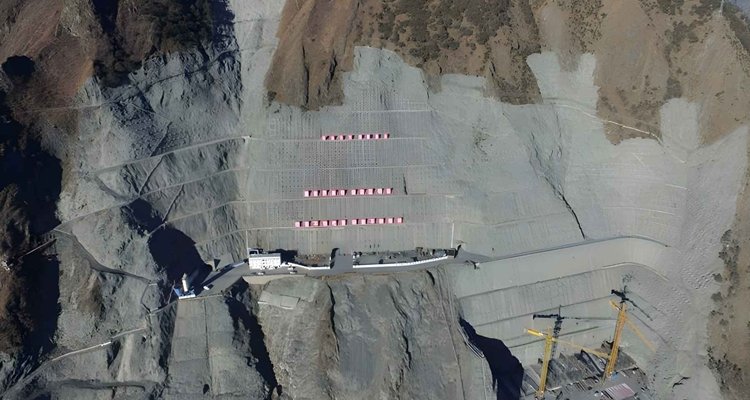
The Lianghekou hydropower plant, now the highest-altitude mega dam in the People’s Republic of China, stands nearly as tall as the Eiffel Tower and is capable of generating 11 billion kilowatt hours of electricity annually. With an installed capacity of 3,000 megawatts, the project marks yet another milestone in Beijing’s aggressive dam-building campaign across Tibet….
Rising approximately 295 metres, the dam holds back a reservoir designed to store around 10.8 billion cubic metres of water. Construction began in 2014, with the final turbine connected to the grid in March 2022, after an investment of roughly 66.5 billion yuan (about 10.5 billion US dollars).
The human cost has been significant. Nearly 5,000 residents were reportedly relocated during construction—part of a broader pattern of displacement that has accompanied China’s dam-building drive across Tibet. The long-term social and cultural impacts of these relocations remain largely unexamined in official narratives….
The 11 billion kilowatt hours generated annually are intended to support economic hubs such as the Chengdu-Chongqing region and stabilize power supplies in Sichuan Province, which has faced summer blackouts in recent years.
Yet, as with many mega infrastructure projects in Tibet, the primary beneficiaries lie far beyond the plateau. Tibet increasingly serves as a strategic energy reservoir for China’s industrial heartlands—its rivers dammed, its landscapes transformed, and its communities displaced in the process.
Although the Tibet Rights Collective’s post seems to imply that the Lianghekou was just switched on, other reporting indicates that it has been operating since 2021 and (more fully) 2022.
In a column for this site on another mega-dam project in Tibet, the Motuo Hydropower Station, James Roth acknowledges the mega-disruptions that come in the wake of these projects. “Where modernity breaks continuity, ruin seems to follow.” But he also stresses another feature.
“The Trivium China consultancy has put its finger on it. ‘Beyond energy security, policymakers likely also have state-building on the mind. The mega dam will anchor an unprecedented wave of industrial and infrastructure investment in Tibet—deepening Beijing’s control over the politically sensitive region.’
“What will happen to Tibet with a million Han immigrant construction workers? And that would be just the beginning…. The Motuo Hydropower Station is going to ‘water bomb’ Tibet, not India. And there doesn’t seem to be anything to be done about it.”
Also see:
StoptheCCP.org: “Red China’s Power Surplus in Tibet”